

Principal Offender Of Robbery Cannot Be Convicted For Receiving Same Stolen Property U/S 411 IPC: Delhi High Court
The Court partly allowed appeal against bus robbery conviction, upheld Sections 392 & 397 IPC on strength of examinations-in-chief of witnesses who later resiled; also sets aside Section 27 Arms Act conviction.

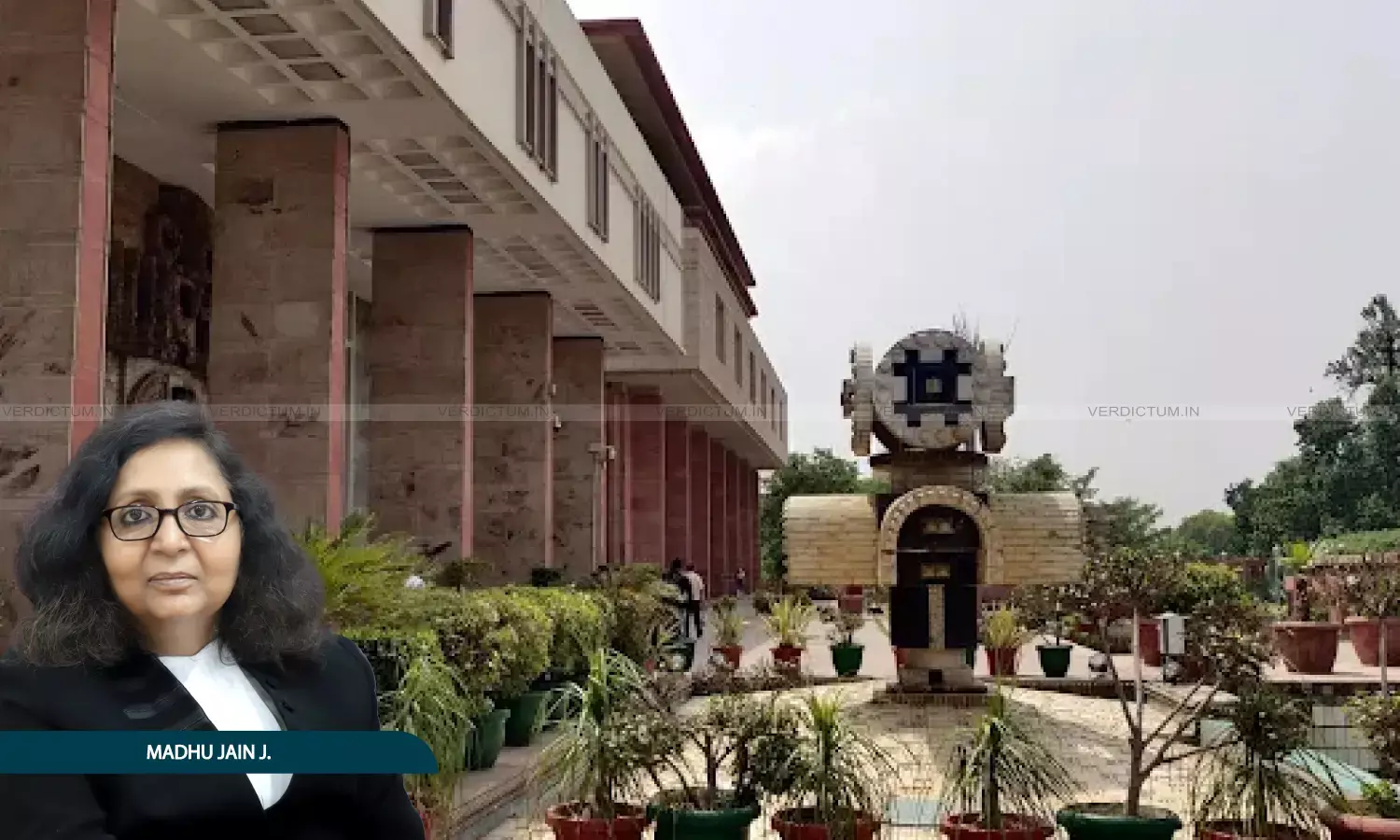
Justice Madhu Jain, Delhi High Court
The Delhi High Court has held that once an accused is found to be the person who robbed a mobile phone, a separate conviction under Section 411 of the Indian Penal Code for receiving or retaining the same property cannot be sustained. Placing reliance on Mir Nagvi Askari v. CBI (2009) 15 SCC 643, the Court observed that Section 411 is directed against receivers of stolen property, and not against the principal thief, robber or misappropriator.
Partly allowing the appeal, the Court upheld the convictions under Sections 392 and 397 IPC. It rested them on the examinations-in-chief of two witnesses who later resiled, corroborated by the PCR official and contemporaneous police records. It also set aside the conviction under Section 27 of the Arms Act, while leaving intact the conviction under Section 25(1B)(b).
A Single Judge Bench of Justice Madhu Jain observed, “First, this Court is of the opinion that the conviction of the appellant under section 411 IPC cannot be sustained. In Mir Nagvi Askari v. CBI, (2009) 15 SCC 643, the Supreme Court explained that Section 411 IPC is directed against a receiver of stolen property and not against the principal thief, robber or mis-appropriator… once the appellant has been found to be the person who robbed the mobile phone, his separate conviction under Section 411 IPC for receiving or retaining the very same property cannot be sustained”.
Advocate Kashmir Singh appeared for the appellant and Raghuvinder Verma, APP appeared for the respondent.
According to the prosecution, on July 13, 2012, the complainant and two friends were travelling by bus towards East Patel Nagar when he found his phone missing. When a friend dialled the number, it allegedly rang in the appellant’s pocket. The appellant is said to have discarded the SIM card and, when the phone was demanded, held a button-operated knife against the friend’s abdomen and threatened to stab him. He was apprehended with the help of members of the public.
Through a judgment dated December 21, 2015, the Additional Sessions Judge, Tis Hazari Courts, convicted Pramod Kumar under Sections 392, 397 and 411 IPC and Sections 25 and 27 of the Arms Act, with a maximum sentence of seven years’ rigorous imprisonment. The complainant and another friend had supported the prosecution in examination-in-chief but resiled in cross-examinations recorded about eleven and fourteen months later.
The Court held that a retraction does not efface earlier testimony, which must be read as a whole. It described the retractions as “selective retractions of those facts which implicated the appellant”, noting that the earlier account was corroborated by the PCR official and the DD and PCR records.
On Section 411, the Court held that his conviction for receiving or retaining the phone “cannot be sustained”. On Section 27 of the Arms Act, following Surinder Singh v. State (UT of Chandigarh), it held that the prosecution must prove contravention of Section 5 or 7, and that a breach of a Section 4 notification “cannot substitute the statutory requirement”.
The Court set aside the Section 411 and Section 27 convictions and the sentence under Section 411. It affirmed the remaining convictions with concurrent sentences and set-off under Section 428 CrPC. Since his sentence was suspended on July 19, 2017, the appellant must surrender within two weeks.
Cause Title: Pramod Kumar v. State (Neutral Citation: 2026:DHC:9555)
Appearances:
Appellant: Kashmir Singh, Advocate.
Respondent: Raghuvinder Verma, APP.