

Landlord Only Required To Demonstrate Title Which Is Superior To That Of Tenant In Proceedings U/S.14(1)(e) Of Delhi Rent Control Act: Delhi High Court
The Delhi High Court was considering a Rent Control Revision Petition filed under Section 25- B(8) of the Delhi Rent Control Act, 1958.

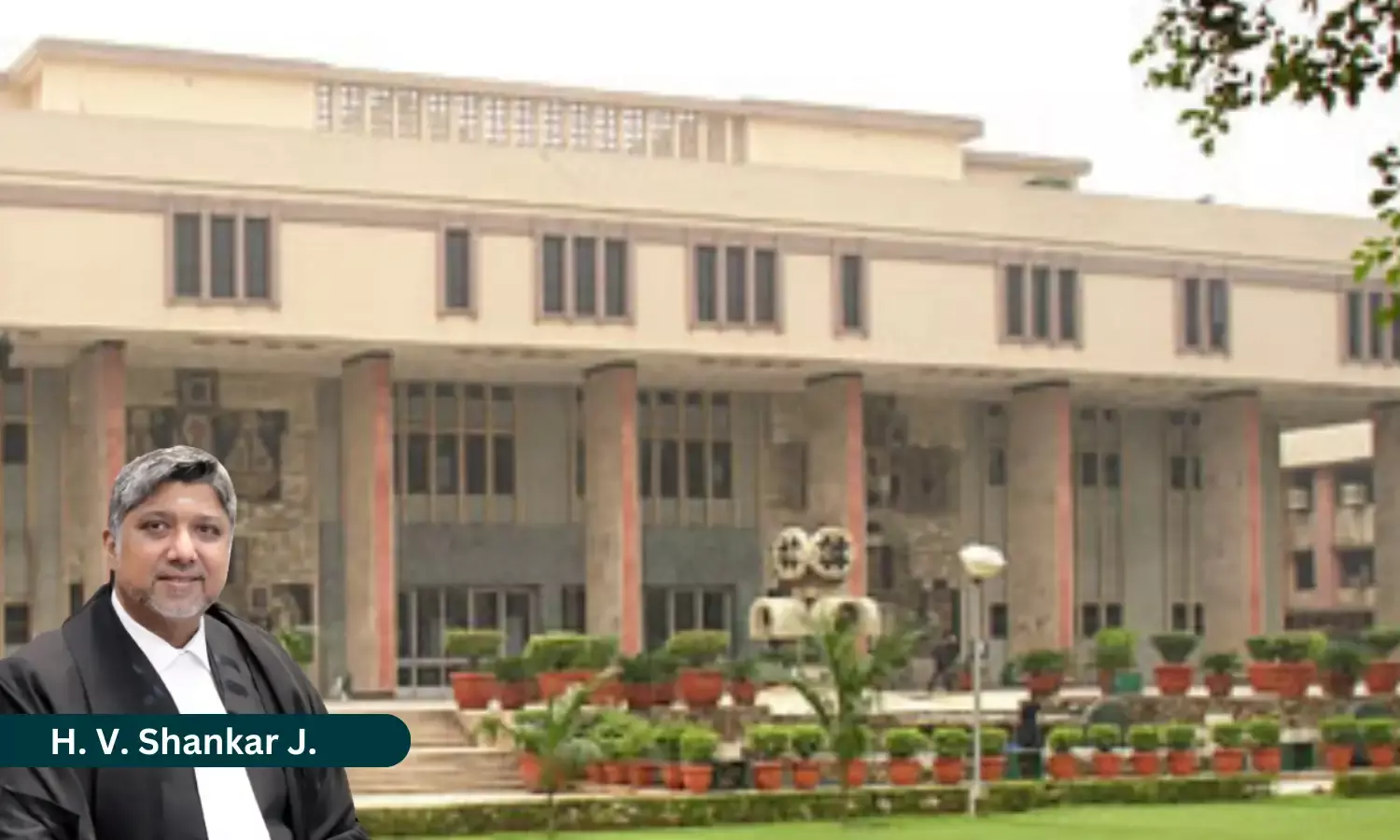
Justice Harish Vaidyanathan Shankar, Delhi High Court
While upholding an eviction order passed by the Additional Rent Controller, the Delhi High Court has affirmed the view that in the proceedings under Section 14(1)(e) of the Delhi Rent Control Act, the landlord is not required to establish title to the standard applicable in a title suit, and the requirement is to demonstrate a title which is superior to that of the tenant.
The High Court was considering a Rent Control Revision Petition filed under Section 25- B(8) of the Delhi Rent Control Act, 1958, assailing the Order passed by the Additional Rent Controller, Shahdara District, Karkardooma Courts, Delhi , in an Eviction Petition whereby the application seeking leave to defend preferred by the Petitioner was dismissed, and an Eviction Order came to be passed against the Petitioner.
The Single Bench of Justice Harish Vaidyanathan Shankar held, “It is well settled that, in proceedings under Section 14(1)(e) of the DRC Act, the landlord is not required to establish title to the standard applicable in a title suit. The requirement is to demonstrate a title which is superior to that of the tenant. The learned ARC, upon examining the pleadings of the parties, has found that the Petitioner neither asserts any independent title in himself nor sets up any title in favour of a person outside the family of the Respondents. The objection based on non-attornment, therefore, does not disclose any triable issue warranting interference with the Impugned Order.”
Advocate Shruti Munjal represented the Petitioner.
Factual Background
The case as set up by the petitioner was that the Petitioner was the tenant of the ancestors of the Respondents. The petitioner claimed that he had not attorned to the Respondents and there was no landlord-tenant relationship. As per the petitioner, the original requirement as pleaded before the ARC was for setting up a confectionery shop, which was subsequently amended, and the requirement was then said to be for a Law Office. The petitioner claimed that there was a suitable alternate accommodation, and the Respondents had a chamber and there was no requirement for the subject premises.
Reasoning
Referring to the provisions of the Delhi Rent Control Act, 1958 (DRC Act), the Bench explained that while exercising jurisdiction under the proviso to Section 25B(8), the Court is neither required nor permitted to undertake a fresh appreciation of the material on record with a view to arrive at an independent conclusion on the merits of the dispute. “Interference would be warranted only where the Impugned Order suffers from a jurisdictional error, manifest illegality, material irregularity or perversity, or where the conclusion arrived at by the learned ARC is wholly unreasonable or founded upon an erroneous premise of law. Equally, where a material plea has been left unconsidered or the decision-making process otherwise discloses an error apparent on the face of the record, exercise of revisional jurisdiction may be warranted”, it added.
According to the Bench, there was no irregularity, in the findings returned by the ARC as the Impugned Order reflected due consideration of the objections raised by the Petitioner and recorded cogent reasons for rejecting the same. “The challenge raised before this Court, in substance, seeks a re-appreciation of the material placed before the learned ARC and a substitution of the findings returned by the learned ARC with a view which may be more favourable to the Petitioner. Such an exercise falls outside the limited scope of revisional jurisdiction under the proviso to Section 25-B(8) of the DRC Act”, it stated
The Bench held that once the Petitioner acknowledged the title and status of the Respondents' predecessors as landlords of the subject premises, a mere plea that the Petitioner subsequently paid rent to another member of the family couldnot displace the Respondents' claim to a better title.“The argument that the Respondents already have a chamber and, therefore, do not require the subject premises, essentially invites this Court to reassess the comparative suitability of the accommodation available to the Respondents. Such an exercise would amount to substituting the subjective assessment of the landlord with that of the Court. It is settled that the landlord is the best judge of his or her requirement and that the tenant cannot dictate the manner in which the landlord ought to utilise the available accommodation. The Court is only required to examine whether the requirement is bona fide and whether the landlord has a reasonably suitable alternative accommodation. It is not for the Court to prescribe an alternative arrangement merely because, in the opinion of the tenant, such arrangement may suffice”, it added.
The Bench further reiterated that a revisional court exercising jurisdiction under the proviso to Section 25-B(8) does not sit as a court of appeal and cannot undertake a roving re-appreciation of evidence merely because another view is possible. The jurisdiction is supervisory and is directed towards ensuring the legality and propriety of the decision-making process, and not towards substituting the conclusion of the learned ARC with that of this Court, it explained.
Thus, finding that the petitioner had failed to demonstrate the existence of any triable issue which could have warranted grant of leave to defend, the Bench held that the ARC had rightly rejected the application seeking leave to defend and dismissed the petition.
Cause Title: Naresh Kumar v. Sunny Kashyap (Neutral Citation: 2026:DHC:7650)