

In-Depth Investigation Is Bound To Take Time: Delhi High Court Denies Bail To UAPA Accused
The Bench granted bail to co-accused found to have no substantial material against him; accused denied bail may renew plea after protected witnesses are examined or in one year.

The Delhi High Court has held that an in-depth investigation into a network alleged to be spread across the country is bound to take certain amount of time, and that the resulting delay in the trial cannot by itself entitle an accused to bail under the Unlawful Activities (Prevention) Act, 1967. The Court observed that the NIA's chargesheets reflect detailed analysis of evidence and witnesses and the unravelling of networks across the country.
Refusing bail to Mohammad Arshad Warsi (A-2), who has been in custody for around three years, the Court found that the prima facie case under Section 43D(5) was not displaced. It noted that protected witnesses are yet to depose and that their allegations against him are serious. It gave him liberty to renew his prayer after the protected witnesses are examined or one year from the order, whichever is earlier. In the connected appeal, it set aside the Special Judge's order and granted bail to A-15 on conditions.
Pertinently, as per the NIA, the ISIS Delhi-Padgha module case, is an alleged pan-India conspiracy, centred on Padgha in Maharashtra and allegedly led by the now deceased Saquib Abdul Hamid Nachan, to spread ISIS ideology and plan terror attacks.
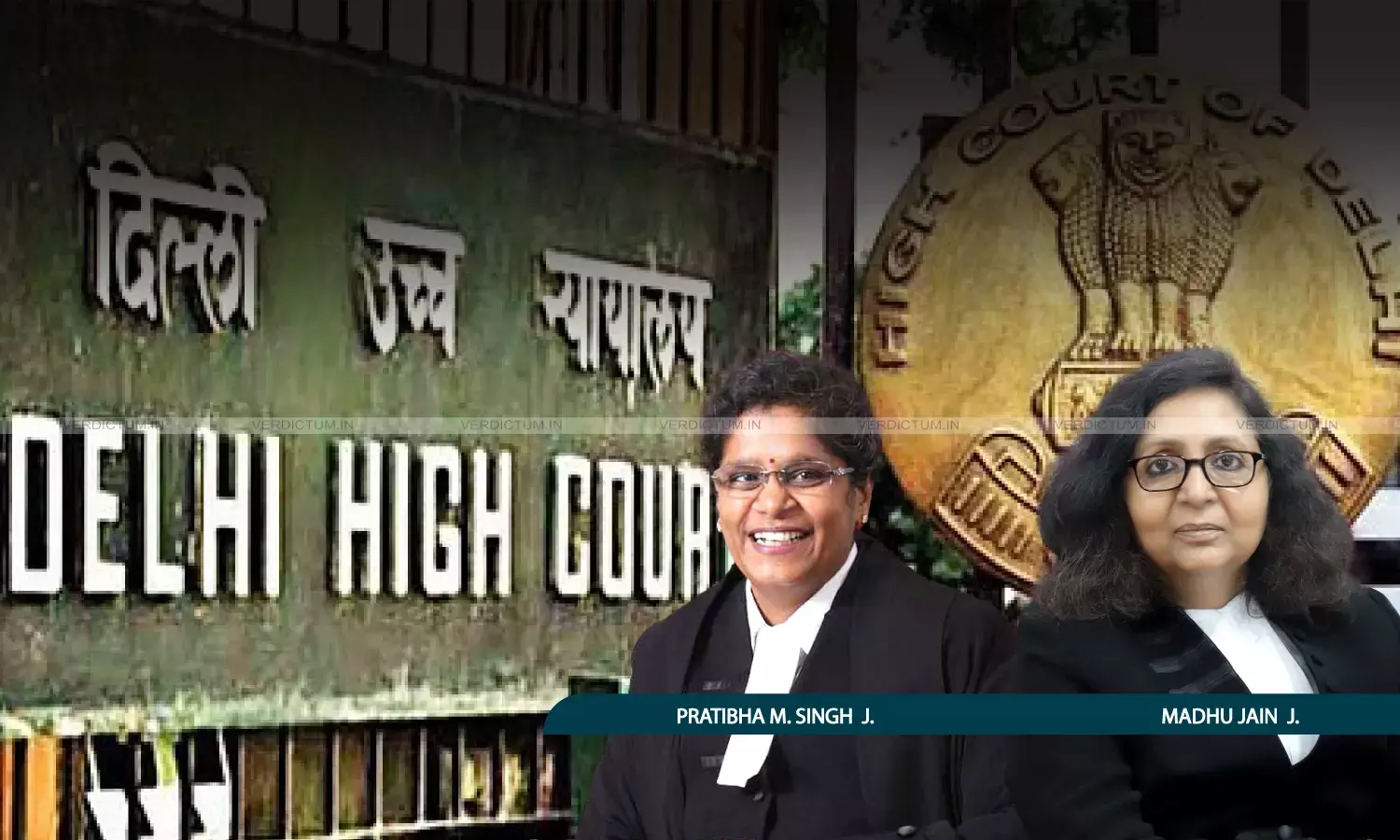
A Division Bench of Justice Prathiba M. Singh and Justice Madhu Jain observed, “…the investigation in this case spans across India, as the same is relating to a large network of ISIS and how the said organization is alleged to have spread in various states including Rajasthan, Maharashtra, Madhya Pradesh, Uttar Pradesh and Delhi. The unravelling of such an extensive network requires time and in-depth investigation. In fact the core place of the investigation is Padgha in Maharashtra which is allegedly claimed as ISIS territory in India. Such a claim is very disturbing and poses a serious threat to National security. A perusal of all the chargesheets filed by the NIA until now shows that detailed analysis of several evidences, witnesses and unravelling of networks spread across the country is being carried out. Such in-depth investigation is bound to take certain amount of time”.
Advocate Sowjhanya Shankaran appeared for the appellant (Kunnathpeedikal), Advocate Archit Krishna appeared for the appellant (Warsi), while Senior Advocate Gautam Narayan, SPP appeared for the respondent.
The appeals challenged the August 14, 2025 orders of the Special Judge (NIA), Patiala House Courts, refusing regular bail on the ground that the allegations appeared prima facie true under Section 43-D(5) UAPA. The case arose from a September 2023 Delhi Police Special Cell FIR and was transferred to the NIA. Five chargesheets have been filed, the latest on January 7, 2026, and charges are yet to be framed.
Mohammad Arshad Warsi (A-2) was arrested on October 1, 2023 on allegations of promoting ISIS ideology and harbouring A-3, who was allegedly found with explosive material. Munzir Abubakar Kunnathpeedikal (A-15) was arrested on December 9, 2023 on allegations of supporting ISIS activities in Padgha.
Warsi argued he was a PhD student and tutor with no link to Padgha, no recovery, and an innocent explanation for his search history, and that he faced prolonged incarceration. Kunnathpeedikal argued the case against him rested on statements under Section 161 CrPC and that nothing was recovered from him. The NIA relied on NIA v Zahoor Ahmad Shah Watali, (2019), protected witness statements and Gulfisha Fatima v State (GNCTD), (2026).
Applying Watali, the Court looked for broad probabilities and found Warsi prima facie closely linked with A-3. He allegedly pointed out A-3's residence, and his Aadhaar card was used at a Pune hospital. The Court said his explanation for his search history "may appear appealing, if read in isolation" but was improbable in that context.
“The explanation given by ld. Counsel for the Appellant/A-2 to the effect that the searches conducted by him on groundnut oil solubility in water, potassium permanganates solubility in water were done because he was teaching students from Class VI to Class X, may appear appealing, if read in isolation. However, when the same is considered in the overall facts and evidence, where the Appellant/A-2 had lent his Adhaar Card to be used by A3, from whom such a huge amount of seizure of explosives and ingredients to make IEDs have been effected, it becomes improbable that the said search history was simply for the purpose of teaching school students”, the Bench said.
On delay, it noted that Gulfisha had been doubted in Syed Iftikhar Andrabi and the interplay is before a larger Bench. It distinguished Jagtar Singh Johal (over eight years) and Naim (7½ years), and said the NIA was not responsible for the delay. It added that Warsi's roots in Delhi made influence on witnesses likely.
For Kunnathpeedikal, the Court noted the main allegation was that he showed ISIS material and that nothing had been substantiated on deletion of data. It held Article 21 of the Constitution of Indfia "may in fact override" Section 43D(5) where no substantial material is discernible.
He was released on a personal bond of Rs. 2,00,000 with surety, with conditions that he must stay in Delhi, not travel to Padgha without permission, use one mobile phone kept switched on, and not contact witnesses or make public statements on the case.
Cause Title: Mohammad Arshad Warsi v. National Investigating Agency (Neutral Citation: 2026:DHC:10414-DB)
Appearances:
Appellant: Advocate Sowjhanya Shankaran, Advocates Archit Krishna, Tamanna Pankaj and Ashutosh Shukla.
Respondent: Senior Advocate Gautam Narayan (SPP), with Advocates Asmita Singh, Manoj Yadav and Bhupendra Giri.