

Sympathy Cannot Override Constitutional Mandate: Delhi High Court Rejects Delayed Compassionate Appointment Plea
The Bench noted that the purpose is strictly confined to providing immediate succour to a family suddenly rendered vulnerable by the untimely demise of its breadwinner.

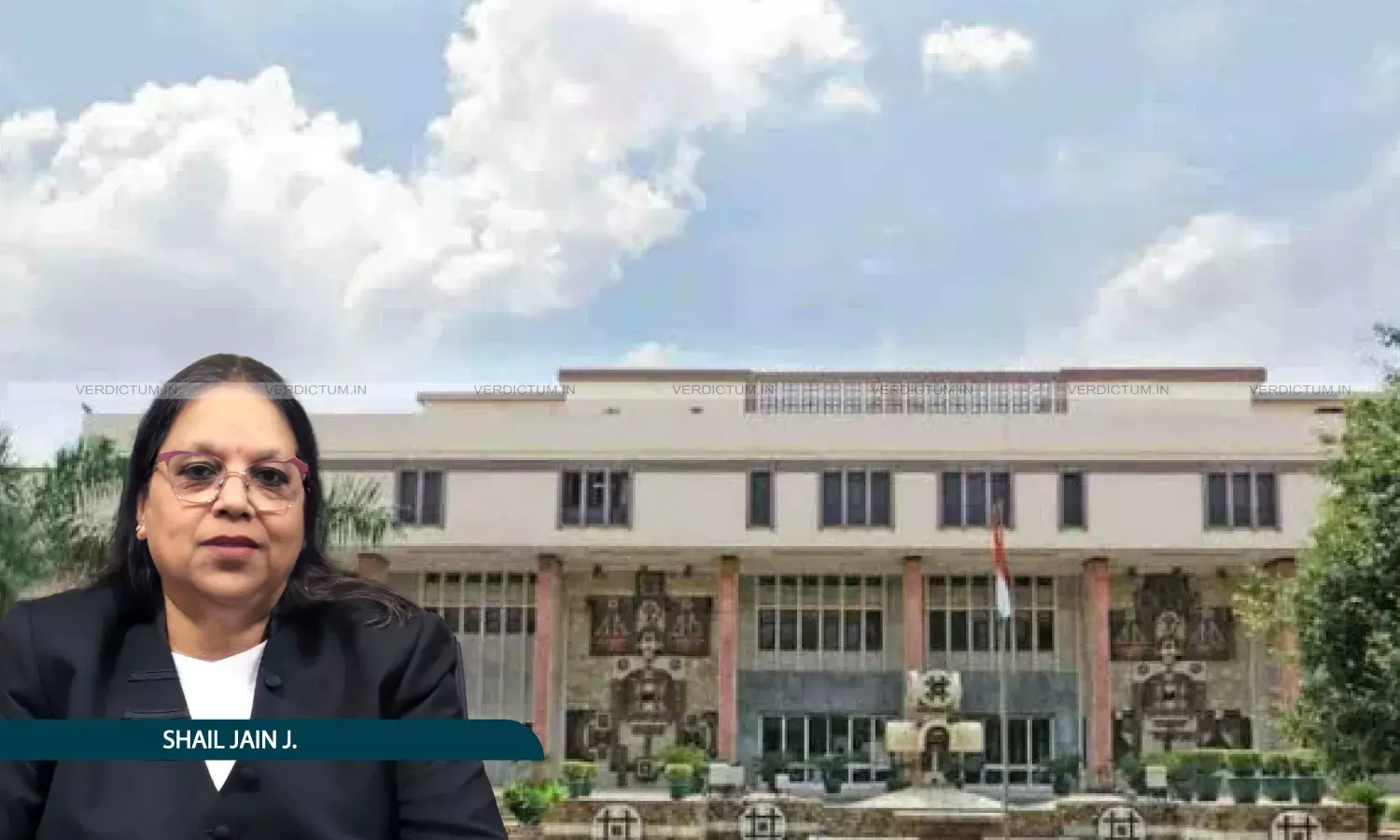
The Delhi High Court has held that compassionate appointment is not a vested or hereditary right and cannot be permitted to operate as an alternate mode of public employment after the family of a deceased employee has survived for approximately six and a half years (in the present case) without immediate financial destitution.
The Court held that compassionate appointment, being an exception to Articles 14 and 16 of the Constitution of India, must strictly comply with the governing scheme. It further observed that delayed claims defeat the object of providing immediate financial relief and set aside the Industrial Tribunal’s award for ignoring terminal benefits, family pension, the claimant’s employment, and absence of vacancies.
Justice Shail Jain in a writ petition filed by BSES Yamuna Power Limited, observed, “While this Court is not unmindful of the hardship faced by the Respondent and his family consequent upon the demise of the employee, considerations of sympathy cannot override the constitutional mandate governing public employment or the express stipulations contained in the applicable Scheme. Compassionate appointment is not intended to operate as a source of financial advancement or long-term economic rehabilitation for the family of a deceased employee. Its object is strictly confined to providing immediate succour to a family suddenly rendered vulnerable by the untimely demise of its breadwinner, and it cannot be permitted to assume the character of an alternate mode of public employment. In the considered opinion of this Court, the impugned Award suffers from patent illegality, non-application of mind, and findings directly contrary to the material available on record”.
Senior Advocate Sandeep Prabhakar appeared for the petitioner and Advocate Pankaj Tripathi appeared for the respondent.
The dispute arose after the respondent sought compassionate appointment following the death of his father, a lineman employed with the erstwhile Delhi Vidyut Board whose services later stood transferred to the petitioner company.
The employee died due to electrocution during the course of employment on August 26, 2003. The family subsequently received terminal and statutory benefits exceeding ₹7 lakh, including compensation under the Employees’ Compensation Act, besides continuing family pension.
The respondent, who was a minor at the time of his father’s death, applied for compassionate appointment only on February 10, 2010, nearly six and a half years after the incident. His request having been rejected, the dispute was referred for adjudication to the Industrial Tribunal, which directed the management to consider his case for compassionate appointment on merits.
Before the High Court, the petitioner contended that the claim was barred under Clause 16(j) of the applicable scheme, which prescribed a maximum limitation period of two years. It was further argued that the family was not in indigent circumstances, no Group ‘C’ or ‘D’ vacancies existed within the prescribed 5% quota, and the respondent himself had admitted to undertaking gainful employment.
The Court observed that the material on record demonstrated that the family had remained financially sustained after the death of the employee and had not suffered the kind of immediate destitution contemplated under the scheme. Further noted that the respondent himself admitted during cross-examination that he had worked with certain organisations prior to seeking compassionate appointment, thereby weakening the plea of continuing financial hardship.
The Court also found that neither the widow nor the elder brother of the deceased employee sought compassionate appointment immediately after the employee’s death, which materially undermined the plea of acute financial crisis. It further held that subsequent changes in family arrangements or future financial liabilities could not independently justify compassionate appointment years later.
“Thus, it clearly emerges that compassionate appointment is neither a vested nor an automatic right, but merely an exception to the constitutional mandate of equality in public employment under Articles 14 and 16 of the Constitution of India. It is further settled that every claim must strictly conform to the governing scheme and can be considered only where immediate financial distress arising from the death of the employee in harness is established, and that delay in seeking such an appointment materially undermines the very object of providing immediate succour to the bereaved family. On the issue of vacancies, the Court held that the mere existence of a 5% quota did not create an enforceable right to compassionate appointment. It observed that appointments could only be made against available sanctioned vacancies and strictly in accordance with the applicable rules and eligibility criteria”, it noted.
The Court ultimately held that the Industrial Tribunal had failed to examine the mandatory requirements of financial indigence, availability of vacancies, eligibility, and timely pursuit of the claim under the scheme.
Terming the award patently unsustainable, the Court held that it suffered from patent illegality, non-application of mind, and findings directly contrary to the material available on record.
Accordingly, the Court quashed and set aside the Industrial Tribunal’s award and allowed the writ petition.
Cause Title: M/s BSES Yamuna Power Ltd. v. Vinod Kumar (Neutral Citation: 2026:DHC:4405)
Appearances:
Petitioner: Sandeep Prabhakar, Sr. Adv., Vikas Mehta, Advocate.
Respondent: Pankaj Tripathi, Gaurav Antil, Advocates.
Click here to read/download the Judgment