

Sovereignty & Security Of Nation Must Prevail Over Personal Liberty: Delhi High Court Denies Bail To 2008 Delhi Serial Blasts Accused
The Bench said that prolonged incarceration alone is insufficient to override statutory embargo under Section 43D(5) UAPA where role attributed to accused indicates central, coordinating position in terrorist conspiracy rather than peripheral participation.

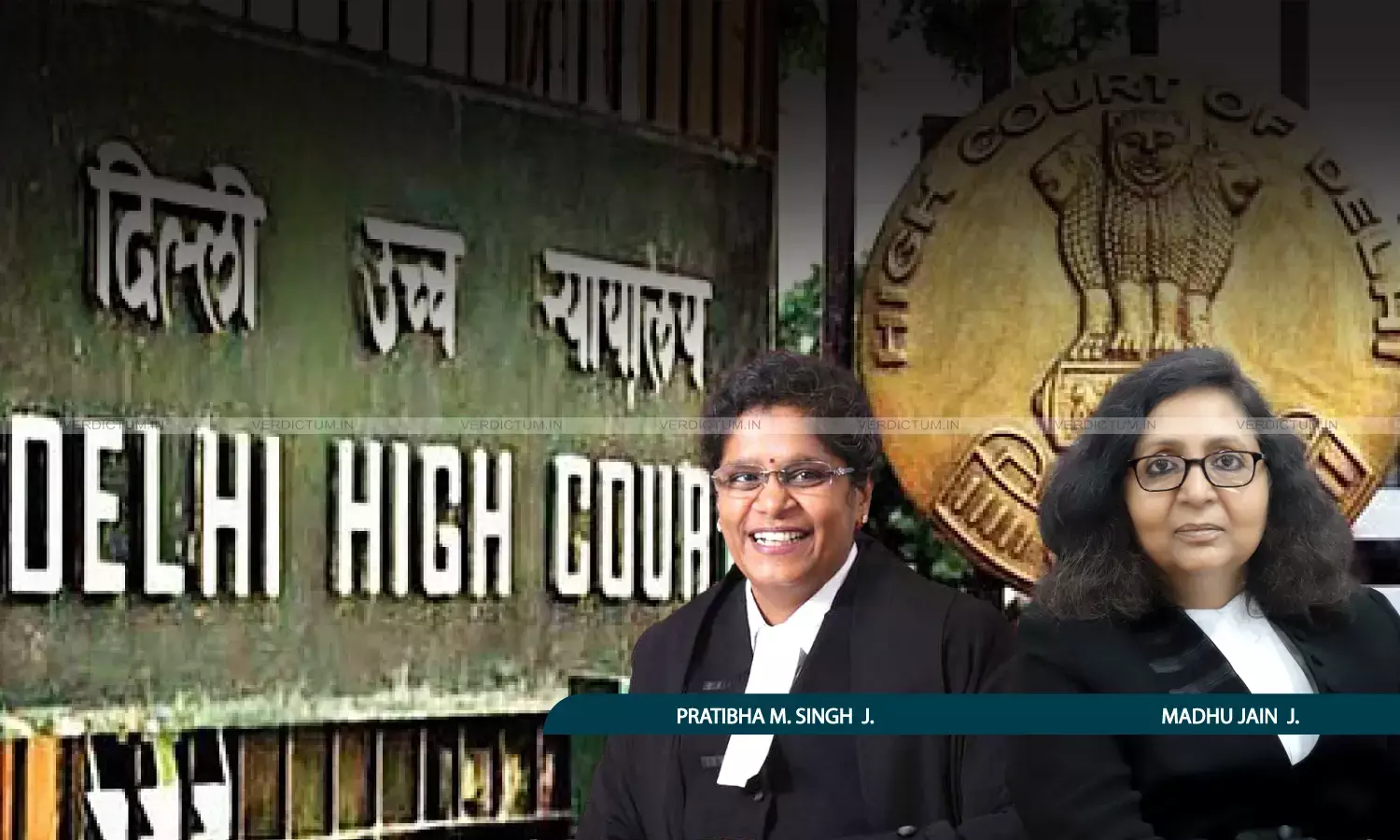
The Delhi High Court has held that where an accused's role in an alleged terrorist conspiracy is central and coordinating rather than peripheral, prolonged incarceration as an undertrial, even for a period as long as seventeen years, does not, by itself, entitle the accused to bail under the special threshold prescribed by Section 43D(5) of the Unlawful Activities (Prevention) Act, 1967.
The Court dismissed the third bail application of Mansoor Asghar Peerbhoy, accused of heading the media cell of the banned terrorist organisation "Indian Mujahideen" in connection with the 2008 Delhi serial bomb blasts that killed 26 people and injured 135 others.
The Court further held that where considerations of personal liberty come into direct conflict with the sovereignty, integrity and security of the nation, the latter must necessarily prevail, particularly in prosecutions involving organised terrorist activity where the accused is alleged to have occupied a position of technical and organisational centrality, a principle the Court extended from the Supreme Court's recent observations in State of Punjab v. Balraj Singh @ Billa 2026 INSC 618 concerning offences threatening national security.
A Division Bench comprising Justice Prathiba M. Singh and Justice Madhu Jain observed, “…where considerations of personal liberty come into conflict with the sovereignty, integrity and security of the nation, the latter must necessarily prevail, particularly in cases involving offences of the present nature…”.
“In addition, the Court cannot lose sight of the fact that the Appellant is a qualified computer professional. The role attributed to him is not that of a peripheral participant, but of a person who, according to the prosecution, occupied a position of significance within the media cell of the, ‘Indian Mujahideen’. For such brazen and blatant of acts of terrorism, for which the Appellant has been charged, the allegations against the Appellant pertain to offences of the gravest nature, for which the law prescribes severe punishments, extending even to the death penalty in appropriate cases”, the Bench further noted.
Advocate Mehmood Pracha appeared for the appellant and Ritesh Kumar Bahri, APP appeared for the respondent.
On September 13, 2008, serial bomb blasts at multiple locations in Delhi killed 26 people and injured 135. Five minutes before the explosions, an email titled MESSAGE OF DEATH claiming responsibility on behalf of Indian Mujahideen was sent to media houses.
The prosecution alleged that Mansoor Asghar Peerbhoy, then employed with Yahoo India and trained in ethical hacking, travelled to Mumbai with a co-accused, procured laptops used to send the email, and hacked a company's Wi-Fi network to facilitate its transmission. Forensic analysis allegedly linked the recovered laptops and PDF files to the email. Peerbhoy was arrested in September 2008 in a Mumbai case and formally arrested in the Delhi serial blasts case on March 9, 2009.
His bail applications were rejected by the Trial Court in 2015 and 2022, and by the Delhi High Court in 2024. While declining to interfere, the Supreme Court permitted him to renew his bail plea if the trial remained incomplete and later extended the timeline before directing the High Court to decide the fresh bail application.
The third bail application was dismissed by the Trial Court on July 19, 2025, giving rise to the present appeal.
The Court applied the threshold under Section 43D(5) as explained in National Investigation Agency v. Zahoor Ahmad Shah Watali (2019) 5 SCC 1, requiring only a prima facie assessment on broad probabilities rather than a detailed evidentiary analysis. It found the prosecution's case, including eyewitness identification by the laptop vendor, forensic recovery of matching PDF documents, and evidence of Wi-Fi hacking, sufficient to meet this threshold, distinguishing the appellant's role from co-accused Mohd. Hakim (who merely supplied ball bearings and was granted bail) as one of central, technical leadership.
Reconciling the competing lines of authority in Gulfisha Fatima, Syed Iftikhar Andrabi, and the pending larger-Bench reference in Tasleem Ahmad, the Court noted that the role attributed to the accused, and the prima facie strength of the case, and found that with the trial nearing conclusion (only two of 305 witnesses remaining), release at this stage risked adversely impacting the proceedings.
“Bearing in mind the gravity of the offences involved, which are serial bomb blasts, the qualifications of the Appellant, the role of the Appellant as a media cell head of the ‘Indian Mujahideen’, and the actual death toll that occurred, the long period of incarceration, in the opinion of the Court, would not by itself be sufficient to grant bail to the Appellant”, the Bench further observed.
The appeal was dismissed, and the impugned order refusing bail was upheld. The Trial Court was directed to conclude the trial within eight months as previously directed by the Supreme Court.
Cause Title: Mansoor Asghar Peerbhoy v. State Govt. of NCT of Delhi (Neutral Citation: 2026:DHC:5407-DB)
Appearances:
Appellant: Mehmood Pracha, Sanawar, Jatin Bhatt, Kshtij Singh and Sikander Raza, Advocates.
Respondent: Ritesh Kumar Bahri, APP, Divya Yadav and Lalit Luthra, Advocates.