

Manish Sisodia Joins Arvind Kejriwal In Withdrawing From Proceedings Before Justice Swarna Kanta Sharma
The former Deputy Chief Minister stated that he could no longer participate in the case while carrying a "serious apprehension" regarding the appearance of impartial justice.

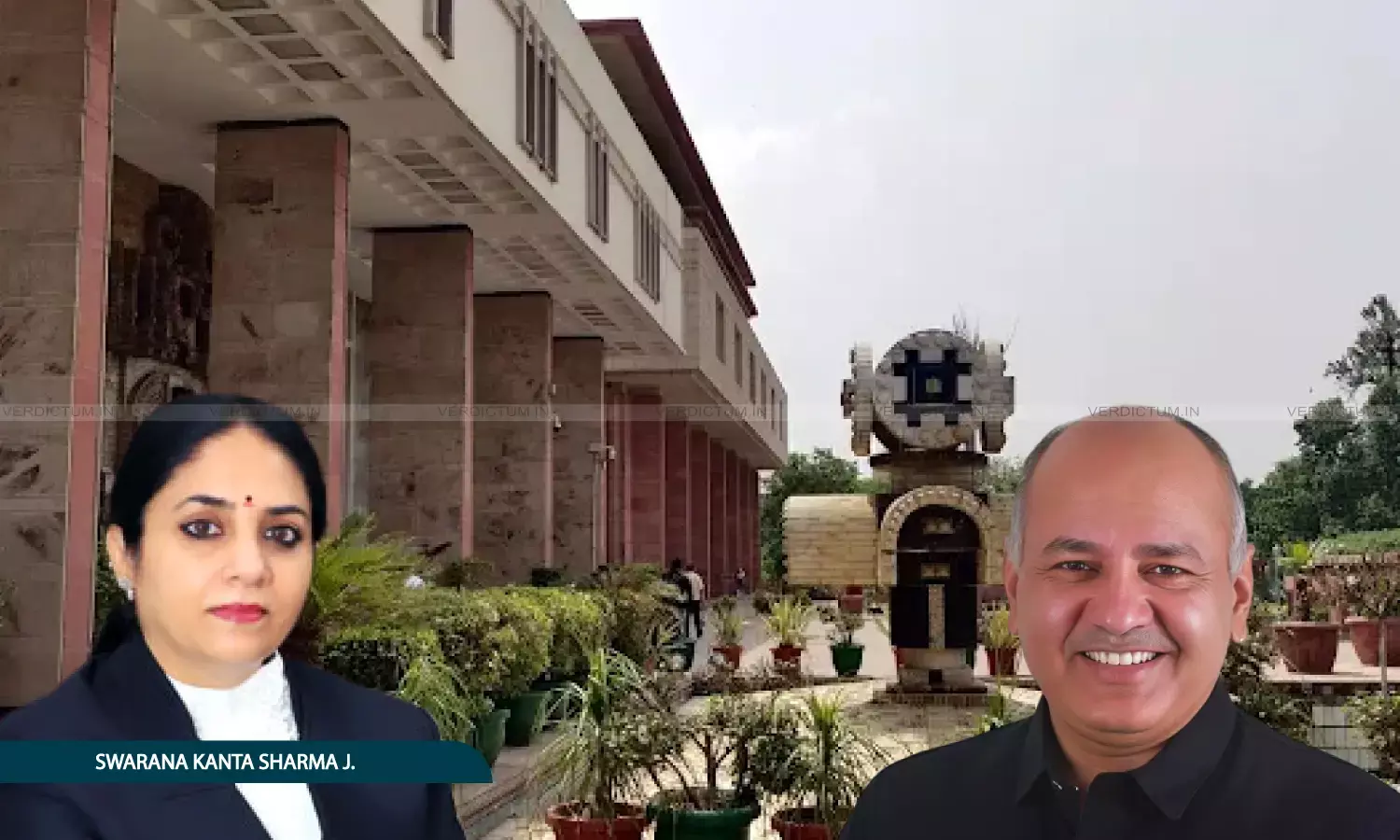
After Arvind Kejriwal, Manish Sisodia also wrote a letter to Justice Swarna Kanta Sharma expressing his decision to stop participating in the court proceedings.
He stated that he agreed with the stand taken by Arvind Kejriwal and based his decision on Mahatma Gandhi's principles of Satyagraha. Sisodia clarified that his letter was not an act of disrespect or a personal attack, but a matter of conscience.
Yesterday, Arvind Kejriwal also expressed his inability to participate in the ongoing Delhi excise policy case proceedings before Justice Swarna Kanta Sharma, stating that he cannot, in good conscience, "argue as though nothing is amiss."
In his letter, he said, "I am aware that some may misread such a step as an attack on the judiciary. I would again reiterate: this is incorrect. Constitutional maturity would have it that one may disagree with a particular course being followed in a particular case without losing faith in the institution as a whole. My respect for the judiciary remains undiminished. It is precisely because courts occupy so vital a place in our constitutional life that circumstances capable of shaking public confidence must be treated with the utmost seriousness...Accordingly, and for reasons substantially aligned with those set out by Mr. Arvind Kejriwal in his letter to you, I respectfully state that I too shall not participate in further proceedings in this matter before this Hon’ble Court, whether personally or through counsel."
He raised two primary concerns that troubled him. First, he noted that Justice Sharma's repeated attendance at programs hosted by the Akhil Bharatiya Adhivakta Parishad, an organization linked to the RSS. Second, he pointed to the professional engagement of the judge's children on Union Government panels. He emphasized that the children's work depended on the Solicitor General, who was the opposing counsel in his case, creating an appearance of closeness.
"Mr. Kejriwal’s letter factually sets out the professional dependence of your children on Mr. Tushar Mehta who is solely responsible for marking the large number of case dockets to them, particularly your son", he added.
Sisodia argued that the court's previous judgment missed the point by defending the right of judges' children to practice law, which no one had questioned. Instead, he claimed the real issue was the duty of candour and the need to maintain the appearance of impartial justice. He cited historical examples of other judges who voluntarily recused themselves or sought transfers when their relatives practiced in the same court to uphold ethical standards.
He said, "One’s conscience is bound to be more troubled when they actually realise that several Hon’ble Judges, over the past 75 years of our rich judicial history, have voluntarily recused themselves in similar situations, and that some, as pointed out in Mr. Kejriwal’s letter, have even sought transfer out of their State when their children began practising within the same jurisdiction. Such are the high standards of judicial ethics observed by several Hon’ble judges of our country. In the context of this case, such instances lead to a more troubling question: what were the minimum duties of candour and self-regulation that arose in the present case? Was there not, at the very least, a duty on the part of the parent-Judge to disclose these circumstances to the parties at the very threshold? Was there not a corresponding duty upon the Ld. Solicitor General, Mr. Tushar Mehta, to place these facts before the Court and the litigants with complete fairness? Was there not a duty to pause and ask whether a matter of such extraordinary political sensitivity demanded a higher degree of caution, disclosure, and institutional self-scrutiny?"
Sisodia also said that the judgment appeared to answer a question that he had never raised. He said that he had not questioned the children’s right to practise their profession. No citizen can and should do that. He added that his question was altogether different, and far more constitutional in character i.e. "when such circumstances exist, what is the duty of the parent-Judge to preserve, protect, and publicly sustain the appearance of impartial justice?"
Ultimately, Sisodia explained that he could no longer participate in the hearings without acting against his own conscience. He acknowledged that his decision might lead to adverse legal consequences, but he chose to accept that burden. He concluded by affirming his respect for the Constitution and the judiciary, clarifying that his dissent was limited strictly to the specific circumstances of this case.
He said, "I wish to make it clear that I do not question the professional ability of Your Ladyship’s children, nor do I make any allegation of personal wrongdoing against Your Ladyship or your family. But the standard by which public confidence in courts is sustained is not confined to actual wrongdoing but to situations where surrounding circumstances create a serious appearance of conflict of interest and bias. In a matter of such sensitivity, that appearance cannot be lightly dismissed."
Accordingly, he asked the Court to take the letter on record.
On April 2026, the Delhi High Court dismissed the application filed by Arvind Kejriwal seeking the recusal of Justice Swarna Kanta Sharma from the Delhi excise policy case, ruling that the plea failed to meet the legal standard of "reasonable apprehension" of bias.
In a detailed order, Justice Sharma observed that the applicant's grievances regarding the "extraordinary speed" of proceedings and her previous judicial findings were legally unsubstantiated, noting that the same judicial practices were never questioned when orders were passed in the party's favor.