

No Embargo On Enquiry Officer Being From Same Unit: Delhi High Court Upholds Dismissal Of CISF Officer For Marrying A Married Man
The Delhi High Court was considering a petition whereby the petitioner challenged the ex parte punishment order passed against her.

The Delhi High Court has upheld an ex parte punishment order passed against a CISF Sub-Inspector after noting that she deliberately absented herself from the enquiry proceedings. It was further noticed that despite being given full opportunity to cross-examine witnesses and produce her defence, she failed to participate in the proceedings.
The High Court was considering a petition whereby the petitioner challenged the ex parte punishment order directing her removal from service for marrying a man with a living spouse. The Petitioner also challenged the Appellate order as well as the Revisional order, whereby the punishment order passed by the Disciplinary Authority was upheld. The Petitioner sought reinstatement in service with continuity of service and all consequential benefits emanating therefrom.
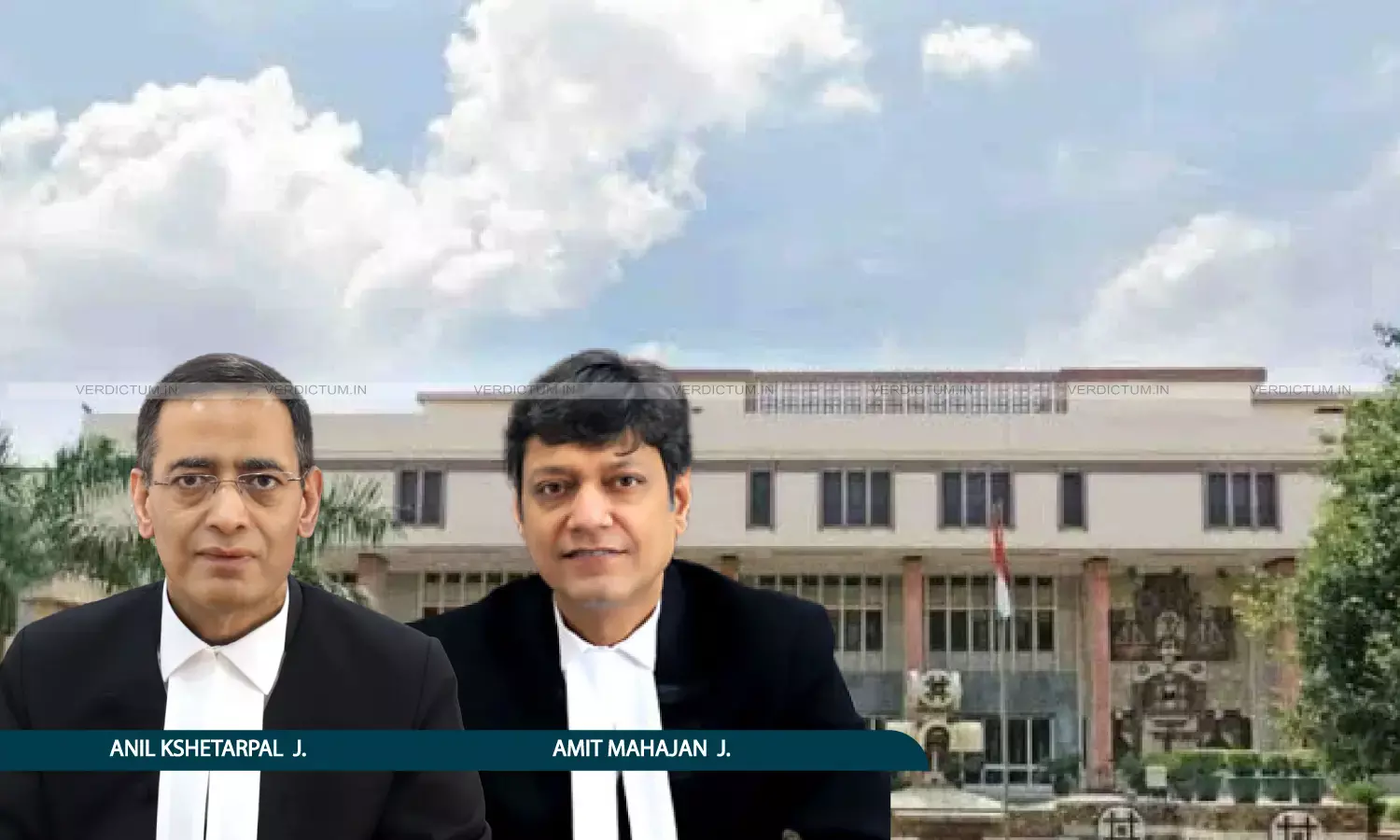
The Bench of Justice Anil Kshetarpal and Justice Amit Mahajan held, "Insofar as the ground in relation to the appointment of the Enquiry Officer from the same unit is concerned, it is pertinent to note that the CISF Rules, 2001, particularly Rule 36(2) does not put an embargo on the appointment of an Enquiry Officer from the same unit."
The Court further held, “Even otherwise, in the opinion of this Court, the grounds taken by the Petitioner pertaining to the Enquiry Officer belonging to the same unit as much as the punishment order being ex parte and crucial witnesses not being called have no legs to stand on. At the cost of repetition, as noted above, the Petitioner deliberately absented herself from the enquiry proceedings. Further, the Appellate order as well as the Revisional Order categorically record that the Petitioner was given full opportunity to cross examine witnesses and produce her defense, however, she failed to participate in the enquiry proceedings. It was further noted that despite ample opportunities to present her case, the Petitioner did not turn up to attend the enquiry proceedings much less to controvert the allegations of charge levelled against her. The grounds thus pressed by the Petitioner at this juncture do not bolster her case.”
Advocate Krishna Sharma represented the Petitioner, while Central Govt Standing Counsel Vikram Jetly represented the Respondent.
Factual Background
The Petitioner was working as a Sub-Inspector at the CISF, Chennai Unit. The Petitioner was issued a Charge Memorandum under Rule 36 of the CISF Rules, 2001, by the Disciplinary Authority. The charges included the Petitioner entering into a marriage with a man when his first marriage was already subsisting. The Petitioner was also charged with dereliction of duty by deserting the Unit Line and duty station. The Petitioner was further charged with making a false claim that she had applied for 3 years' extraordinary leave, whereas no such application was submitted. Thereafter, the Departmental Enquiry was conducted, and the charges against the Petitioner were found to be proved. The Disciplinary Authority awarded the penalty of “removal from service” to the Petitioner. Aggrieved thereby, the Petitioner preferred an appeal, and the same also came to be dismissed.
The Petitioner’s revision petition praying for quashing of the charges framed against her was dismissed by the Revisional Authority. Aggrieved thereby, the Petitioner filed the petition.
Reasoning
The Bench, at the outset, reiterated that while exercising jurisdiction under Article 226 of the Constitution, the Court does not sit in appeal over the orders passed by the concerned authorities. “The scope of judicial review is limited to examining the decision-making process and not the correctness of the decision on merits”, it added.
Dealing with the ground in relation to the appointment of the Enquiry Officer from the same unit, the Bench noted that the CISF Rules, 2001, particularly Rule 36(2), do not put an embargo on the appointment of an Enquiry Officer from the same unit. “Barring the fact that the Enquiry Officer belonged to the same unit, no other ground has been taken by the Petitioner to paint biasness on the Enquiry Officer”, it further stated.
The Bench noted that the Disciplinary Authority found that the Petitioner had married a man who already had a living spouse, thereby violating Rule 18 of the CISF Rules, 2001. It was also noticed that despite ample opportunity, the Petitioner never turned up to attend the enquiry proceedings or came forth to cross-examine the witnesses or contest the allegations levelled against her. Regarding the other two charges, it was found that the Petitioner did not turn up for duty and was absent from the duty station.
The Bench further noticed that during the course of the departmental enquiry, other witnesses, including the Coy Commander, were also examined, who denied having received any leave application from the Petitioner for 3 years' extraordinary leave. On the basis of the aforesaid, all three charges levelled against the Petitioner were found to be proved.
The Bench also held that the punishment order passed by the Disciplinary Authority was based on cogent factual findings, and the same was also upheld by the Appellate Authority and the Revisional Authority. Thus, finding no ground warranting the exercise of writ jurisdiction, the Bench dismissed the petition.
Cause Title: Mamta Chaudhary v. Union of India (Neutral Citation: 2026:DHC:4986-DB)
Appearance
Petitioner: Advocates Krishna Sharma, Devashish Chauhan, Jasleen Sandha
Respondent: Central Govt Standing Counsel Vikram Jetly, Advocates Shreya Jetly, A C J.P Singh, Inspector Yashpal, SI Rotash CISF