

Multiple FIRs Arose From One Continuous Transaction: Delhi High Court Quashes Two FIRs Against AAP MLA Kuldeep Kumar Over 2021 Tiranga Yatra
The Bench applied "test of sameness” and held that rally passing through different police jurisdictions does not convert single procession into separate offences; invoked double jeopardy after conviction in connected FIR.

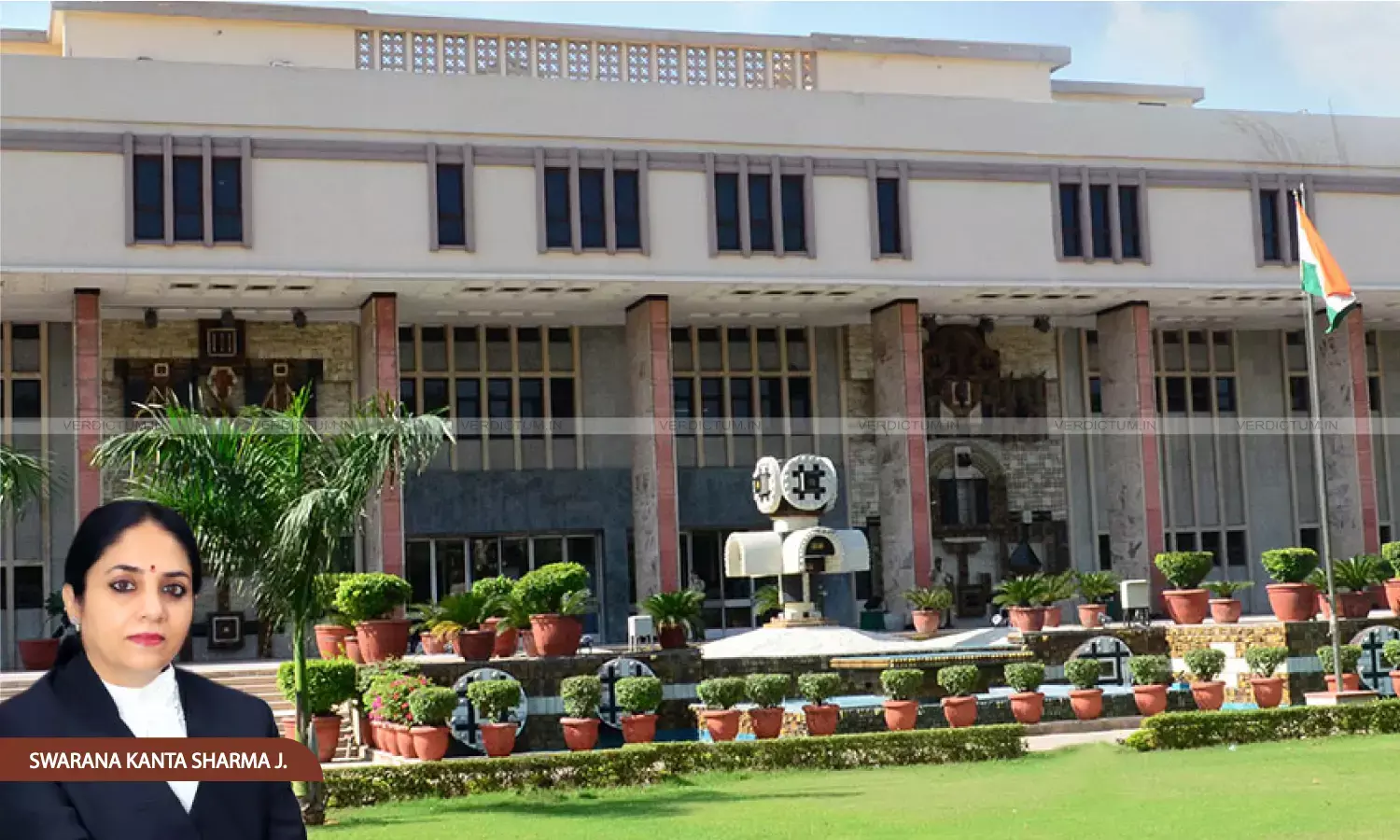
The Delhi High Court has quashed two FIRs registered against Kondli MLA Kuldeep Kumar (AAP) and others in connection with a "Tiranga Yatra" held on Independence Day, 2021, holding that all three FIRs arising from the same procession constituted one continuous transaction under the settled "test of sameness", and that continuing prosecution in the remaining FIRs after conviction in a connected one would violate the constitutional protection against double jeopardy.
Applying the triple test of unity of purpose, proximity of time and place, and continuity of action, the Court held that the mere fact that the rally passed through the territorial jurisdiction of different police stations at different points of the same afternoon could not convert a single continuing procession into multiple independent offences under Section 188 IPC, each warranting a separate FIR.
A Single Bench of Dr. Justice Swarana Kanta Sharma observed, “In the considered opinion of this Court, the facts of the present case satisfy the „test of sameness‟ as there is – unity of purpose and design, proximity of time and place, and continuity of action. The three FIRs arise from one continuous transaction, i.e. the Tiranga Yatra taken out on 15.08.2021, and the FIRs refer to the alleged violation of the prohibitory orders and the COVID-19 protocols at different points of time as the same procession moved through different localities. The differences in the time and place of reporting by different police officers of different police stations, do not, in the facts of the present case, change the character of the offence committed by taking out the Yatra in violation of prohibitory orders and violating the COVID-19 protocols, which is a single transaction”.
Advocate Rishikesh Kumar appeared for the petitioners and Naresh Kumar Chahar, APP appeared for the respondent.
The case arose from a Tiranga Yatra taken out on August 15, 2021 by Kuldeep Kumar, then MLA from Kondli, allegedly in violation of COVID-19 restrictions then in force.
Three separate FIRs were registered at three different police stations, New Ashok Nagar, Kalyanpuri and Ghazipur, each alleging violation of prohibitory orders as the rally moved through different localities between 3:00 PM and 5:15 PM.
Proceedings in the New Ashok Nagar FIR had already culminated in conviction of Kuldeep Kumar and co-petitioner Ravinder, who were fined Rs. 1,600 each. The petitioners sought quashing of the remaining two FIRs, contending they arose from the same incident and that continued prosecution would amount to double jeopardy, while the State argued each police jurisdiction witnessed a distinct, fresh act of disobedience justifying separate FIRs.
Surveying the law on successive FIRs from T.T. Antony v. State of Kerala, Babubhai v. State of Gujarat, Anju Chaudhary v. State of U.P., and the Supreme Court's recent rulings, the Court reiterated that while a second FIR is not absolutely barred, it cannot be sustained where it relates to the same incident or the same transaction as an earlier FIR, a determination to be made by applying the "test of sameness."
On facts, the Court found unity of incident (a single Tiranga Yatra, not multiple rallies), continuity of action (the prosecution itself did not allege the procession had dispersed and reassembled), close proximity of time and place (all incidents within roughly two hours and 1–2 kilometres of each other), identical nature of allegations and the same notifications alleged to be violated, and overlapping accused persons across the FIRs. It rejected the State's contention that entry into a new police jurisdiction constituted a fresh, independent offence, holding this did not alter the character of what remained one continuing transaction.
Having found the FIRs to arise from a single transaction, the Court held that permitting the remaining prosecutions to continue after conviction in the connected FIR would subject the petitioners to prosecution and punishment more than once for the same offence, contrary to Article 20(2) of the Constitution of India and Section 300 CrPC.
The Court clarified that its ruling did not lay down a blanket rule against multiple FIRs for Section 188 violations, noting that a second FIR could still be maintainable where the subsequent incident was genuinely distinct, involved a counter-version, or revealed a larger conspiracy, categories into which the present case did not fall.
Cause Title: Kuldeep Kumar v. State (NCT of Delhi) (Neutral Citation: 2026:DHC:6236)
Appearances:
Petitioners: Rishikesh Kumar, Rajneesh Bhaskar and Atul Kumar, Advocates.
Respondent: Naresh Kumar Chahar, APP, for the State.