

Workman Must Prove Legality Of His Induction Before Challenging Termination: Delhi High Court Sets Aside DDA Reinstatement Award
The Court held that burden of proving employer-employee relationship lies on workman & distinguished proof of physical work and proof of lawful appointment.

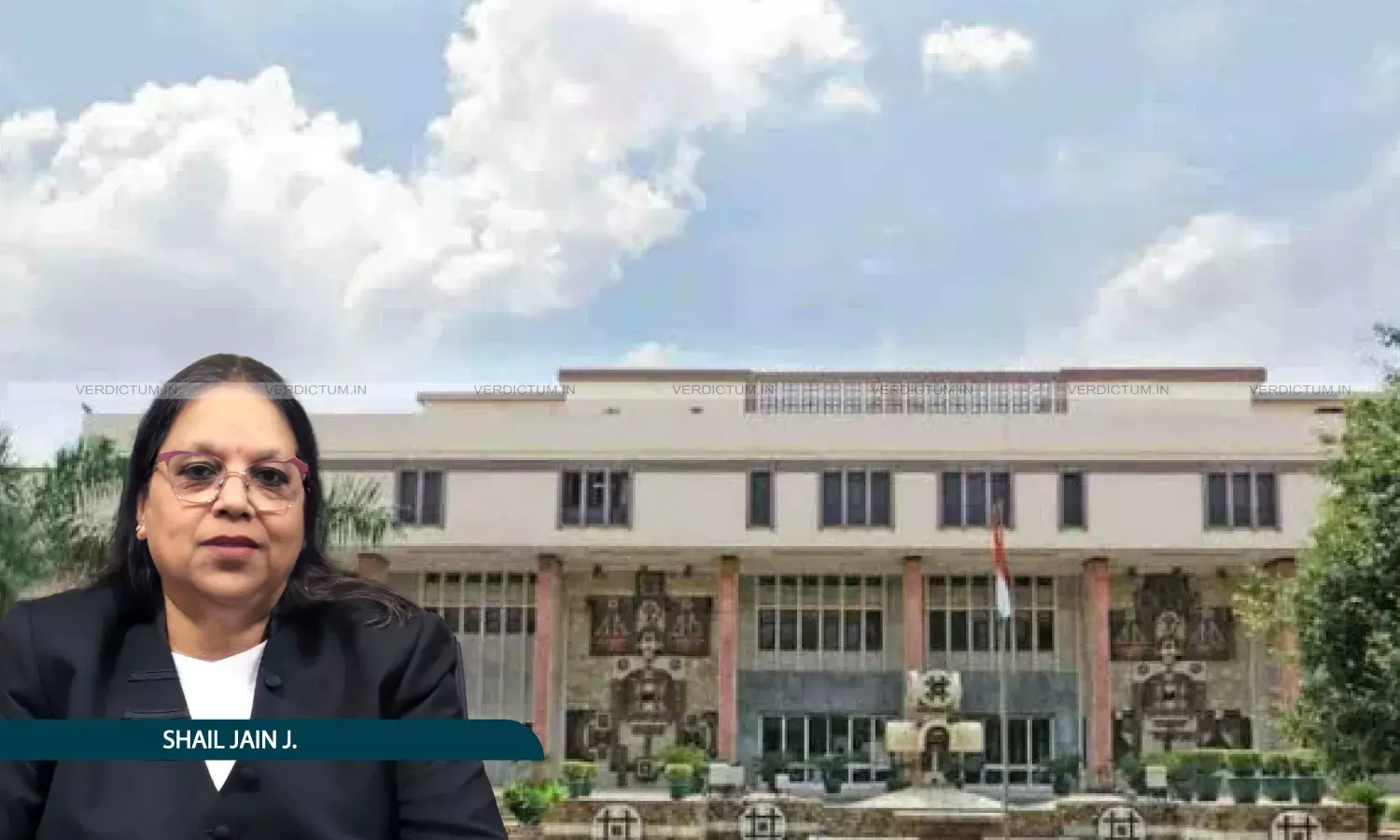
The Delhi High Court has held that before a workman can invoke the protections of the Industrial Disputes Act, 1947 against termination, he must first discharge the foundational burden of establishing that his entry into service was pursuant to a lawful appointment, and that mere proof of having physically worked or drawn wages does not, by itself, establish this anterior fact.
The Court further held that in a batch of connected disputes arising from identical facts, six Labour Courts had correctly required workmen to prove the legality of their induction before examining the legality of termination, while a solitary Labour Court had erred by inverting this burden and requiring the Delhi Development Authority to disprove employment, a divergence the Court found to be a manifest error of law warranting correction under Articles 226 and 227 of the Constitution of India.
A Single Bench of Justice Shail Jain observed, “…Merely because a person is shown to have discharged duties for a certain period or even received remuneration would not, by itself, establish that he acquired the legal status of a workman under the Industrial Disputes Act. The Act protects persons whose engagement flows from a legally recognisable contract of employment. Where the very genesis of such relationship is disputed, the workman must first establish the legality of his induction into service before invoking the statutory consequences flowing from termination”.
“…Unless the foundational appointment itself is proved, subsequent office orders, transfers, postings or salary entries could only demonstrate their continuance in service; they cannot independently establish that such service originated through a lawful process, or that it thereafter continued legally” the Bench said.
Advocate Sarvesh Bisaria appeared for the petitioners and Advocate Arun Birbal appeared for the respondent.
In the matter, the Bench was hearing a batch of connected writ petitions filed by workmen and by the Delhi Development Authority (DDA), arising from divergent Labour Court awards concerning the same set of circumstances.
The workmen, engaged as Mates, Beldars, Chowkidars and Security Guards, claimed to have joined DDA's service around 1982, been regularised in 1985, and had their services orally discontinued around 1990 without a charge-sheet, enquiry, or retrenchment compensation. The DDA disputed the very existence of any lawful appointment, contending that the workmen had entered service on the strength of forged transfer and relieving orders, a matter which had led to registration of FIR and a CBI FIR revealing a wider pattern of forged appointments across its establishments.
References under Section 10(1)(c) of the Industrial Disputes Act were made to different Labour Courts. Six Labour Courts dismissed the workmen's claims for want of proof of lawful appointment, while a solitary award, in the Bhan Prakash Sharma matter, directed reinstatement with back wages, reasoning that the DDA had failed to prove the alleged forgery.
On the rival awards, the Court held that proof of physically working in an establishment is distinct from proof of lawful induction into service, and that the workmen across the batch had failed to produce any contemporaneous document evidencing their 1982 appointment or 1985 regularisation, with documentary evidence commencing only after the disputed transfer orders.
The Court held that the Bhan Prakash Sharma award had erroneously shifted the burden onto the DDA before the workmen discharged their own, and had treated post-induction departmental records as sufficient proof of lawful appointment, contrary to settled Supreme Court authority on burden of proof in industrial adjudication.
“Significantly, while the workmen repeatedly asserted that they entered service in the year 1982, no contemporaneous document evidencing such initial appointment was brought on record. Neither before the Labour Court nor before this Court has any workman produced an appointment order, joining report, muster roll, attendance register, wage register, salary slip or any contemporaneous official record pertaining to the period immediately following the alleged appointment in 1982”, the Bench said.
“This omission assumes considerable significance. The dispute in the present batch is not with regard to the nature of duties allegedly performed by the workmen after they came to be shown in the records of the DDA, but with regard to the legality of their very induction into service. Consequently, the most material evidence which the workmen were required to produce was evidence demonstrating the manner in which they initially entered the establishment of the DDA. It is precisely this foundational evidence which is conspicuously absent throughout the record”, the Bench further noted.
Accordingly, the Court allowed the DDA's petition and set aside the award dated December 07, 2010 directing reinstatement, while dismissing all connected writ petitions filed by workmen challenging awards that had rejected their claims, with no order as to costs.
Cause Title: Jai Prakash & Ors. v. D.D.A. (Neutral Citation: 2026:DHC:5970)
Appearances:
Petitioners: Sarvesh Bisaria and Ashish Azad, Advocates.
Respondent: Arun Birbal, Advocate.