

FCI Cannot Recover Excess Payments From Retirees After Decades While Withholding Benefits Under Same CDA–IDA Regime: Delhi High Court
The dispute arose from FCI's decision to retrospectively convert certain employees from the CDA pattern to the IDA pattern based on promotions received after January 1, 1989.

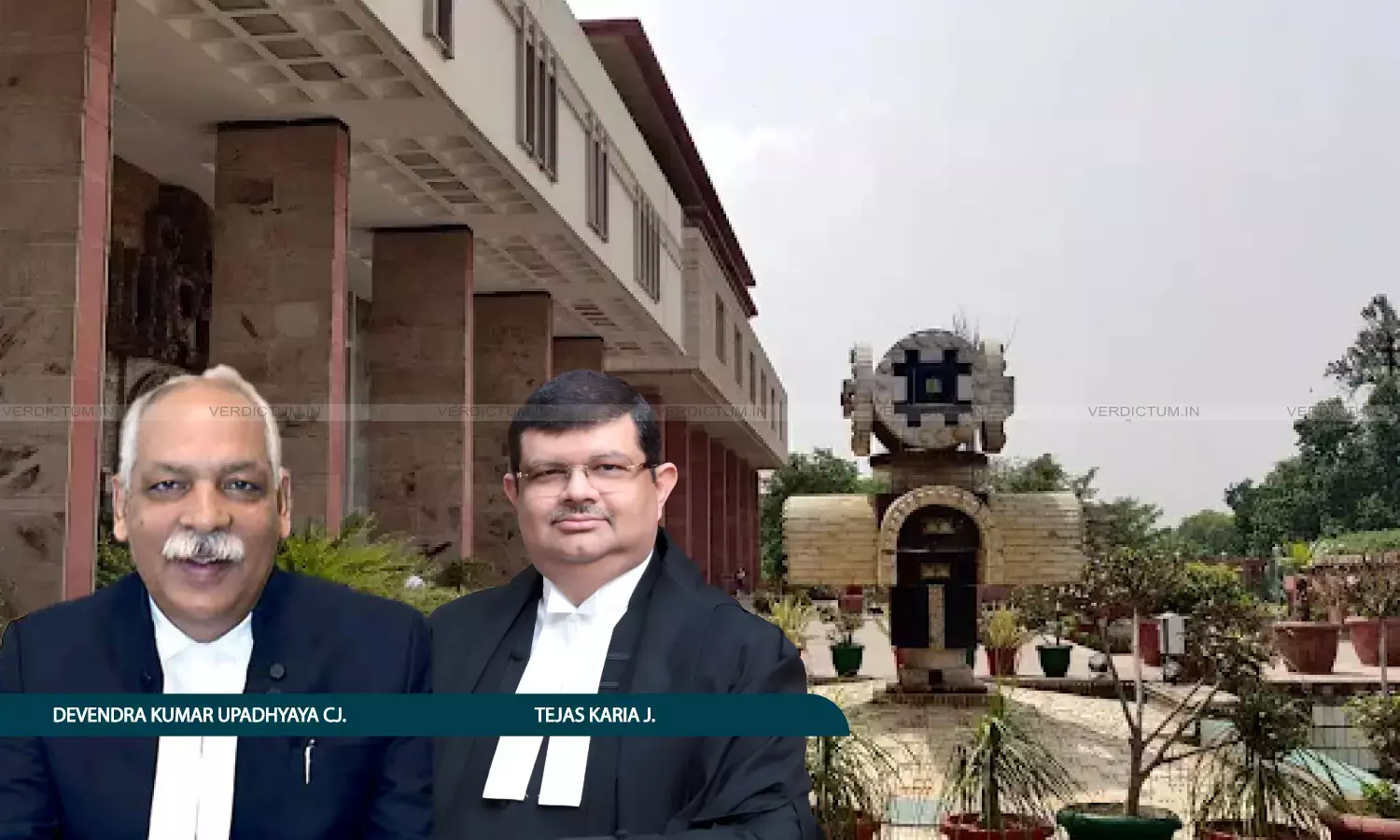
The Delhi High Court has upheld a common judgment granting relief to several current and retired employees of the Food Corporation of India (FCI), holding that the corporation could not selectively implement the Central Dearness Allowance (CDA) to Industrial Dearness Allowance (IDA) pay conversion policy to recover alleged excess payments while simultaneously withholding benefits payable to employees.
It was observed that the alleged excess payments were not attributable to any fraud, misrepresentation, or concealment by the employees but resulted from internal administrative decisions of the corporation.
The Bench, accordingly, dismissed a batch of appeals filed by FCI against employees who had challenged the manner in which the corporation implemented the CDA-to-IDA pay fixation regime. The dispute arose from FCI's decision to retrospectively convert certain employees from the CDA pattern to the IDA pattern based on promotions received after January 1, 1989.
A Division Bench comprising the Chief Justice Devendra Kumar Upadhyay and Justice Tejas Karia observed, “The approach adopted by the FCI in partially implementing the IDA pattern only where it was entitled to recover excess amounts paid to employees, while refraining from extending the corresponding benefits to employees who were entitled thereto, is unsustainable in law. By placing reliance upon internal Circulars dated 24.05.2013 and 05.01.2015, the FCI cannot justify withholding payments which are otherwise lawfully due. The FCI is not entitled to arbitrarily implement the IDA pattern in a manner that enables it to secure recoveries while withholding benefits due to its employees”.
“…It is well settled that recovery from retired employees, after the lapse of several years and in the absence of any wrongdoing on their part, is arbitrary and inequitable. Once such payments have remained undisturbed over a considerable period and have attained finality, coercive recovery after retirement would be unduly harsh and oppressive…”, the Bench further directed.
Advocate Purushottam Sharma appeared for the appellant and Advocate G.D. Mishra appeared for the respondent.
The Court upheld the Single Judge's directions restraining FCI from recovering amounts from retired employees whose pay had been revised decades after retirement.
Significantly, the Bench held that recovery from retired employees after a long lapse of time would be arbitrary, oppressive, and contrary to the principles laid down by the Supreme Court. The Court further noted that the executive instructions relied upon by FCI effectively deprived employees appointed before January 1, 1989 of the option between the CDA and IDA patterns that had been recognised by the Supreme Court in Jute Corporation of India Officers Association v. Jute Corporation of India Ltd (1990) 3 SCC 436.
The Court also rejected FCI's justification for withholding payments and arrears payable to employees who stood to benefit from IDA re-fixation. It found that while FCI aggressively pursued recovery wherever re-fixation produced an alleged excess payment, it simultaneously kept payment cases pending through internal circulars issued in 2013 and 2015.
“We are of the considered view that a selective and inconsistent application of policy is wholly impermissible. A State instrumentality is bound to act fairly, reasonably, and in a non-discriminatory manner, and cannot adopt a position that permits it to retain the benefits of a policy while simultaneously denying corresponding entitlements accruing to its employees. The implementation of a welfare scheme cannot be conditioned upon the unilateral advantage of the employer, particularly where such an approach results in unequal treatment and prejudice to its employees. Any policy implementation that operates solely to the benefit of the organisation while depriving employees of the advantages flowing therefrom would be arbitrary and violative of the Constitution of India”, the Bench said.
Calling such an approach "selective and inconsistent", the Bench held that a State instrumentality cannot implement a policy only when it benefits the employer while denying corresponding advantages to employees.
“By relying upon internal circulars, a State instrumentality cannot indefinitely withhold the benefits flowing from a duly approved policy. The mere possibility of difficulty in effecting restitution of any excess amounts that may subsequently be found payable does not confer upon a State instrumentality the authority to deny or defer benefits accruing under a pay scale sanctioned by the Central Government. The implementation of a Central Government pay scale must be fair, uniform, and non-arbitrary. Any selective or arbitrary application thereof is violative of Article 14 of the Constitution of India and cannot be sustained in law”, the Bench said.
Accordingly, the Court upheld the directions requiring refund of recovered amounts, release of withheld retiral dues, payment of arrears and consequential benefits, and dismissal of all FCI appeals.
Cause Title: Food Corporation Of India v. Jagneshwar Prasad Gupta & Ors. (Neutral Citation: 2026:DHC:5063-DB)
Appearances:
Appellant: Purushottam Sharma, Vani Vyas and Prakhar Singh, Advocates.
Respondent: G.D. Mishra, Advocate.