

Taking Past Service Record Into Account To Aggravate Punishment Without Prior Disclosure Violates Natural Justice: Delhi High Court
The Court upheld reinstatement of a DTC bus conductor over lack of cash verification but denied back wages in light of his past record, reflecting similar lapses.

The Delhi High Court has held that relying on prior infractions to impose a more severe punishment without granting the workman a genuine opportunity to explain constitutes a fatal infraction of the principles of natural justice.
In the cross-appeals regarding consequential relief, the Bench affirmed that while serious procedural lapses vitiate a termination order, a workman's past performance remains a relevant factor when balancing equities for financial remedies. The Court held that the lower tribunals correctly exercised their discretion by directing full reinstatement with continuity of service and retirement benefits to remedy the unfair dismissal, while concurrently declining the award of back wages as a justified consequence of the conductor’s overall unsatisfactory service history.
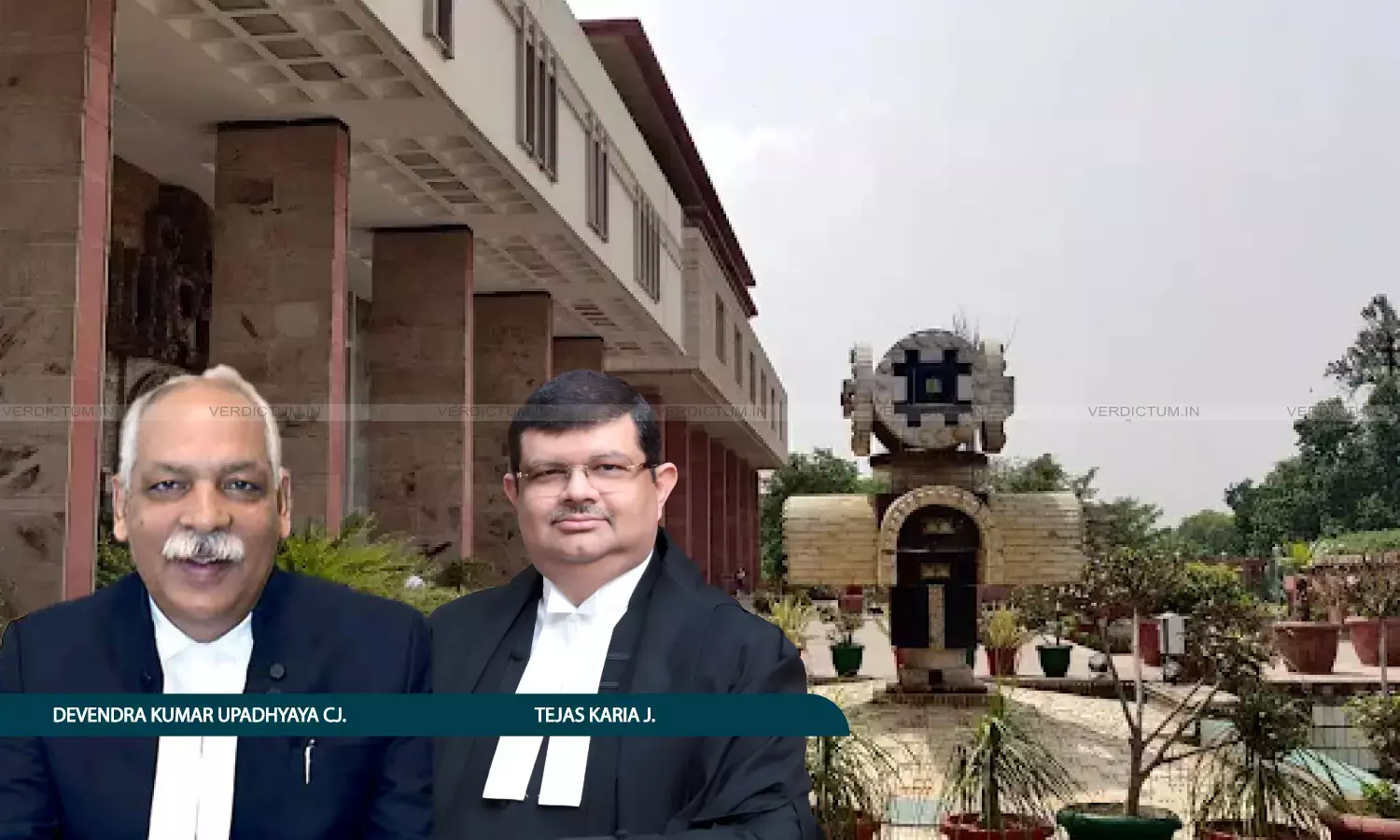
A Division Bench comprising Chief Justice Devendra Kumar Upadhyaya and Justice Tejas Karia observed, “…most significantly, the chargesheet itself stated that the past service record of the Respondent would be taken into consideration while passing the final order, yet the said past record was not enclosed therewith and no opportunity was afforded to the Respondent to explain or rebut the same. The reliance upon a person’s past record for the purpose of imposing a more severe punishment, without granting such person an opportunity to address the same, constitutes a settled infraction of the principles of natural justice”.
Advocate Rahul Kumar Verma appeared for the appellant and Advocate Vikram Singh appeared for the respondent.
The brief facts of the case pertained to an incident on April 24, 1992, when a vigilance checking squad intercepted a Delhi Transport Corporation bus. The squad found ten passengers traveling without tickets who claimed they had paid their fares to the conductor.
Although un-punched tickets were recovered from his possession, the vigilance squad failed to conduct a physical verification or audit of the actual cash held by the conductor at the time of intercepting the vehicle.
The management initiated a domestic enquiry and subsequently removed the conductor from service on October 19, 1994. The workman challenged his termination before the Labour Court, which set aside the removal in 2010 due to procedural unfairness and directed reinstatement with continuity of service but without back wages.
The management challenged this award through a writ petition, which was dismissed by a Single Judge in May 2024, prompting the corporation to prefer the present Letters Patent Appeal.
The Bench observed that the statements of the passengers suffered from material inconsistencies regarding destinations and fares. It held that without checking the conductor's cash balance, the charge of financial misconduct could not be conclusively proven. Furthermore, the employer failed to supply the logbook and passenger statements.
“…in the absence of verification of the cash in the Respondent’s possession, the DTC cannot be said to have discharged its burden of proving the charge of ‘misconduct’ by reliable and consistent evidence”, the Bench held.
“…we are of the considered view that the Impugned Order correctly appreciates both the factual matrix and the governing legal principles. The learned Single Judge, in our opinion, rightly upheld the findings of the learned Labour Court that the enquiry proceedings were vitiated and that the Appellant had failed to prove the charge of ‘misconduct’ before the learned Labour Court by cogent, reliable and consistent evidence”, the Bench said.
Accordingly, the Court found no legal infirmity or perversity in the lower orders and dismissed the management's appeal. The Bench upheld the direction to reinstate the respondent with full continuity of service, seniority, pension, and gratuity, while confirming that he is not entitled to any back wages.
Cause Title: Delhi Transport Corporation v. Ram Avtar Sharma (Neutral Citation: 2026:DHC:4634-DB)
Appearances:
Appellant: Rahul Kumar Verma, Raj Shekhar Awasthi, and Bhumi Panjwani, Advocates.
Respondent: Vikram Singh, Advocate.