

“Family Tree & Maps Common To Multi-Generational Sagas”: Delhi High Court Dismisses Author Sivasundari Bose’s Infringement Suit Against David Davidar
Bose had alleged that Davidar’s novel, 'The House of Blue Mangoes', was plagiarised from her unpublished manuscript titled 'Golden Stag'.

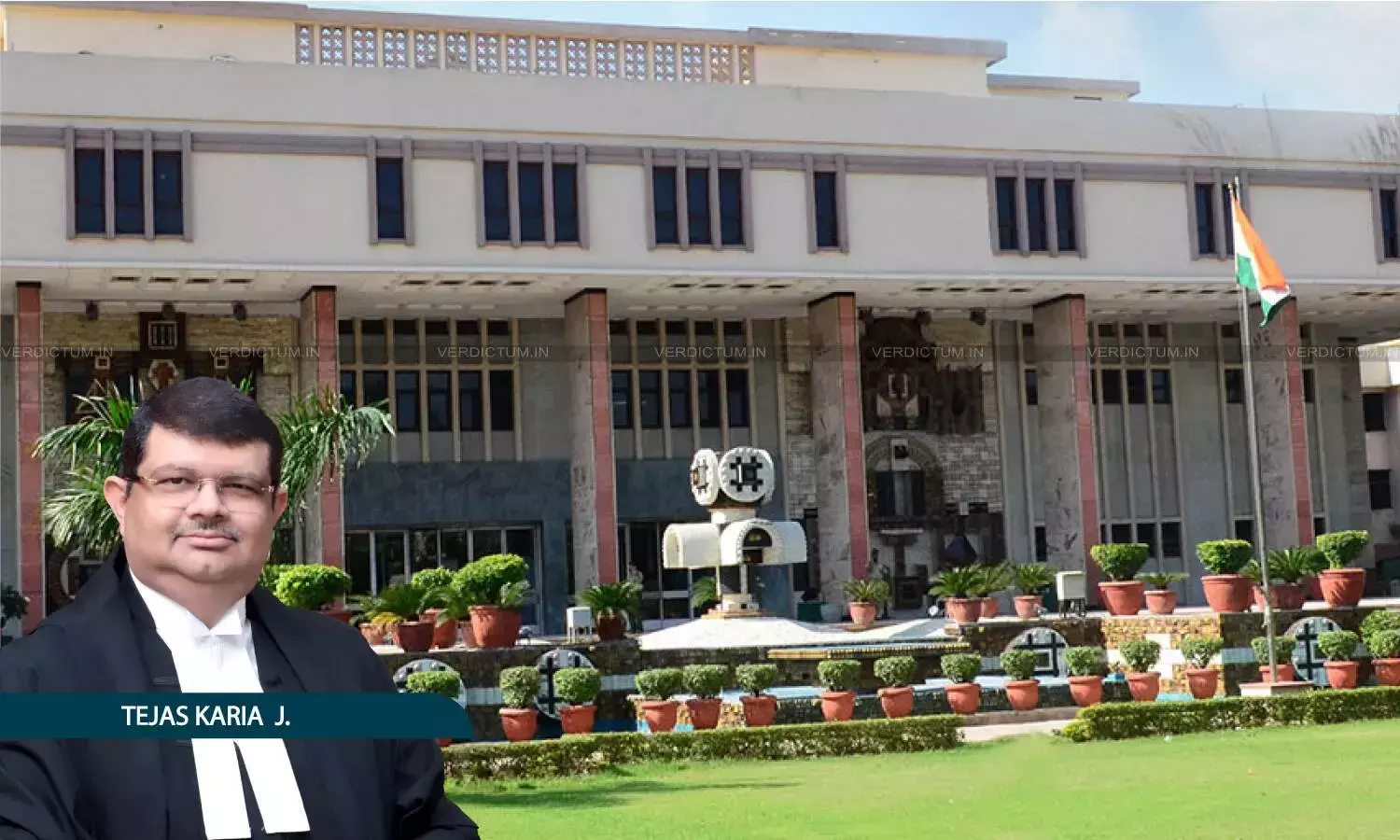
The Delhi High Court while noting that elements such as family trees, maps, and historical settings are common features of multi-generational sagas and do not qualify for copyright protection, dismissed the copyright infringement claims brought by author Sivasundari Bose against noted publisher and writer David Davidar, ending a legal dispute that spanned over a decade.
The matter pertained to the allegations by Bose that Davidar’s novel, 'The House of Blue Mangoes', was plagiarised from her unpublished manuscript titled 'Golden Stag'. The Court emphasised that copyright law protects the specific expression of an idea, not the idea itself, nor the historical facts or stock motifs inherent to a particular literary genre.
Justice Tejas Karia observed, “The differences between David's Book and Sivasundari's Book significantly outweigh any purported similarities, which alone are inadequate to support a claim of copyright infringement in favour of Ms. Sivasundari Bose. The inclusion of maps and family trees is common in multi-generational sagas and cannot be uniquely attributed to Ms. Sivasundari Bose. Therefore, she does not have exclusive copyright over such elements”.
“…Her accusation that Mr. David Davidar copied the family tree from Sivasundari’s Book is not only hypocritical but factually baseless. Mr. David Davidar’s inclusion of a family tree and geographical map are devices commonly used in multi-generational novels to aid reader comprehension, and their mere inclusion cannot be monopolised by Ms. Sivasundari Bose…”, the Bench further observed.
Advocate Pravin Anand appeared for the plaintiff and Advocate Ritu Singh Mann appeared for the defendant.
Bose claimed she had submitted her work to Penguin India in 2000, while Davidar was the CEO, providing him with access to her story. She pointed to several similarities, including the South Indian setting, the inclusion of a family tree and maps, and the depiction of historical events like the smallpox epidemic and local famines. Davidar denied the allegations, asserting that his novel was an original work based on his own family history and extensive research.
The legal battle began in 2011 when Davidar filed a suit against groundless threats of legal proceedings. Bose subsequently filed her own suit for copyright infringement and breach of trust in 2012.
Therefore, the two matters were consolidated, and the Court examined whether Davidar had access to the manuscript and if the two works were "substantially similar" under the law.
The Court noted that Bose, failed to produce the original manuscript she claimed to have sent in 2000, which weakened the basis for a direct comparison. Furthermore, the Court held that Bose could not prove that Davidar had actually read or accessed the specific details of her work during his tenure at the publishing house.
Addressing the alleged similarities, the Court observed:
Genre Elements: Inclusions like family trees and regional maps are standard for historical family sagas and are considered elements that are indispensable to telling a story in that genre.
Historical Facts: Descriptions of historical events like the caste-based riots or the smallpox epidemic are matters of public record and cannot be monopolized by one author.
Expression v. Idea: The Court found that while the "theme" of a family saga might be similar, the narrative style, character depth, and word count of Davidar’s novel were vastly different from Bose's work.
“…Historical content, regional and time setting are public domain material and not a subject matter of copyright protection and themes like caste of the family, number of generations and social / political / religious trends etc., are also public domain material not subject to copyright protection that are to be found in various books and were prevalent during that period in the region”, the Bench noted.
“No author can claim exclusive rights over historical or cultural facts that belong to the public domain. Both Mr. David Davidar and Ms. Sivasundari Bose belong to the Nadar community of Tamil Nadu. Both were born and grew up in the coastal regions of Tamil Nadu and so share a common historical, cultural, and societal heritage. Inevitably, certain customs and traditions and religious observances appear in both books although there is no resemblance whatsoever in the way they are described or used in the narrative. Both authors are writing about Tamil Nadu's early 20th-century history, although only 46 pages of Ms. Sivasundari’s Book correspond to the period covered by David’s Book, thus there is bound to be some overlap in terms of historical events, personalities, customs, and traditions of the time. There is no similarity in the way these uncopyrightable historical and cultural facts are used”, the Bench further noted.
The Court dismissed the infringement suit, declaring that no case of plagiarism was made out against Davidar.
However, the Court also dismissed Davidar's claims regarding defamation, finding that Bose's actions were not motivated by malice. All pending applications were disposed of, and both parties were directed to bear their own costs.
Cause Title: David Davidar v. Sivassundari Bose (Neutral Citation: 2026:DHC:3666)
Appearances:
Plaintiff: Pravin Anand, Prachi Agarwal, Medha Singh and Manan Mondal, Advocates.
Defendant: Ritu Singh Mann, Sohrab Singh Mann and Shivani, Advocates.