Delhi High Court Issues Time-Bound Directions On Staff Vacancies, ICU Helpline, Hospital Heads And Equipment Across 38 Government Hospitals
The Court directed the Delhi Government to add ten round-the-clock helpdesk lines for the ICU-bed helpline and publish the contact details of referral coordinators for every hospital.
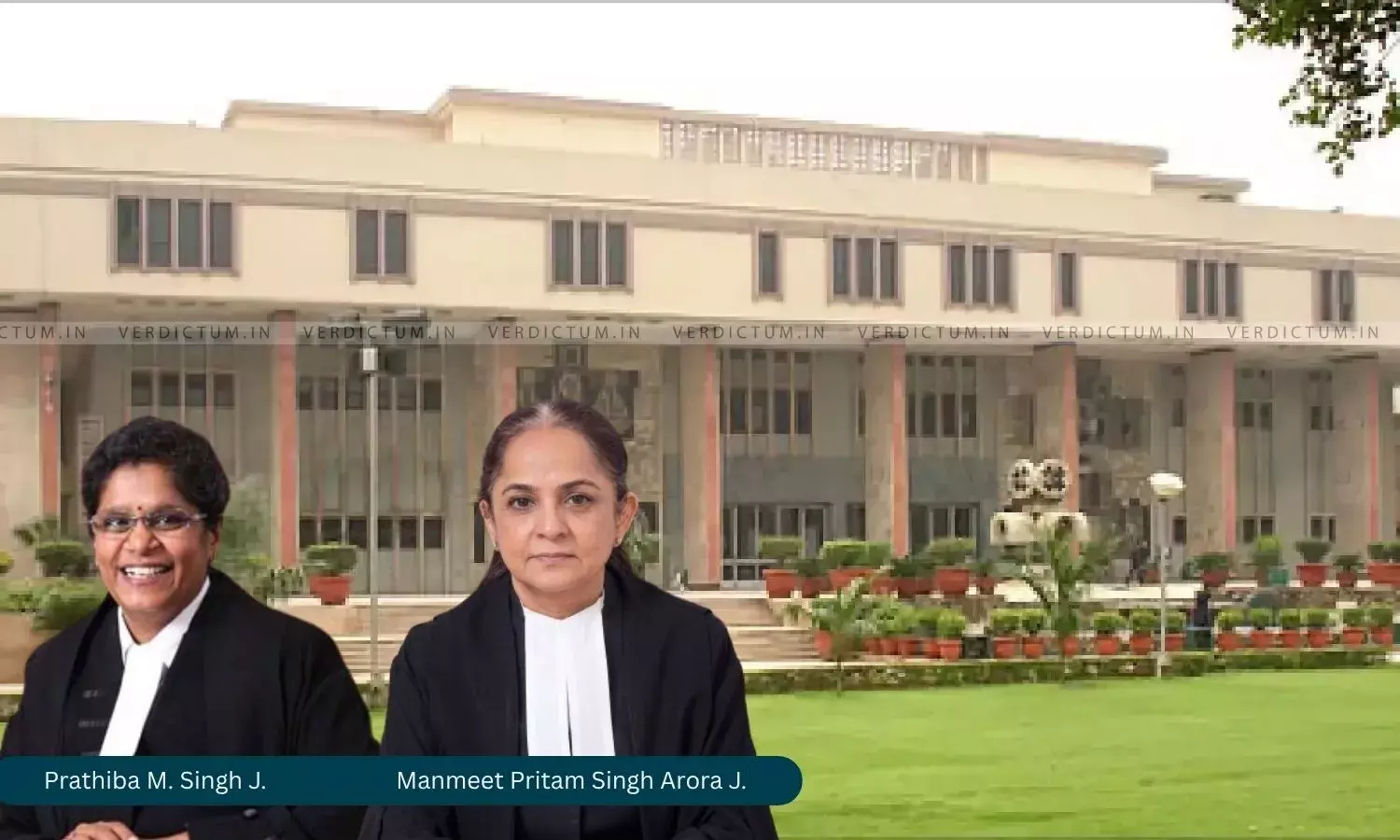
Justice Prathiba M. Singh, Justice Manmeet Pritam Singh Arora, Delhi High Court
The Delhi High Court has issued time-bound directions concerning staff vacancies, regular appointments of Medical Superintendents and Medical Directors, ICU-bed assistance and equipment availability across 38 Delhi Government hospitals.
The Court was hearing connected writ petitions concerning the functioning of government hospitals and reviewing compliance with its earlier directions on a common helpline, referral coordinators, regular hospital heads, staff shortages and unused equipment.
A Bench of Justice Prathiba M. Singh and Justice Manmeet Pritam Singh Arora, upon examining the material placed on record, observed: “On the last date of hearing i.e., 18th September, 2026 the Court had considered various issues with respect to the functioning of 38 government hospitals across Delhi, including streamlining the process of a common helpline number for information across the hospitals, appointment of referral coordinators in each hospital, appointment of regular Medical Superintendents/Medical Directors (hereinafter ‘M.S./M.D.’ respectively) across all 38 hospitals in Delhi as also the issues pertaining to unused equipments lying in the hospitals.”
Advocate Ashok Agarwal assisted the Court as amicus curiae. Standing Counsel Sameer Vashishth and Standing Counsel Avnish Ahlawat appeared for the Delhi Government. Central Government Standing Counsel Amit Tiwari and Central Government Standing Counsel Avshreya Pratap Singh Rudy appeared for the Union of India.
Background
At an earlier hearing, the Court had directed the Delhi Government’s Health Secretary to convene meetings and file status reports on the functioning of the 38 hospitals.
Five major government hospitals were represented through their Medical Superintendents, Medical Directors or Directors at the present hearing. The Special Secretary of the Health and Family Welfare Department was also present.
The status report showed that the toll-free number identified for ICU-bed enquiries received approximately 2,000 to 2,300 calls each month, while around 300 to 500 calls were dropped every week. The Head of Operations of Centralised Accident and Trauma Services recommended adding ten helpdesk lines.
The status report also disclosed 645 vacancies for General Duty Medical Officers, 406 for non-teaching staff and 804 for paramedical staff. The Court had earlier been informed that equipment remained unused in some hospitals because technically qualified personnel were unavailable.
Court’s Observations
Ten Additional Lines For ICU-Bed Helpline
Accepting the recommendation made after analysing call traffic, the Court directed the Delhi Government to increase the helpline’s capacity from 30 to 40 lines and provide corresponding personnel for round-the-clock operation.
The Bench directed: “Accordingly, the GNCTD shall make all the necessary arrangements for an increase of ten additional helpdesk lines along with corresponding manpower for 24x7 operation. This would increase the existing capacity from 30 to 40 seats/helpdesk lines. The Secretary, Health and Family Welfare, GNCTD shall take the necessary steps within the next four weeks and a status report shall be filed in this regard.”
Three referral coordinators had been identified for round-the-clock shifts in each hospital to assist patients seeking ICU beds or other help. The Court directed that their mobile and landline numbers be published on the Delhi Government’s website and periodically verified for availability.
Regular Full-Time Heads For Hospitals
The Court expressed concern that two Delhi Government hospitals were functioning without a Medical Superintendent or Medical Director. It directed the Chief Secretary to coordinate and convene a meeting of the National Capital Civil Service Authority so that the appointments could be completed by November 30, 2026.
Seven society-run hospitals had hospital heads serving either on additional charge or according to seniority, without regular appointments. The Court observed: “The appointment or nomination of doctors on additional charge basis would be a completely inefficient process in respect of both the hospitals where the said MD/MS is functioning. These hospitals need full time MS/MD and considering the footfall and resource crunch in these hospitals, sharing of MS/MD would result in lack of efficient administration and governance.”
The Court directed that regular appointments for these seven hospitals be completed by November 25, with a status report filed by November 30.
Recruitment Against Staff Vacancies
The Court directed the Delhi Government to send requisitions for vacant General Duty Medical Officer and non-teaching positions to the Union Public Service Commission within two weeks. The UPSC was asked, as an exceptional measure, to commence recruitment without waiting for its annual submission cycle.
Pending regular recruitment, the Medical Superintendents and Medical Directors were directed to engage contractual employees under the applicable guidelines. Referring to the board constituted for this purpose, the Court directed: “The Dean, Maulana Azad Medical College shall along with other Board members, take urgent steps for recruitment of contractual employees in all these three categories without any further delay. The said process shall be completed within a period of two months from today.”
The respective hospitals were separately directed to engage contractual paramedical personnel against vacant positions within two months. The Delhi Subordinate Services Selection Board was asked to report on regular recruitment, while the recruiting authorities were directed to maintain adequate waiting lists because selected candidates might not join.
Required And Unused Equipment
The Court initially sought an equipment assessment from five major government hospitals. Their heads were directed to identify required and unused equipment and submit requisitions to the Delhi Government by November 30.
The Bench directed: “In these hospitals, the concerned MSs/MDs who are present in Court, shall create a list of the required equipment and unutilized equipment and take steps to write to the Delhi Government for sanctioning of any such equipment, which are required. Let these five hospitals submit such requisition by 30th November, 2026. The Health Secretary, GNCTD shall look into the same and hold a meeting with the above named MSs/MDs and approve the necessary equipment.”
The Health Secretary was also asked to assess expenditure on outsourcing radiology services and consider whether contractual salaries could be increased to attract more candidates.
The Court further directed the heads of all 38 hospitals to meet and submit a common report suggesting measures for ensuring the availability of equipment and staff.
Conclusion
The High Court directed the Delhi Government to add ten ICU-helpdesk lines within four weeks and publish the contact details of referral coordinators. It fixed deadlines for appointing regular hospital heads, sending recruitment requisitions and engaging contractual medical, non-teaching and paramedical personnel.
Five major hospitals were directed to submit equipment requisitions by November 30, while the heads of all 38 hospitals were asked to prepare a common report on staff and equipment availability. The matter was directed to be listed on December 17, 2026.
Cause Title: Court on Its Own Motion v. Union of India and Others and Connected Matters (Neutral Citation: 2026:DHC:9736-DB)
Appearances
Petitioners: Senior Advocate Siddharth Aggarwal, represented by Advocate Vishwajeet Singh Bhati; Advocate Ashok Agarwal; Advocates Rudra Vikram Singh, Virendra Vikram, Rashmi and Sanat Vadhera
Respondents: Standing Counsel Sameer Vashishth; Standing Counsel Avnish Ahlawat with Advocate Nitesh Kumar Singh; Central Government Standing Counsel Amit Tiwari; Central Government Standing Counsel Avshreya Pratap Singh Rudy; Standing Counsel Anand Prakash with Advocate Varsha Arya; Advocate Abheet Mangleek; Advocate Ravinder Aggarwal