

Six-Month Limitation U/S 471 DMC Act Applies Only To Filing Of Complaint Before Municipal Magistrate, Not Investigation Or Chargesheet: Delhi High Court
The Court held that FIR transmitted to Municipal Magistrate within six months suffices; transmission to area Magistrate or ilaqa Magistrate does not; non-transmission within six months ipso facto vitiates prosecution and is not a curable defect.

The Delhi High Court has held that the six-month limitation period under Section 471 of the Delhi Municipal Corporation Act, 1957 applies only to the filing of a complaint before the Municipal Magistrate and does not extend to completion of investigation or filing of chargesheet. The Court clarified that prosecution under the DMC Act cannot be quashed merely because the chargesheet was filed beyond six months, as no such limitation is prescribed for investigation under the DMC Act or the CrPC.
The reference was taken up suo motu by the Court on its own motion after the Metropolitan Magistrate, Patiala House Courts, noticing that identical applications under Section 258 CrPC seeking dropping of proceedings on the ground of chargesheet being filed beyond six months were being routinely filed across courts in Delhi. Further that in several instances proceedings had already been dropped on this legally unsettled ground, referred five questions of law to the High Court as a matter of larger public importance affecting hundreds of pending prosecutions for unauthorised construction under Section 332 of the DMC Act.
The Court, thus, held that limitation under Section 471 can be saved only through filing of the complaint by the competent municipal officer before the Municipal Magistrate or transmission of the complaint by police in terms of Section 157 CrPC. Mere forwarding of FIR to an area or ilaqa Magistrate is insufficient. Failure to transmit the complaint or information to the designated Municipal Magistrate within six months vitiates the prosecution, as the limitation is mandatory and cannot be condoned.
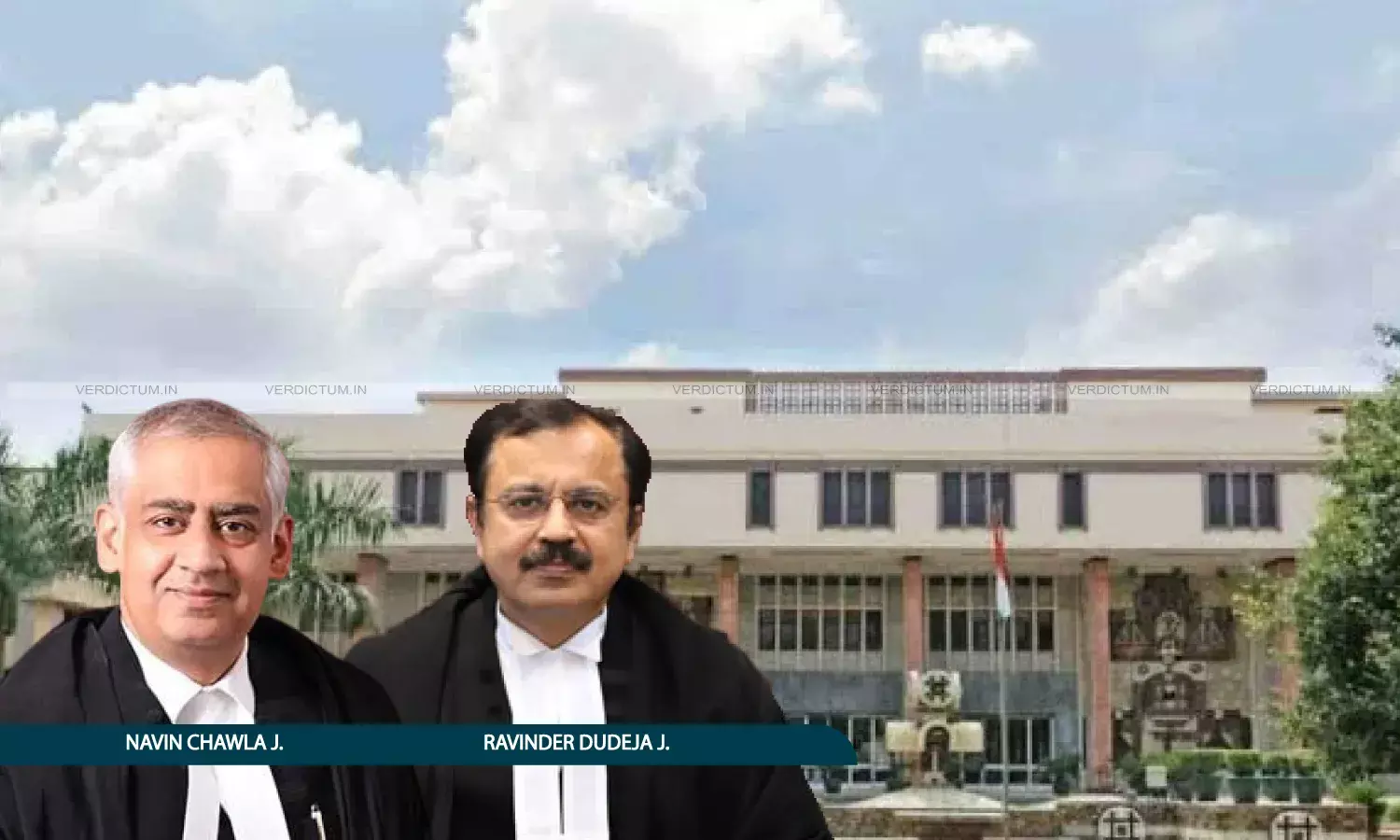
A Division Bench comprising Justice Navin Chawla and Justice Ravinder Dudeja observed, “…Section 471 of the DMC Act provides for a special period of limitation for filing of the complaint of any offence against the Act or Rule, Regulation or Bye-Law made thereunder. It does not provide for any limitation for taking cognizance of the offence by the Magistrate. Therefore, Section 468 of the Cr.P.C. and other provisions regulating period of limitation for taking cognizance of offences contained in Chapter XXXVI of the Cr.P.C., would not extend the period of limitation as far as the filing of the complaint under Section 471 of the DMC Act is concerned…”.
“…Equally, Section 471 of the DMC Act does not prescribe the limitation period for the Magistrate to take cognizance of the offences mentioned in Section 466A of the DMC Act; the same shall continue to be governed by Chapter XXXVI of the Cr.P.C.. The only prescription of the limitation period in Section 471 of the DMC Act is to the filing of the complaint and not to the filing of the chargesheet or the taking of cognizance on either a complaint or the chargesheet”, the Bench further noted.
Senior Advocate Rahul Mehra appeared as amicus curiae and Advocate Aman Usman appeared for the respondent.
The five questions referred were: first, whether any statutory timeline for completion of investigation and filing of chargesheet is prescribed under Section 471 of the DMC Act and whether a chargesheet can be barred by limitation; second, whether Section 471 prescribes a bar on taking cognizance after expiry of six months from the date of knowledge; third, what is the scope and relevance of the requirement of sending a complaint to the Magistrate within six months when cognizance is taken on the police report and not the complaint; fourth, whether transmission of the FIR to the jurisdictional or ilaqa Magistrate within six months constitutes sufficient compliance of Section 471; and fifth, whether non-transmission of the complaint to the concerned Magistrate within six months ipso facto vitiates the entire prosecution or is merely a curable defect, and whether the remedy under Section 258 CrPC would be available to the accused.
The Court clarified that Section 471 does not bar the Municipal Magistrate from taking cognizance after six months, cognizance is governed by Section 468 CrPC once the complaint is filed within the six-month period.
“…we hold that while Section 471 of the DMC Act, in no uncertain terms, provides that no person shall be liable to punishment for any offence against the DMC Act or any Rule, Regulation or Bye-Law made thereunder, unless complaint of such offence is made before a Municipal Magistrate within six months from the date of commission of such offence or the date on which the commission or existence of such offence was first brought to the notice of the complainant/officer of the Corporation, at the same time, the transmission of such complaint in form of an FIR by the police officer to the Municipal Magistrate under Section 157 of the Cr.P.C., would also suffice and shall stop the period of limitation under Section 471 of the DMC Act. At the same time, transmission of such complaint by the police officer to the area Magistrate/ilaqa Magistrate, who is not the designated Municipal Magistrate, would not suffice for purposes of stopping the period of limitation under Section 471 of the DMC Act.”, the Bench said.
The Court also held that the DMC Act is not a complete code in itself and Section 4(2) CrPC applies to investigation and trial, subject to specific provisions of the DMC Act. A copy of the judgment was directed to be communicated to all Municipal Magistrates for necessary information.
Cause Title: Court on Its Own Motion v. State of Delhi (Neutral Citation: 2026:DHC:5135-DB)
Appearances:
Petitioner: Rahul Mehra, Senior Advocate, Chaitanya Gosain, Hanif Chimthanawala, Advocates.
Respondent: Aman Usman, Tushar Sannu, Standing Counsel with Priyankar Tiwary and Fajallu Rehman, Advocates.