

Amended Section 19 Prevention Of Corruption Act Does Not Reopen Cases Where Cognizance Was Already Taken Before July 26, 2018: Delhi High Court
The Bench answered reference on whether former public servants facing prosecutions where cognizance was taken prior to the amendment can claim benefit of prior sanction requirement.

The Delhi High Court has held that the 2018 amendment to Section 19 of the Prevention of Corruption Act, 1988, which extended the requirement of prior sanction to former public servants and those holding a different office at the time of prosecution, applies only where the Court is yet to take cognizance of the offence on or after July 26, 2018, and cannot be invoked to reopen cases where cognizance already stood taken before that date.
The Bench, answering a reference made by a Special Judge under the Prevention of Corruption Act, held that while the amended Section 19(1) benefits accused persons even where the alleged offence was committed before the amendment came into force, its protection is prospective in application and does not revive the sanction requirement in prosecutions where cognizance had already been validly taken without such sanction prior to the amendment.
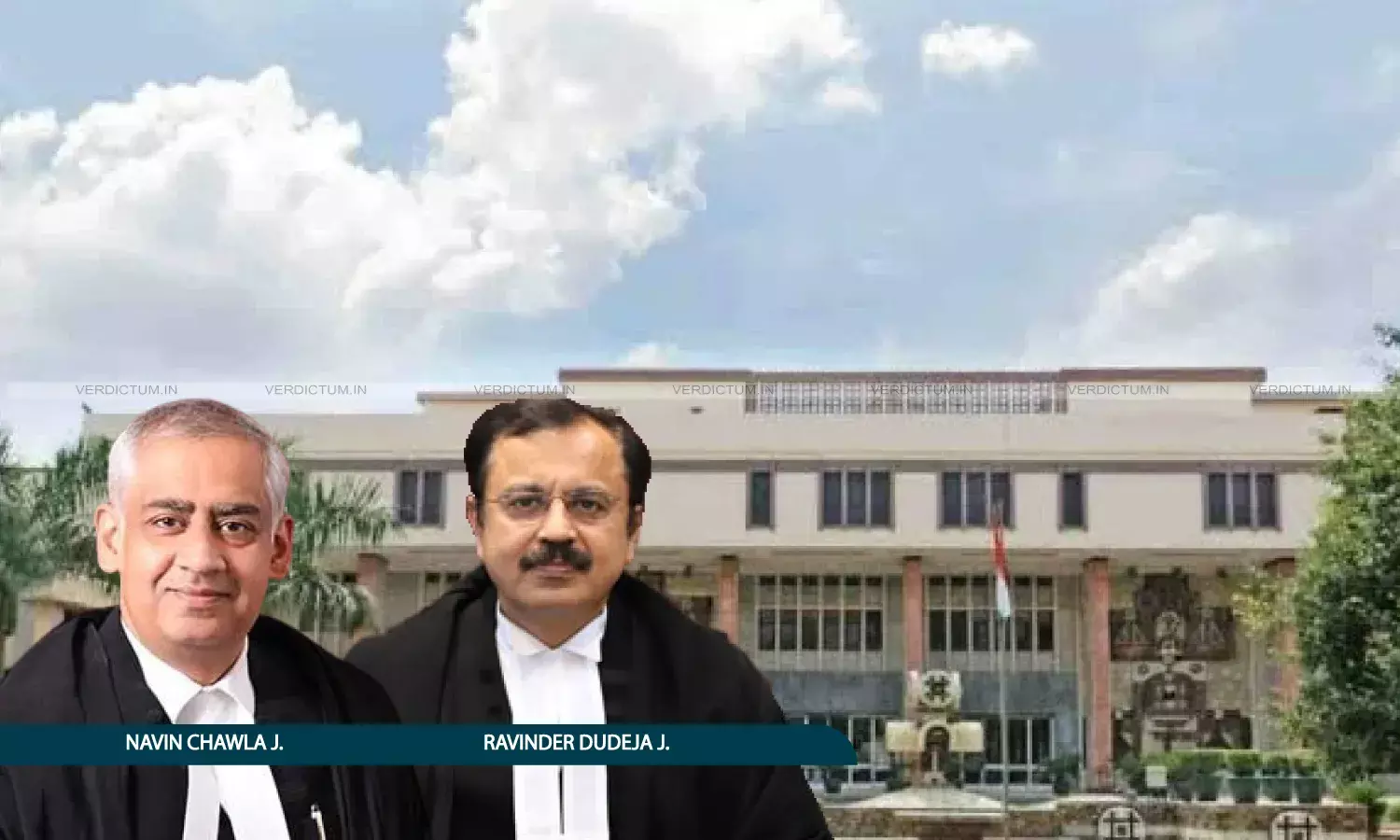
A Division Bench comprising Justice Navin Chawla and Justice Ravinder Dudeja observed, “The relevant date for the application of the amended Section 19(1) of the 1988 Act is with effect from 26.07.2018. The Amendment Act, as far as amendment to Section 19(1) of the 1988 Act, is retrospective to the extent that the benefit thereunder would enure even where the offence is alleged to have been committed prior to its coming into force, however, it is prospective to the effect that, where cognizance of such offence already stands taken before 26.07.2018, the same shall not be reopened and there would be no fresh requirement of prior sanction in such cases. The requirement of taking sanction would be applicable only where the Court is yet to take cognizance of the offence mentioned in Section 19(1) of the Act as on 26.07.2018 and thereafter”.
Senior Advocate Siddharth Yadav appeared as the amicus curiae and Senior Advocate N. Hariharan appeared for the respondent.
The reference arose from proceedings before the Special Judge (PC Act), CBI-01, Tis Hazari Courts, who framed four questions of law concerning the interpretation and retrospective operation of the Prevention of Corruption (Amendment) Act, 2018, which came into force on July 26, 2018 and amended Section 19 of the PC Act to extend the requirement of prior sanction to persons who had ceased to be public servants, or who held a different public office, at the time cognizance of an offence was sought to be taken against them. The Court clarified it was not examining the underlying facts of the case giving rise to the reference and confined itself strictly to the questions of law referred.
Tracing the evolution of the sanction requirement from Section 6 of the Prevention of Corruption Act, 1947 through pre-amendment Section 19(1) of the 1988 Act, the Bench noted that the Supreme Court in S.A. Venkataraman v. State, R.S. Nayak v. A.R. Antulay, Parkash Singh Badal v. State of Punjab, and Abhay Singh Chautala v. CBI had consistently held that sanction was unnecessary where the accused had ceased to be a public servant, or held a different office, by the time cognizance was sought.
On the first question, the Court relied on Dilawar Singh v. Parvinder Singh to hold that the PC Act, being special legislation, displaces the general principle that cognizance is taken of an offence rather than an offender, meaning sanction must be obtained specifically qua each accused public servant before cognizance can be taken against them.
On the retrospectivity question, the Bench held that the Amendment Act's Explanation, clarifying that "public servant" includes a person who has ceased to hold the relevant office or now holds a different one, created a new obligation and disability on the prosecution rather than merely clarifying an existing ambiguity, and therefore could not be treated as a declaratory statute warranting retrospective effect.
“…the Amendment Act uses the word ‘substitution’, it, in effect, inserts a new obligation of taking prior sanction even with respect to the former public servants or public servants who hold a different office when the cognizance of the offence is taken by the Court. It thus inserts a new obligation on the prosecution and does not give any indication of having a retrospective effect, except to the fact that even though the offence may relate to a period prior to the amendment, the protection would enure to the benefit of such former public servants when the Court is to take cognizance of the offence after the Amendment Act has come into force”, the Bench noted.
The Bench accordingly held the amendment to be a hybrid: retrospective in that it benefits accused persons even for offences predating the amendment, but prospective in that it operates only where cognizance is taken by the Court on or after July 26, 2018, leaving unaffected cases where cognizance had already validly been taken earlier without sanction.
The Court answered the reference by holding that sanction under Section 19(1) of the PC Act is mandatory qua each named public servant regardless of the general rule that cognizance is taken of offences rather than offenders; that the amended Section 19(1) applies with effect from July 26, 2018, benefiting accused persons for offences committed before that date but only where cognizance is yet to be taken on or after that date; and that cases where cognizance already stood taken prior to July 26, 2018 shall not be reopened for want of the newly introduced sanction requirement. The fourth question, being general and unspecific, was left unanswered.
The matter was remitted to the Special Judge to proceed further in light of the answers, listed for September 10, 2026.
Cause Title: Court On Its Own Motion v. State (Neutral Citation: 2026:DHC:6342-DB)
Appearances:
Petitioner: Siddharth Yadav, Senior Advocate (Amicus Curiae), with Narender Lodiwal and Wasim Ashraf, Advocates.
Respondent: Aditya Wadhwa, Shivani Pegatraju, Anupam S. Sharma, SPP, Harpreet Kalsi, Prakarsh Airan, Vashisht Rao, Amisha P. Dash, Abhiyant Singh and Mayank Tyagi, N. Hariharan, Senior Advocate, Dr. Sushil Gupta, Ripudaman Bhardwaj, CGSC, Kushagra Kumar and Amit Kumar Rana, Advocates.