

CAPF Retirement Age Parity Benefits Limited To Personnel Not Crossing 60 Years As On Jan 31, 2019: Delhi High Court
The Court clarified that CAPF personnel who crossed 60 before Jan 31, 2019 are ineligible for retrospective pension benefits from enhanced superannuation age.

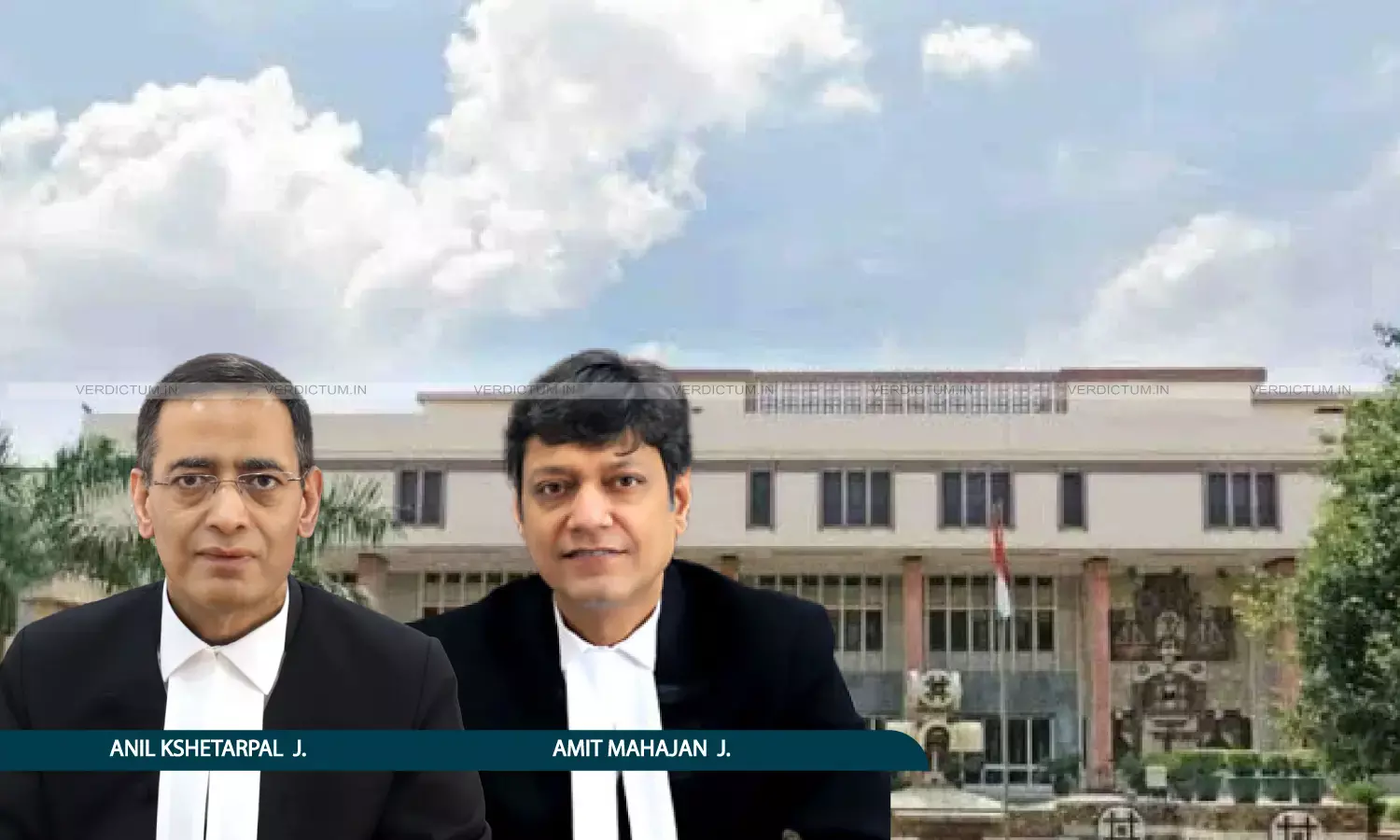
The Delhi High Court has dismissed a batch of writ and review petitions seeking the extension of notional service benefits for those Central Armed Police Forces (CAPFs) personnel who retired between 2011 and 2016.
The court noted that the foundational judgment in Dev Sharma v. Indo-Tibetan Border Police W.P.(C) 1951/2012, which struck down differential retirement ages, created a specific window for relief. This window is strictly confined to personnel who, while having retired before the judgment date, had not yet attained the age of 60 by January 31, 2019, it noted. Consequently, the court held that those falling outside this age bracket at the time of the legal shift cannot claim parity or consequential financial advantages.
Justice Anil Kshetarpal and Justice Amit Mahajan referring to the precents observed, “…the judgments…have consciously drawn a distinction between personnel who had not crossed the age of 60 years as on 31.01.2019 and those who had already crossed the said age. The Petitioners admittedly fall in the latter category. The issue therefore stands concluded by Co-Ordinate Bench decisions and cannot be reopened in the present proceedings”.
Advocate Shanker Raju appeared for the petitioner and Satya Ranjan Swain, CGSC appeared for the respondent.
The matter concerned disparity in retirement ages within the CAPFs, where personnel at the rank of Commandant and below retired at 57, while higher-ranking officers served until 60.
Following the 2019 Dev Sharma judgment, which declared this distinction unconstitutional, the Ministry of Home Affairs fixed a uniform retirement age of 60 for all ranks. The petitioners in the current batch, having superannuated in or before 2016 at the age of 57, sought a revision of their pensionary benefits by notionally extending their service to 60 years, alleging discrimination in the government's implementation of the Dev Sharma directions.
The matter followed the clarifications issued in Bharat Singh & Ors. v. Union of India & Ors., W.P.(C) 13195/2019, where the court previously delineated the scope of Paragraph 72 of the Dev Sharma judgment. The court noted that the petitioners had accepted their superannuation years prior and had not challenged their retirement orders when the issue was originally sub judice.
The Court considering the established ratio in Rajender Singh & Ors. v. Union of India & Ors., W.P.(C) 2834/2021, noted that the benefit of continuation in service is not res integra for those crossing 60 years before the 2019 cutoff.
“Apart from the above, it is a settled principle of service law that payment of salary and attendant monetary benefits is ordinarily premised upon actual discharge of duties. The doctrine of “no work, no pay” embodies the equitable principle that an employee who has not rendered service cannot claim wages or service benefits for a period during which he was not in employment, unless a specific judicial direction creates such entitlement. The enhancement of the age of superannuation, by itself, does not automatically confer retrospective financial benefits upon personnel who had already retired and did not serve during the relevant period”, the Bench noted.
“…Having accepted superannuation and remained out of service for several years, the Petitioners cannot now claim notional continuation or consequential monetary benefits as though they had remained in service. Grant of such relief would amount to conferring advantages without corresponding service and would run contrary to settled principles governing service jurisprudence”, the Bench further held.
Accordingly, the court dismissed the writ petitions and review petitions, holding that the petitioners were ineligible for the arrears of retirement benefits or notional service extensions. The court affirmed that the distinction drawn between personnel based on their age as of January 31, 2019, is a conscious and concluded legal boundary that cannot be reopened.
Cause Title: Charanjit Lal and Ors. v. Union of India and Ors. (Neutral Citation: 2026:DHC:3195-DB)
Appearances:
Petitioners: Shanker Raju, Sanjiv Kumar Saxena, Ramneek Mishra, Mukesh Kumar Tiwari, Vijay Kumar, and Nishant Mankoo, Advocates.
Respondents: Satya Ranjan Swain (CGSC), Farman Ali (CGSC), Usha Jamnal, Amit Tiwari (CGSC), and Ajay Pal (Law Officer, CRPF).