

False Statement Made Before Court: Delhi High Court Directs Section 340 CrPC Complaint Against Five Former CBI Officials
The Court also held that differing degrees of participation in preparing, altering, vetting, processing, approving or filing the reply did not justify excluding any concerned officer at the complaint stage.
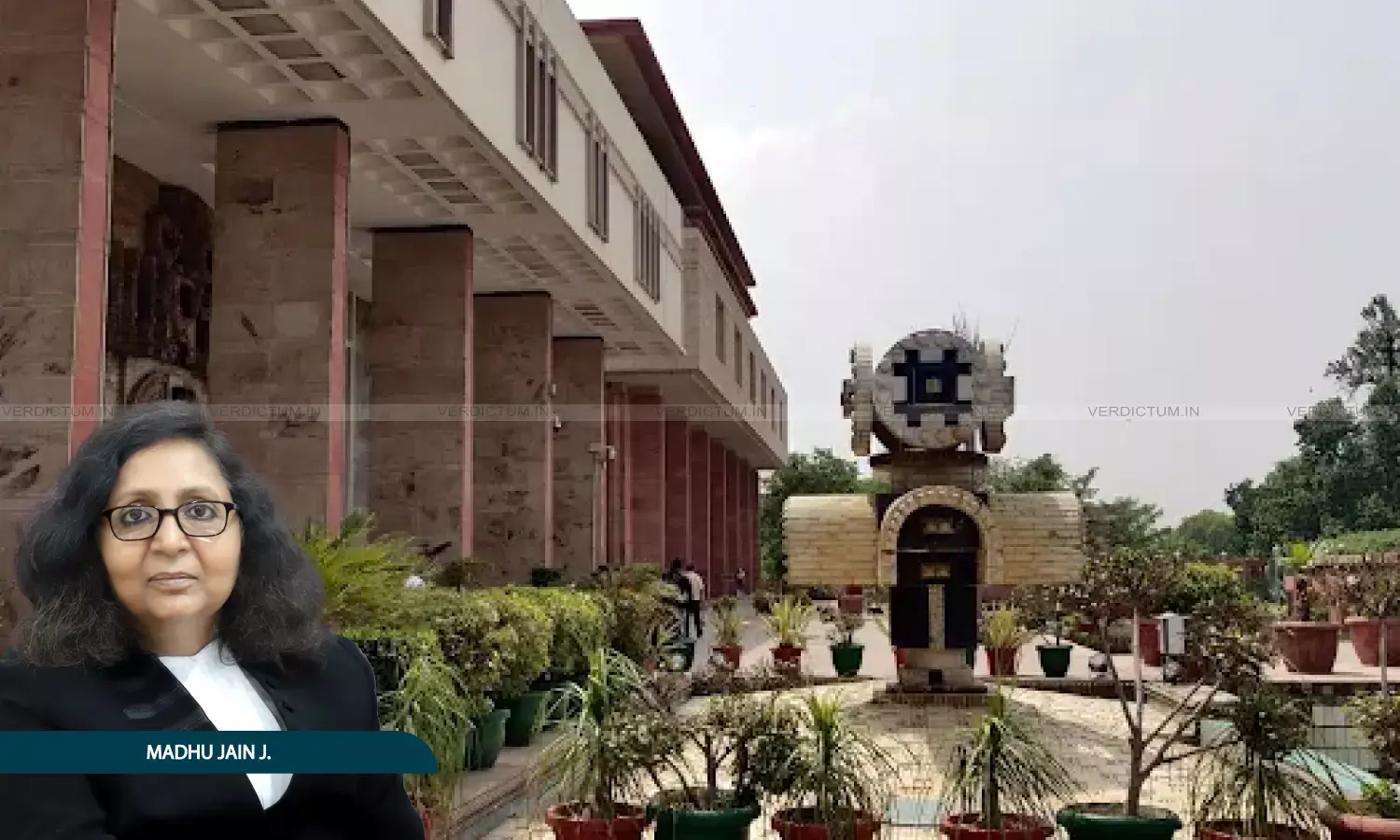
Justice Madhu Jain, Delhi High Court
The Delhi High Court directed the filing of a written complaint against five former CBI officers and Special Public Prosecutor after finding that successive drafts and file-notings prima facie indicated their participation in placing a claim before the Court that they allegedly knew was inconsistent with the existing position.
The Court was hearing a criminal appeal under Section 380 of the Bharatiya Nagarik Suraksha Sanhita, 2023, corresponding to Section 341 CrPC, against a Special Judge’s order dismissing an application under Section 340 CrPC. The application concerned a statement in a CBI reply that correspondence with the administrative ministry regarding further legal action was underway.
A Bench of Justice Madhu Jain observed: “The respective acts of preparing, altering, vetting, processing, approving and filing the reply, read with the knowledge disclosed by the preceding drafts and file-notings, furnish a reasonable basis for the prima facie inference that the concerned officers participated in advancing a claim which was known to be inconsistent with the existing position. These circumstances disclose substantially more than the mere failure of a party to establish a contention. They prima facie attract Section 209 IPC against all the concerned officers, subject to proof of their respective knowledge, intention and participation before the competent Magistrate.”
Senior Advocate Yashraj Singh Deora appeared for the appellant. Special Public Prosecutor Atul Guleria appeared for the respondents.
Background
The appellant, an Indian Revenue Service officer, had been prosecuted by the CBI for allegedly possessing assets disproportionate to his known sources of income. In 2016, the High Court held that the sanction for his prosecution was invalid, following which the Special Judge discharged him.
The Ministry of Law and Justice subsequently opined that no reasonable ground existed to challenge that decision before a higher forum. The Department of Personnel and Training communicated the opinion to the CBI.
The appellant thereafter applied for the return of documents seized during the investigation. The CBI opposed the return of some documents by stating that correspondence with the administrative ministry concerning further legal action was underway and that the documents might be required in subsequent proceedings.
Finding that the reply did not disclose the precise status of the proposed challenge, the Special Judge directed the CBI to file a clear reply stating whether any appeal or revision had been filed or was pending.
The appellant then sought proceedings under Section 340 CrPC, alleging that the statement was incorrect because no correspondence with the ministry was underway at that time. On the same day, the CBI forwarded a reconsideration proposal to the Department of Personnel and Training. It subsequently filed an additional reply stating that an in-principle decision to challenge the earlier judgment had been taken and that the proposal had been forwarded.
In the first round of proceedings, the Special Judge directed the filing of a complaint against the investigating officer who had signed the reply. The High Court subsequently set aside that direction solely to enable the Special Judge to consider the administrative record and examine the roles of the other officers involved in preparing and filing the reply.
After the remand, the Special Judge found that no correspondence with the ministry was underway when the reply was filed and that the statement conveyed an incorrect impression. However, the application was dismissed after treating the statement as an imprecise choice of words and considering the subsequent clarification, absence of prejudice to the appellant and passage of time.
The appellant argued that the successive drafts disclosed the deletion of the correct position and its replacement with the statement that correspondence was underway. The CBI maintained that the ministry’s opinion was advisory, reconsideration was being processed internally and the incorrect statement was clarified at the earliest opportunity.
Court’s Observations
The High Court explained that forming an opinion under Section 340 CrPC is distinct from adjudicating guilt in the prosecution that may follow. At the complaint stage, the Court must examine whether an offence covered by Section 195(1)(b) CrPC appears to have been committed and whether an inquiry by the competent Magistrate is expedient in the interests of justice.
Referring to K. Karunakaran v. T.V. Eachara Warrier (1978), the Court observed that the material must disclose a prima facie case carrying a reasonable likelihood of establishing the alleged offence. Relying upon Pritish v. State of Maharashtra (2002), it added that a preliminary inquiry under Section 340 is not mandatory and is directed towards expediency rather than the determination of guilt.
The Court applied the Constitution Bench decision in Iqbal Singh Marwah v. Meenakshi Marwah (2005) and held that expediency must ordinarily be assessed by examining the effect of the alleged offence upon the administration of justice, rather than the extent of injury suffered by an individual litigant.
The Court stated: “Consequently, the absence of an adverse order against the applicant, though relevant to the overall assessment, cannot by itself be treated as sufficient to decline action where a material falsehood has prima facie been knowingly placed before the Court.”
The Court found that the ministry’s opinion had already been communicated to the CBI and that only an internal proposal to seek reconsideration and further legal advice remained pending. It held that the successive drafts disclosed more than an imprecise description of that internal process.
The Court noted that an earlier draft expressly stated that the proposal to file a special leave petition had been turned down. That statement was deleted and replaced by a handwritten assertion that correspondence with the ministry was underway, although no such correspondence was then taking place.
The Court observed: “This concerned alteration changed the very factual position sought to be presented before the Court.”
The Court clarified that the CBI was entitled to seek reconsideration, obtain another legal opinion and pursue any remedy available in law. It held, however, that an internal proposal awaiting approval could not be represented as correspondence already underway with the ministry.
The Court further clarified that its finding did not rest merely upon the non-disclosure of the ministry’s legal opinion. It was based on the affirmative factual statement made before the Court, its inconsistency with the contemporaneous record and the concerned officers’ demonstrated knowledge of that record.
The Court found that the investigating officer had prepared the successive drafts, incorporated the handwritten alteration, prepared the final reply and filed it under his signature. Since he had prepared an earlier draft acknowledging the ministry’s decision, the Court held that his subsequent adoption of the altered statement prima facie indicated knowledge of the correct position.
The Court observed that the Head of Zone’s noting demonstrated awareness that the Department of Personnel and Training had already communicated its decision and that reconsideration was only being proposed. The record also prima facie connected that officer with the handwritten alteration and subsequent approval of the final reply.
The Court found that two other supervisory officers had referred to the ministry’s decision in their respective notings and participated in processing the drafts. It held that they knew the actual position and took part in the decision-making process preceding the filing of the reply.
The Court further observed that the Special Public Prosecutor had vetted both the draft disclosing the ministry’s decision and the final reply containing the altered statement. It held that participation at both stages prima facie demonstrated familiarity with the change in the position presented before the Court.
As regards the remaining CBI officer, the Court noted that he dealt with the final reply, obtained its vetting and forwarded it for further approval. It held that the record disclosed different degrees of involvement, but those differences did not warrant excluding any concerned person at the stage of directing the complaint.
Referring to Perumal v. Janaki (2014), the Court observed that Section 191 IPC applies where a person legally bound to state the truth makes a statement that he knows or believes to be false or does not believe to be true. Section 193 IPC prescribes punishment for intentionally giving false evidence in a judicial proceeding.
The Court also relied upon Sanjeev Kumar Mittal v. State (2010), which held that a knowingly false averment in a pleading required by law to be verified may attract Section 191 IPC upon its filing, even if its maker does not enter the witness box.
Applying these principles, the Court held that the inquiry could not be confined to the officer who signed the reply when the record prima facie indicated that other officers knowingly participated in making, adopting or causing the statement to be placed before the Court.
It consequently found that the altered assertion was material to the relief sought from the Special Judge and that the contemporaneous record provided a reasonable foundation for allegations under Section 191 read with Section 193 IPC against all the concerned persons.
The Court explained that Section 209 IPC concerns the making of a claim in a court of law that the maker knows to be false, fraudulently, dishonestly or with the intention of injuring or annoying another person.
Relying upon HS Bedi v. National Highway Authority of India (2016), the Court observed that a “claim” includes the factual basis upon which a party seeks an outcome from a court and may arise through a reply or defence. It further noted that the provision is not confined to the party that initiated the proceedings.
The Court held that the assertion about ongoing correspondence was used as a factual ground to oppose the appellant’s request and seek continued retention of his documents. The acts attributed to the concerned persons, when read with their knowledge of the earlier drafts and file-notings, furnished a prima facie basis for the allegation that they participated in advancing a claim known to be inconsistent with the existing position.
The Court also referred to Walmark Holdings Limited v. Fortis Healthcare Limited (2026), Deepika Prashar v. Suman Singh Virk (2024) and the appellate decision in Suman Singh Virk v. Deepika Prashar (2025). It observed that these decisions reinforced the need to assess demonstrated conduct and documentary material rather than treat a later explanation or change of position as an automatic answer to an earlier statement.
The Court held that the additional reply expressly stated that the reconsideration proposal was forwarded to the Department of Personnel and Training only after the disputed reply had been filed. It observed that this drew a distinction between internal consideration and the actual transmission of a proposal.
The Court stated: “Thus, even when both replies are read together, the inconsistency between the assertion made in the reply dated 02.08.2016 and the factual position as on that very date remains unexplained.”
The Court further observed that the CBI continued to maintain in its response to the Section 340 application that its earlier assertion was correct because the proposal was being processed internally. It held that the later clarification was relevant but could not conclusively displace the prima facie inference arising from the drafting record.
The Court held that the disputed statement concerned a matter of substance because it was relied upon to resist the return of documents after the appellant’s discharge. Whether a challenge had been initiated, a proposal had been forwarded or the matter remained under internal consideration was relevant to the Special Judge’s decision.
It held that the Special Judge’s reliance upon the absence of injury to the appellant was inconsistent with Iqbal Singh Marwah v. Meenakshi Marwah (2005), under which expediency is assessed by examining the impact of the alleged offence on the administration of justice.
The Court further held that the subsequent filing of a special leave petition did not retrospectively establish that correspondence with the ministry was underway when the disputed reply was filed. The truth of the statement had to be assessed according to the position existing when it was made.
The Court found that the appellant had raised the allegation shortly after the disputed reply was filed and that the issue had remained under judicial consideration throughout the intervening period.
It further observed that the relevant material was principally documentary and consisted of preserved official drafts, file-notings and court filings. Since the Special Judge had identified no loss of material that would make a fair inquiry impracticable, the Court held that the passage of time did not outweigh the reasons for directing a complaint.
The Court held that the statement was made on behalf of a prosecuting agency concerning a matter within its knowledge and was relied upon to obtain an order against the appellant’s request.
The Court underscored: “Courts must be able to assess such representations on a truthful account of the existing position. A deliberate substitution of that account with a materially false claim directly affects the fairness of the adjudicatory process.”
It held that the justification for further proceedings extended beyond the appellant’s individual grievance. The Court consequently found that the threshold under Section 340 CrPC was satisfied and that no further preliminary inquiry was necessary because the successive drafts, file-notings and signed reply had already been examined.
Conclusion
The Court allowed the appeal and set aside the Special Judge’s order dismissing the application under Section 340 CrPC.
It directed the Special Judge to make a written complaint against five CBI officers and the Special Public Prosecutor for the alleged offences under Sections 191 read with 193 and Section 209 IPC. The complaint must be transmitted to the jurisdictional Magistrate within four weeks of receiving the judgment.
The Court directed that the complaint be placed before the Chief Judicial Magistrate (Central), Tis Hazari Courts, in the existing complaint proceedings. The Magistrate was directed to consider their revival and ensure that parallel proceedings concerning the same allegations were not instituted.
The Court clarified that the competent court must proceed independently on the material placed before it without being influenced by observations made solely for directing the complaint. It also disposed of the pending applications and vacated the interim orders.
Cause Title: Ashok Kumar Aggarwal v. Sushil Dewan and Others (Neutral Citation: 2026:DHC:8774)
Appearances
Appellants: Senior Advocate Yashraj Singh Deora; Advocates Anupama Dhurve and Priyesh Mohan Srivastava
Respondents: Special Public Prosecutor Atul Guleria; Advocates Aryan Rakesh, Vivek Maurya, K.M. Swati and Manish
