

Knowledge Can’t Be Presumed In A Vacuum On The 4th Day Of Unprecedented Lockdown: Delhi High Court Quashes COVID-19 FIR Against Solitary Pedestrian
The Bench noted that public road presence alone, absent proof of a promulgated order or any overt act causing harm, does not attract Section 188 IPC.

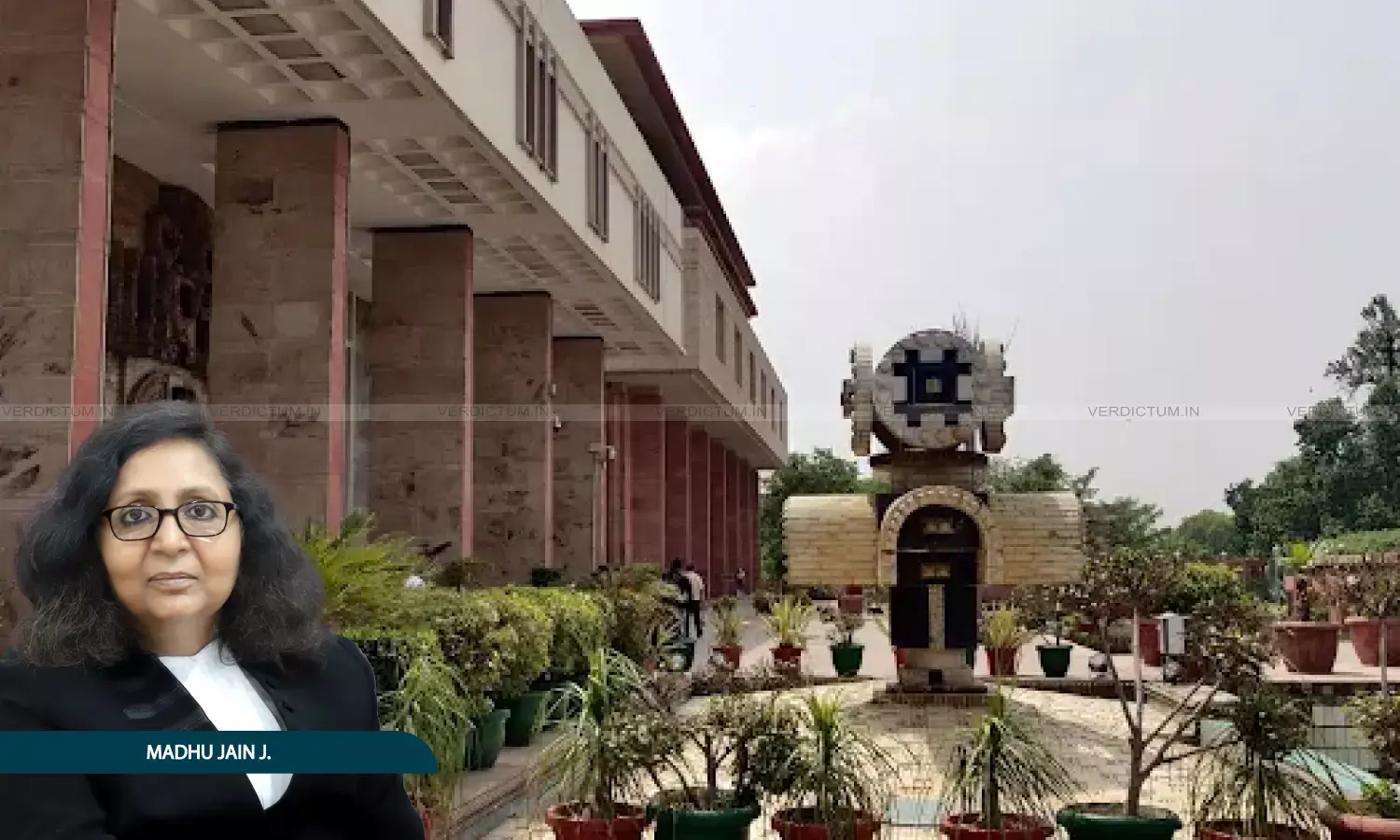
Justice Madhu Jain, Delhi High Court
The Delhi High Court has held that knowledge of an executive order cannot be presumed in a vacuum at least on the fourth day of an unprecedented nationwide lockdown, quashing a six-year-old FIR registered against a man for stepping out during the nationwide COVID-19 lockdown, after finding that the prosecution never placed on record any material to show that the order allegedly violated had been publicly promulgated or brought to the accused's knowledge.
The Court further held that mere presence on a public road, unaccompanied by any circumstance capable of causing obstruction, annoyance, injury, or danger to human life, health or safety, does not satisfy the statutory ingredients of Section 188 IPC, and that offences under Sections 269 and 270 IPC, which presuppose an infected person acting with knowledge of infection, cannot be sustained where the accused was never tested for COVID-19 and the prosecution itself made no such allegation.
A Single Bench of Justice Madhu Jain observed, “…Knowledge cannot be presumed in a vacuum, least of all on the fourth day of an unprecedented nationwide lockdown”.
“…The petitioner was merely a solitary pedestrian. It is not the case of the prosecution that Petitioner’s conduct caused, or was even likely to cause, any obstruction, annoyance, or injury to a person lawfully employed, or any danger to human life, health, or safety, or a riot or affray. Beyond the petitioner’s presence on a public road, the FIR alleges no overt act whatsoever. Mere presence on a public road, unaccompanied by any circumstance capable of attracting the consequences envisaged under Section 188 IPC, does not constitute an offence under the provision. The significance of the absence of any overt act is further underscored by the fact that the lockdown regime did not impose a blanket prohibition on movement, but expressly permitted movement for essential purposes, including medical needs”, the Bench noted.
Advocate Ashima Mandla appeared for the petitioner and Nawal Kishore Jha, APP appeared for the respondent.
According to the prosecution, the petitioner, Anupam Sahu, was found walking alone on Aruna Asaf Ali Marg on March 28, 2020 during picket duty enforcing the lockdown.
On being questioned, he stated he had stepped out as he was unable to pass time at home. An FIR under Section 188 IPC was registered the same evening, and he was arrested and later released on bail. Sections 269, 270 and 336 IPC were subsequently added in the chargesheet, which rested solely on the statements of three police officials, with no public witness or medical examination on record. The petitioner contended he had actually been proceeding for a medical follow-up for chronic back pain, relying on a certificate dated March 21, 2020, later verified as genuine by the State.
The Metropolitan Magistrate had taken cognizance of the offences on May 24, 2022 and summoned the petitioner, prompting the present petition filed on May 16, 2023, since no framing-of-charge stage arises in a summons trial.
Examining the ingredients of Section 188 IPC, the Court held that neither the FIR, the chargesheet, nor any witness statement contained an averment that the order dated March 24, 2020 was promulgated through any public mode or that the petitioner had knowledge of it, nor did the record disclose any consequence contemplated by the provision.
It further held that Sections 269 and 270 IPC could not apply absent any allegation of infection, and that Section 336 IPC failed for want of any identified person endangered. Placing the case within categories (1) and (3) of State of Haryana v. Bhajan Lal, the Court found continuation of the prosecution, six years on, an abuse of process.
Accordingly, the Court quashed FIR No. 105/2020 and all consequential proceedings, including those pending before the Trial Court, and directed that a copy of the judgment be sent to the Trial Court for compliance.
Cause Title: Anupam Sahu v. The State (Neutral Citation:2026:DHC:5771)
Appearances:
Petitioner: Ashima Mandla and Mandakini Singh, Advocates, with the petitioner-in-person.
Respondent: Nawal Kishore Jha, APP, with SI Parag, PS Kishangarh.