

EWS Category Candidates Cannot Claim Age Relaxation Benefits As SC/ST/OBC Candidates In Civil Services Examination: Delhi High Court
The Court held that reservation for Economically Weaker Sections addresses economic deprivation distinct from social backwardness, and therefore, non-extension of ancillary relaxations such as age and attempts does not violate constitutional guarantees.
The Delhi High Court has held that candidates belonging to the Economically Weaker Sections are not entitled to claim parity with SC/ST/OBC categories in matters of age relaxation in the Civil Services Examination.
The Court further held that the policy decision of the Central Government to deny such ancillary relaxations to EWS candidates, while extending them to other reserved categories, does not suffer from arbitrariness or unconstitutionality.
The Court was hearing a writ petition under Article 226 of the Constitution challenging the Office Memorandum dated 31.01.2019, Notice of Examination dated 19.02.2019, Frequently Asked Questions dated 19.09.2022, and the Civil Services Examination Notification, on the ground that candidates belonging to the Economically Weaker Sections were denied age and attempt relaxations available to other reserved categories.
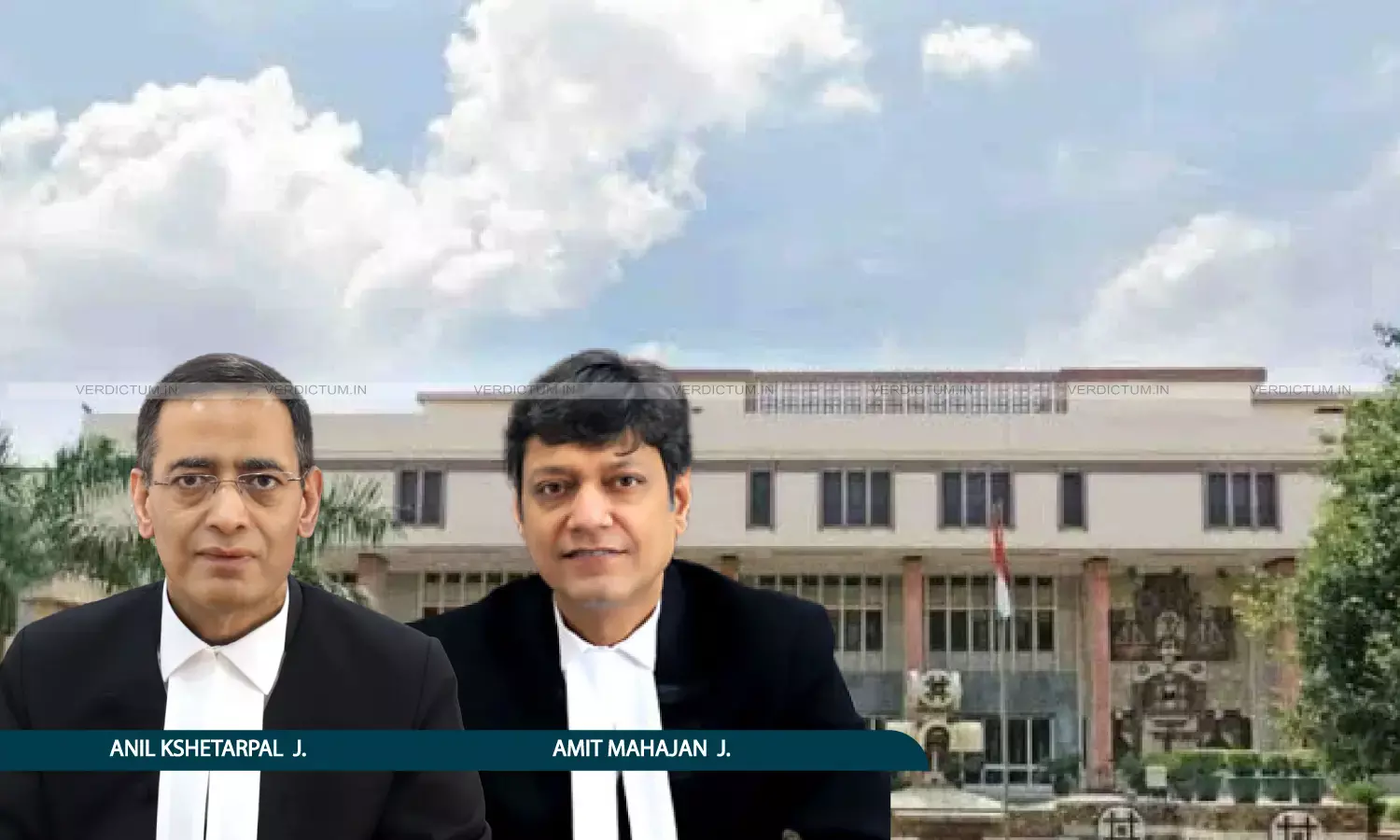
A Division Bench comprising Justice Anil Kshetrapal and Justice Amit Mahajan, while upholding the policy framework, observed: “The Office Memorandum dated 31.01.2019 which provides 10% reservation to EWS candidates without providing any other ancillary relaxations and Notice of Examination, dated 19.02.2019 which only provides relaxations in terms of age and attempt relaxation to SC/ST/OBC candidates cannot be held to unconstitutional or arbitrary.”
“The Frequently Asked Questions on reservation to Economically Weaker Sections in posts/services under Central Government, dated 19.09.2022, issued by Respondent No.2, only reiterates the policy of the government stating that age relaxation is not provided to candidates belonging to the EWS category. Once this Court has concluded that the policy decision not to extend age relaxation to the EWS category is neither unconstitutional nor arbitrary, the FAQs reflecting that position cannot be said to suffer from any perversity”, the Bench added.
Advocate Shivendra Singh appeared for the Petitioners, while Advocate Ravinder Agarwal appeared for the Respondents.
Background
The Petitioners, belonging to the Economically Weaker Sections category, sought extension of age relaxation and additional attempts in competitive examinations, on parity with candidates belonging to Scheduled Castes, Scheduled Tribes and Other Backward Classes in direct recruitment under the Central Government.
The challenge was directed against the Office Memorandum dated 31.01.2019, which introduced 10% reservation for EWS candidates pursuant to the Constitution (103rd Amendment) Act, 2019, but did not provide any ancillary relaxations, such as age or attempts. The Notice of Examination dated 19.02.2019 provided such relaxations exclusively to SC/ST/OBC categories.
Further, the Frequently Asked Questions dated 19.09.2022 clarified that EWS candidates would be treated at par with the General Category in matters of age and number of attempts. The Civil Services Examination Notification, 2024, continued this policy position.
The Petitioners contended that denial of such relaxations defeated the purpose of reservation for EWS candidates and violated Articles 14 and 16 of the Constitution, while the Respondents argued that the issue pertained to policy decisions beyond the scope of judicial review.
Court’s Observation
The Court commenced its analysis by delineating the scope of judicial review in matters of policy, reiterating that courts cannot sit in appeal over policy decisions unless they are shown to be violative of constitutional provisions, statutory mandates, or manifestly arbitrary. It relied on Directorate of Film Festivals v. Gaurav Ashwin Jain (2007) and State of Punjab v. Ram Lubhaya Bagga (1998) to emphasise that the legality of policy, and not its wisdom, is subject to judicial scrutiny.
The Court observed that the impugned framework constituted a policy decision adopted by the Executive, taking into account administrative considerations, data, and institutional constraints, and that courts cannot substitute such decisions merely because an alternative may appear more equitable.
Turning to the constitutional framework, the Court examined the scheme of Articles 15(6) and 16(6), introduced by the Constitution (103rd Amendment) Act, 2019, which enables reservation for Economically Weaker Sections. It noted that EWS constitutes a distinct class, defined by economic deprivation, and explicitly excludes categories covered under Articles 15(4) and 16(4).
The Court emphasised that the nature of disadvantage suffered by EWS candidates differs fundamentally from that faced by SC/ST/OBC categories. It held that while the latter are beneficiaries of reservations grounded in historical, social and educational backwardness, EWS classification is based solely on economic criteria.
In this regard, the Court observed: “Economic status, on the other hand, is fluid. It can change over time, within years or across generations… For this reason, the deprivation faced by EWS individuals is not comparable to caste-based discrimination, which carries to some extent a long-lasting social stigma.”
The Court further held that since the constitutional framework itself recognises EWS as a distinct category, the grant of reservation does not automatically entitle such candidates to all ancillary benefits extended to SC/ST/OBC categories. It clarified that “the EWS category cannot claim automatic parity with SC/ST/OBC in ancillary considerations such as age relaxation or enhanced attempts.”
Relying on C. Udayakumar v. Union of India (1995), the Court reiterated that differential treatment in ancillary concessions between distinct categories recognised under the Constitution does not amount to discrimination.
The Court also considered the argument that certain States and Union Territories had extended age relaxation to EWS candidates. Rejecting this contention, the Court held that “no claim of parity can be sustained between policies framed by the Union and those adopted by individual States or Union Territories as conditions of service, including the prescription of age limits and permissible attempts, fall within the exclusive domain of the respective recruiting authorities”.
The Court further noted that the Civil Services Examination Rules, 2024, which govern age limits and attempts, do not provide for such relaxations and had not been independently challenged.
The Court ultimately concluded that the Petitioners failed to establish that the impugned policy violated any constitutional or statutory provision or suffered from arbitrariness.
Conclusion
The Delhi High Court held that the policy decision not to extend age and attempt relaxations to Economically Weaker Sections candidates, while granting such benefits to SC/ST/OBC categories, is constitutionally valid and falls outside the scope of judicial interference.
The Court refused to issue any direction to extend such relaxations or to quash the Office Memorandum dated 31.01.2019, Notice of Examination dated 19.02.2019, Frequently Asked Questions dated 19.09.2022, or the Civil Services Examination Notification, 2024.
Accordingly, the writ petition was dismissed, and all pending applications were disposed of.
Cause Title: Anish Arun & Ors. v. Union of India & Ors. (Neutral Citation: 2026:DHC:3135-DB)
Appearances
Petitioners: Advocates Shivendra Singh, Sagar Devgan, Prakriti Rastogi, Aryama Singh Rajput
Respondents: Advocates Ravinder Agarwal, Manish Kumar Singh, Vasu Agarwal, Lekh Raj Singh
