

Turnover Relaxation Can Be Denied To MSEs In Health & Safety Procurements Where Justified: Delhi High Court Upholds ₹33 Cr Criterion In Army Dialysis Plant Tender
However, the Court flagged tender's self-defeating design; MSE purchase preference clause rendered meaningless by a turnover floor no micro enterprise can meet, and directed correction in future tenders.

The Delhi High Court has held that a procuring authority may validly decline to relax the prior-turnover and prior-experience eligibility criteria for Micro and Small Enterprises (MSEs) in tenders relating to public health and safety, where adequate justification for withholding such relaxation exists, in terms of the Government of India's Office Memorandum dated September 20, 2016.
The Court accordingly dismissed a challenge by a micro-enterprise bidder to a tender floated by the Director General Armed Forces Medical Services for 13 RO water plants for hemodialysis, which prescribed a minimum OEM turnover of Rs. 33 crores, a threshold no MSE can meet under the statutory turnover ceiling for that category.
The Court nonetheless went on to flag what it called an "anomaly" in the tender's own design: while one clause expressly extended purchase preference to MSEs, the accompanying turnover floor was structured such that it could never actually be met by any enterprise falling within the micro category, rendering the promised preference illusory. The Bench directed the Ministry to correct this inconsistency in future tenders, even as it upheld the outcome in the present case.
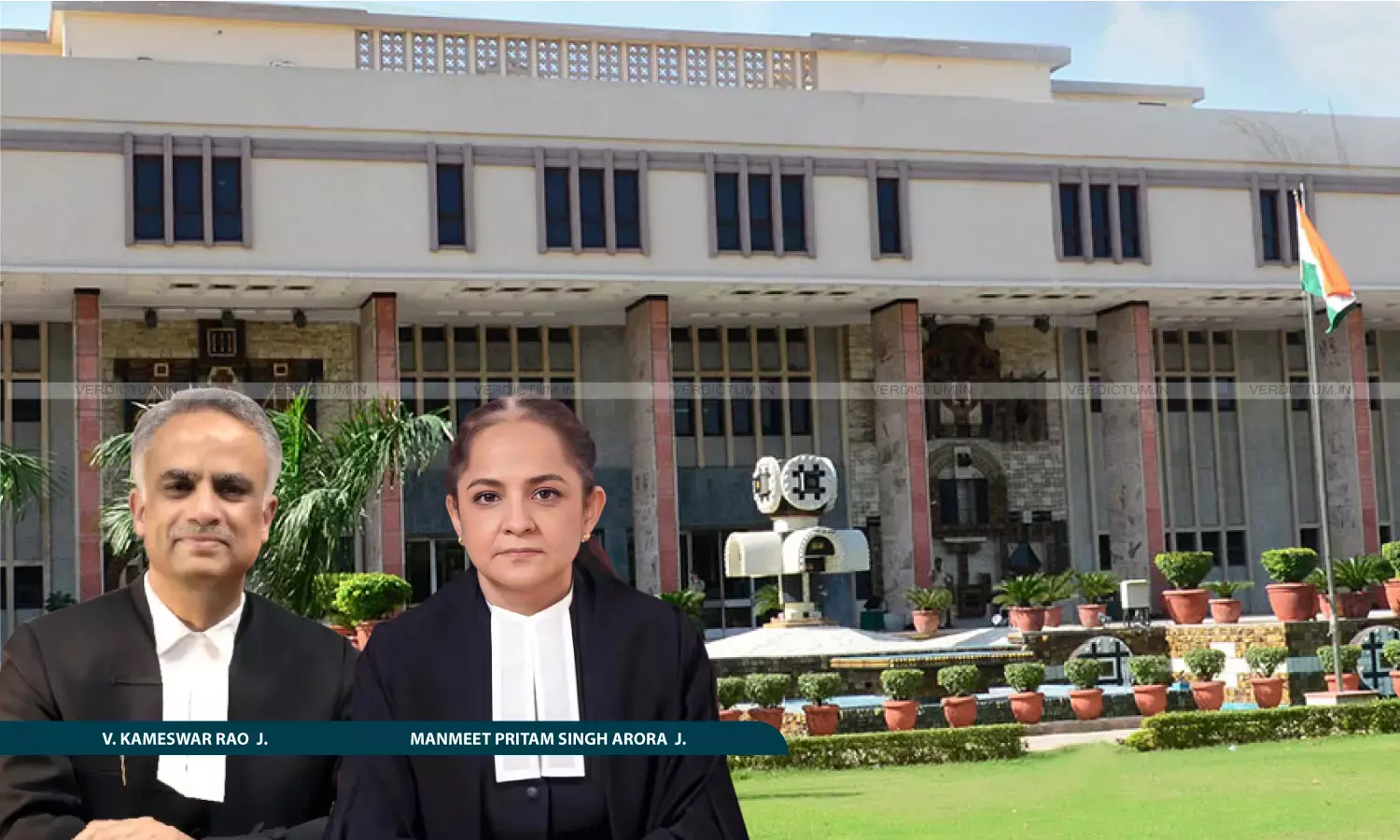
A Division Bench comprising Justice V. Kameswar Rao and Justice Manmeet Pritam Singh Arora observed, “There is no dispute that annual turnover of the petitioner is Rs.75.22 Lacs, much below the turnover of Rs. 33 crores stipulated in the tender document and also much below the tender value. In that sense, the petitioner is not meeting the turnover requirement. Such requirement cannot be relaxed for a procurement relating to public health and safety, in terms of the aforesaid OM”.
Advocate P.B. Sashaankh appeared for the petitioner and Jivesh Tiwari, CGSC appeared for the respondent.
“…Though, this plea looks appealing on a first blush, but on a deeper consideration, when the petitioner is not meeting the financial turnover criteria, the relaxation cannot be given to the petitioner, merely because the petitioner is a micro enterprise, the purchase preference shall not be applicable in the case of the petitioner. There appears to be an anomaly, which the respondent could not foresee, while incorporating the Clause 5 in the manner they have done to indicate that purchase preference shall be applicable to an MSE. That apart, if the Clause 5 is read meaningfully, it means that the purchase preference shall be applicable only to those enterprises, which meet the threshold turnover of Rs.33.00 Crores, which in any case, shall be small enterprises and not micro”, the Bench had further noted.
In the matter, the tender required bidders to demonstrate a minimum average annual turnover of Rs. 2 crores and, for the OEM, Rs. 48 crores over the preceding three years, later relaxed to Rs. 33 crores following representations, but still roughly five times the statutory turnover ceiling of Rs. 10 crores for a micro enterprise.
The petitioner, whose own average annual turnover stood at approximately Rs. 75 lakh, contended that the criterion was arbitrary and self-defeating, since the tender simultaneously promised purchase preference to MSEs under the Public Procurement Policy for Micro and Small Enterprises Order, 2012, while imposing a turnover bar no MSE could cross. It relied on a Chhattisgarh High Court judgment in which a tender had granted MSEs complete exemption from turnover and experience criteria.
The Union of India, defended the criterion by relying on the 2016 Office Memorandum, which permits procuring entities to withhold turnover and experience relaxation for MSEs in procurements relating to public safety, health, and critical security equipment where adequate justification exists.
It contended that the equipment constituted life-support medical infrastructure for Armed Forces hospitals, that the OEM turnover threshold had already been reduced from Rs. 48 crores to Rs. 33 crores after considering industry representations, and that the petitioner's turnover, well below even the value of a single unit under the tender, did not inspire confidence in its capacity to execute and support the contract over its operational life. The Respondent also pointed to a specific tender clause stating that no exemption from turnover or experience criteria would be granted.
Distinguishing the Chhattisgarh High Court precedent on the ground that it involved a tender expressly granting MSEs complete exemption, and relying on the Supreme Court's ruling in Agmatel India Pvt. Ltd. v. Resoursys Telecom Others, (2022) 5 SCC 362 that a tender-floating authority is the best interpreter of its own tender absent illegality, irrationality, or mala fides, the Court held that the OEM turnover criterion could not be relaxed for the petitioner. It further held that the purchase-preference clause could not be invoked to bypass the eligibility threshold, since preference under the tender's scheme operated only after a bidder had already cleared the eligibility and technical-qualification stages.
Accordingly, the Court dismissed the writ petition, while directing the Ministry to correct the identified anomaly in future tenders and observing that the pending 2025 procurement, being health-related, ought to be brought to finality without further delay.
Cause Title: Althion Tech Innovations Pvt. Ltd. v. Union of India (Neutral Citation: 2026:DHC:6904-DB)
Appearances:
Petitioner: P.B. Sashaankh, Ritwik Mohapatra and Vardaan Wanchoo, Advocates.
Respondent: Jivesh Tiwari, CGSC, Rahul Kumar Sharma, Government Pleader, Nandini Aggarwal and Samiksha, Advocates, with Col. M.K. Mishra and Col. GPS Gahlot.