

Father Can’t Be Held Liable Under Domestic Violence Act Merely Because He Didn’t Control Conduct Of His Adult Son: Delhi High Court
The Delhi High Court was considering a petition filed by a woman assailing the order passed in favour of her father-in-law under the Protection of Women from Domestic Violence Act.

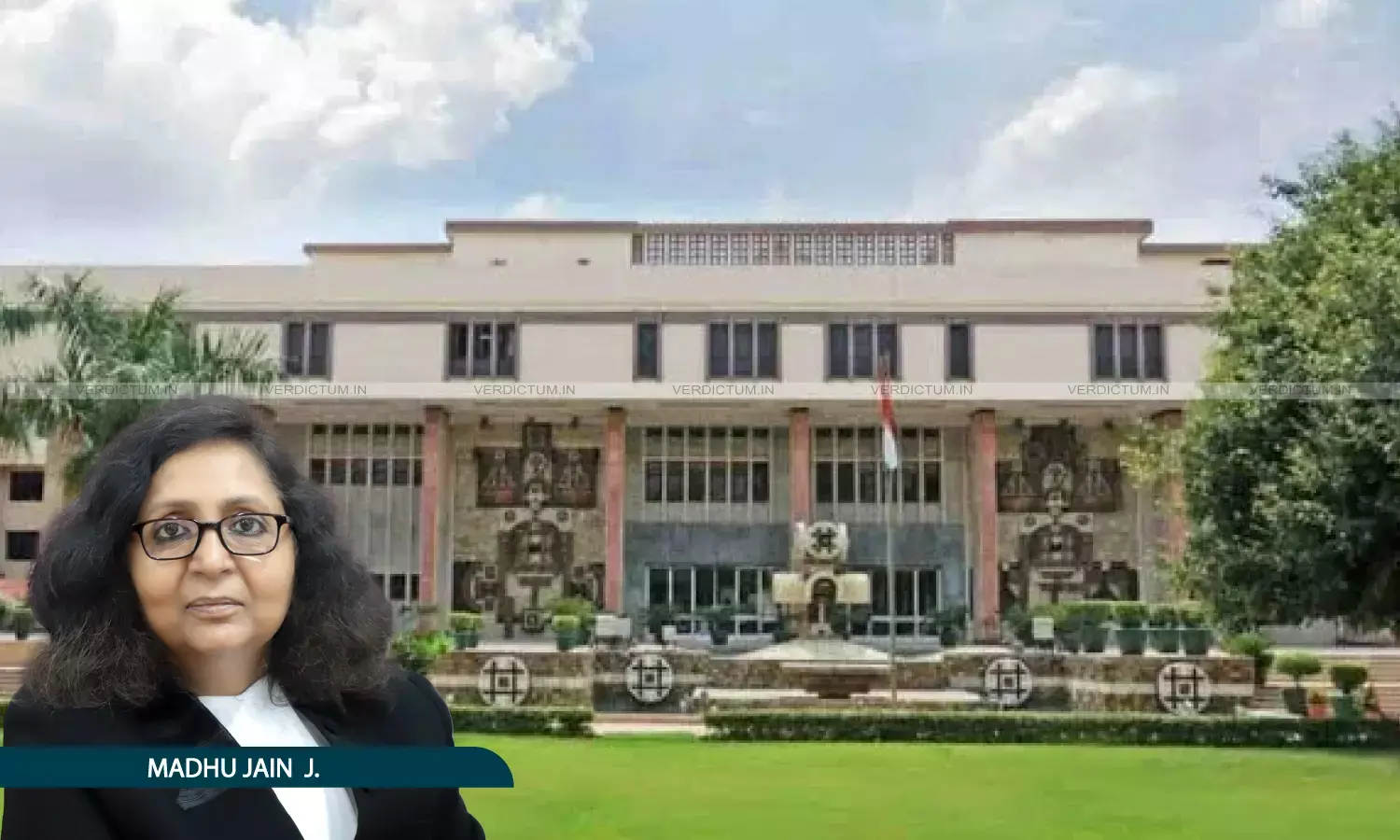
While upholding an order setting aside the direction for issuance of notice to a father-in-law under the Protection of Women from Domestic Violence Act, 2005, the Delhi High Court has held that a father cannot be made liable under the Act merely because he did not control the conduct of his adult son.
The High Court was considering a petition filed under Section 482 of the Code of Criminal Procedure, 1973 (Cr.P.C.) assailing the order allowing the appeal preferred by the petitioner’s father-in-law and setting aside the direction for issuance of notice to him under the Protection of Women from Domestic Violence Act, 2005 (DV Act).
The Single Bench of Justice Madhu Jain held, “Nothing in this account shows his participation in the alleged matrimonial misconduct of respondent No. 3. A father cannot be made liable under the DV Act merely because he did not control the conduct of his adult son.”
Advocate Dhruv Chawla represented the Petitioner while Advocate Ravi Kumar Aggarwal represented the Respondent.
Factual Background
The petitioner married the third respondent in 2006 and, thereafter, resided with her husband and father-in-law(second and third respondents). The petitioner and third respondent adopted a daughter. The father-in-law carried on business as the sole proprietor of a firm, while the petitioner and her husband were partners in the firm. The petitioner alleged that the second respondent interfered with the firm, restricted her access to the office and email facilities, supported the husband in the matrimonial discord, and sought to compel the petitioner, the third respondent and their daughter to leave the shared household.
The husband and father-in-law denied these allegations and maintained that the dispute involving the father -in-law was commercial, and the matrimonial dispute was between the petitioner and the husband (third respondent). In 2019, the petitioner instituted proceedings under Section 12 read with Sections 17 to 22 of the DV Act, seeking protection, residence, monetary and compensatory reliefs. The husband and the father-in-law alone were arrayed as respondents. The Metropolitan Magistrate, after considering the Domestic Incident Report (DIR) and the material on record, directed issuance of notice to both respondents.
The father-in-law preferred an appeal under Section 29 of the DV Act. The Appellate Court accepted the existence of a domestic relationship, but held that the allegations against him arose substantially from the dealings of the firm and did not disclose economic, verbal or emotional abuse. Aggrieved by the aforesaid, the petitioner approached the High Court.
Reasoning
The Bench noted that even on the petitioner’s account, no step by the father-in-law was stated which could enable him to take over or wind up the firm or affect her partnership rights. “A bare statement of such a threat, without explaining how those rights could be affected, does not make out economic abuse or a threat of economic abuse”, it stated.
Referring to Section 17, the Bench explained that the right under Section 17 does not depend on title, and actual dispossession is not necessary. A threat of dispossession may itself attract Sections 3(c) and 18. The Bench found that no consequence was threatened and no step to remove the petitioner, prevent her access or disturb her possession was alleged. The Bench took note of the fact that the petitioner continued to reside in the shared household and sought alternate accommodation with reference to the status of the third respondent. “Read together, these facts do not show a threat of domestic violence by respondent No. 2”, it added.
The Bench stated that the application, did not set out any act by him which amounted to domestic violence. According to the Bench, the brief reasons given by the Metropolitan Magistrate were not, by themselves, sufficient to set aside the notice. Thus, finding no ground for interference under Section 482 of the Cr.P.C., the Bench dismissed the petition while ordering that the proceedings against the father-in-law would remain unaffected.
Recently, the Supreme Court held that failing to restrain her son does not satisfy the legal threshold of cruelty or common intention under Section 498A of the IPC, without a factual foundation.
Cause Title: A v. State Through Chief Secretary & Ors. (Case No.: CRL.M.C. 6388/2023)
Appearance
Petitioner: Advocates Dhruv Chawla, Nitin Kumar, Vipul Kanwar, Harshita Pal
Respondent: Advocates Ravi Kumar Aggarwal, Ishaan Aggarwal, Vineet Chaudhary, Santosh Chaudhary