

Rubbing Of Private Parts Without Penetration Does Not Amount To Penetrative Sexual Assault: Delhi High Court Modifies POCSO Conviction
The High Court reduced a man’s 20-year sentence to 10 years after finding that he had entered the stage of attempting penetrative sexual assault.

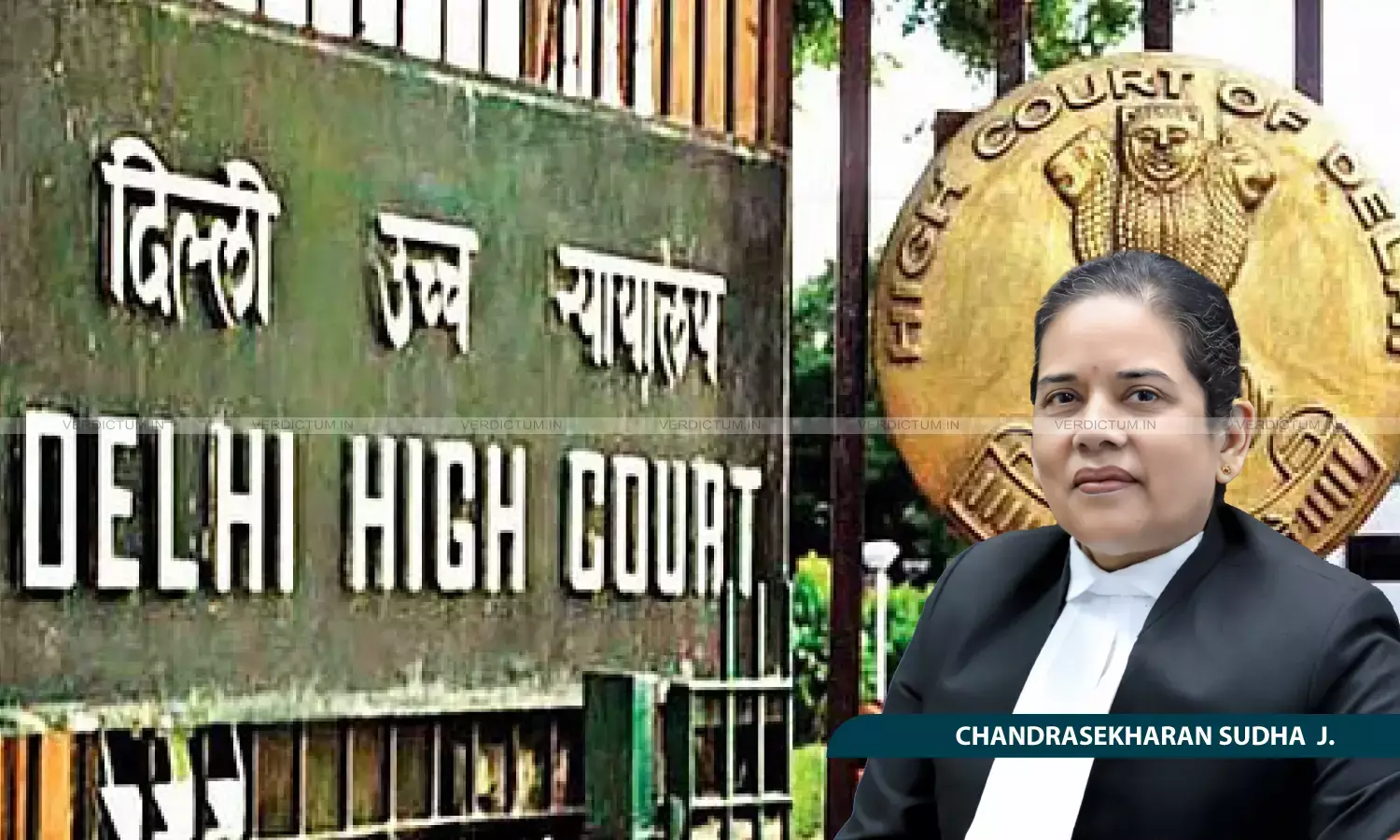
The Delhi High Court has modified the conviction and reduced the sentence of a man convicted under the Protection of Children from Sexual Offences (POCSO) Act, holding that while rubbing private parts against a minor does not fulfill the statutory requirement of penetration under Section 3, it clearly crosses the threshold of "preparation" into an "attempt" under Section 18.
It was observed that because the prosecution failed to establish actual penetration—however slight—the offense fell short of completed aggravated penetrative sexual assault under Section 6.
Consequently, the Court altered the appellant's conviction to Section 18 read with Section 6 of the POCSO Act and reduced his 20-year rigorous imprisonment sentence to 10 years, noting that the overt act of undressing and ejaculating demonstrated clear execution of intent beyond mere preparation.
The Bench of Justice Chandrasekharan Sudha held, "The rubbing of the penis of the accused against the private part of PW1 does not apparently come within clauses (a) to (d) of Section 3 of the Act. Therefore, the case of penetrative sexual assault under Section 3 or aggravated penetrative sexual assault as contemplated under Section 5 POCSO Act cannot be held to have been made out from the materials available on record."
Advocate Azhar Qayam appeared for the Appellant, while APP Manjeet Arya appeared for the Respondent.
Brief Facts
The prosecution case originated from a incident wherein the sole accused allegedly lured a minor victim—a three-year-old girl—into his residence while she was playing outside.
The accused removed the victim's lower garment, undressed himself, lay on top of her, and rubbed his private parts against her private parts until he ejaculated, thereby soiling her clothing.
A First Information Report was lodged on the mother's statement, and the police conducted an investigation, culminating in a chargesheet filed under the provisions of the Indian Penal Code and the Protection of Children from Sexual Offences Act (PoCSO Act).
The trial court framed charges against the accused for offences punishable under Section 6 of the PoCSO Act (aggravated penetrative sexual assault) and Section 376(2)(i) of the Indian Penal Code.
After the closure of prosecution evidence, the accused was examined under Section 313 of the Code of Criminal Procedure, where he denied the allegations, claimed false implication due to a monetary dispute with the victim's father, and pleaded severe intoxication to the level of unconsciousness.
The trial court convicted the accused under Section 6 of the PoCSO Act and Section 376(2)(i) of the Indian Penal Code, sentencing him to undergo rigorous imprisonment for twenty years along with a fine. Aggrieved by the conviction and sentence, the accused filed the present criminal appeal before the High Court.
Contentions of the Parties
It was contended by the Appellant/Accused that the trial court failed to properly appreciate the evidence on record and that the judgment was contrary to the facts and law. It was argued that the prosecution failed to prove any act of penetration, and therefore, the conviction for aggravated penetrative sexual assault under Section 6 of the PoCSO Act could not be sustained. It was submitted that the accused was falsely implicated owing to an existing dispute with the victim's father.
The State supported the trial court’s findings, arguing that there was no infirmity in the judgment. The State relied heavily on the Forensic Science Laboratory (FSL) report, which confirmed a matching DNA profile generated from the vaginal swabs, pyjamas, and underwear of the victim with the blood and semen samples of the accused.
It was asserted that the consistent testimonies of the child victim and her mother, combined with forensic confirmation of ejaculation, fully substantiated the grave charges against the accused.
Observations and Findings of the Court
The High Court noted that while a formal hearing under Section 232 of the Cr.P.C. was omitted post-examination under Section 313 Cr.P.C., such non-compliance did not vitiate the trial proceedings, as no substantial prejudice was demonstrated or claimed by the accused.
The Court observed that to establish an offence under Section 6 of the PoCSO Act or Section 376(2)(i) IPC, actual penetration—however slight—was a mandatory prerequisite. Examining the oral testimony of the child victim and the mother's initial statements, the Court noted that while the act involved rubbing private parts and ejaculation, there was no statement or evidence proving penetration into the victim's body. Consequently, the conviction for completed aggravated penetrative sexual assault under Section 6 could not stand.
The Court distinguished between mere "preparation" and an "attempt" to commit a crime. It observed that the accused, having undressed himself and the child and engaged in rubbing his private parts against hers until ejaculation, had progressed far beyond the stage of preparation. His deliberate overt acts clearly established an intention and direct execution toward committing penetrative sexual assault.
"The stage of “preparation” consists of deliberation, devising or arranging the means or measures, which would be necessary for the commission of the offence. An “attempt” to commit the offence, starts immediately after the completion of preparation. “Attempt” is the execution of mens rea after preparation. “Attempt” starts where “preparation” comes to an end, though it falls short of actual commission of the crime", the Court observed.
Holding that the act fell short of completed penetration but clearly amounted to an attempt to commit aggravated penetrative sexual assault on a child under twelve years of age, the High Court altered the conviction from Section 6 to Section 18 read with Section 6 of the PoCSO Act.
The Court held, "In the case on hand, the accused after undressing himself and the victim, proceeded to rub his penis against the private part of PW1. Therefore, he reached the stage much after preparation and his intention is clear from the overt act committed. He did enter the stage of attempting penetrative sexual assault."
In accordance with Section 57 of the Indian Penal Code, the maximum sentence leviable for an attempt punishable under Section 18 is half of the maximum term (ten years).
Considering the age of the accused relative to the infant victim, the High Court held that no leniency was warranted and modified the sentence to ten years of rigorous imprisonment while keeping the fine intact.
Cause Title: Anil v. State [Neutral Citation: 2026: DHC: 5865]
Appearances:
Appellant: Advocates Azhar Qayam, Narender Kumar, Shahmuddin Zehri, Zubair Khan and Priyanka Singh
Respondents: APP Manjeet Arya