

Marriage To Third Party Behind Prosecutrix's Back Creates Grave Suspicion Warranting Trial: Delhi High Court Refuses Discharge In Rape Case
The Court said if two views are possible and evidence creates a 'mere suspicion' rather than a 'grave suspicion' regarding the accused's involvement it is fully justified in discharging the accused.

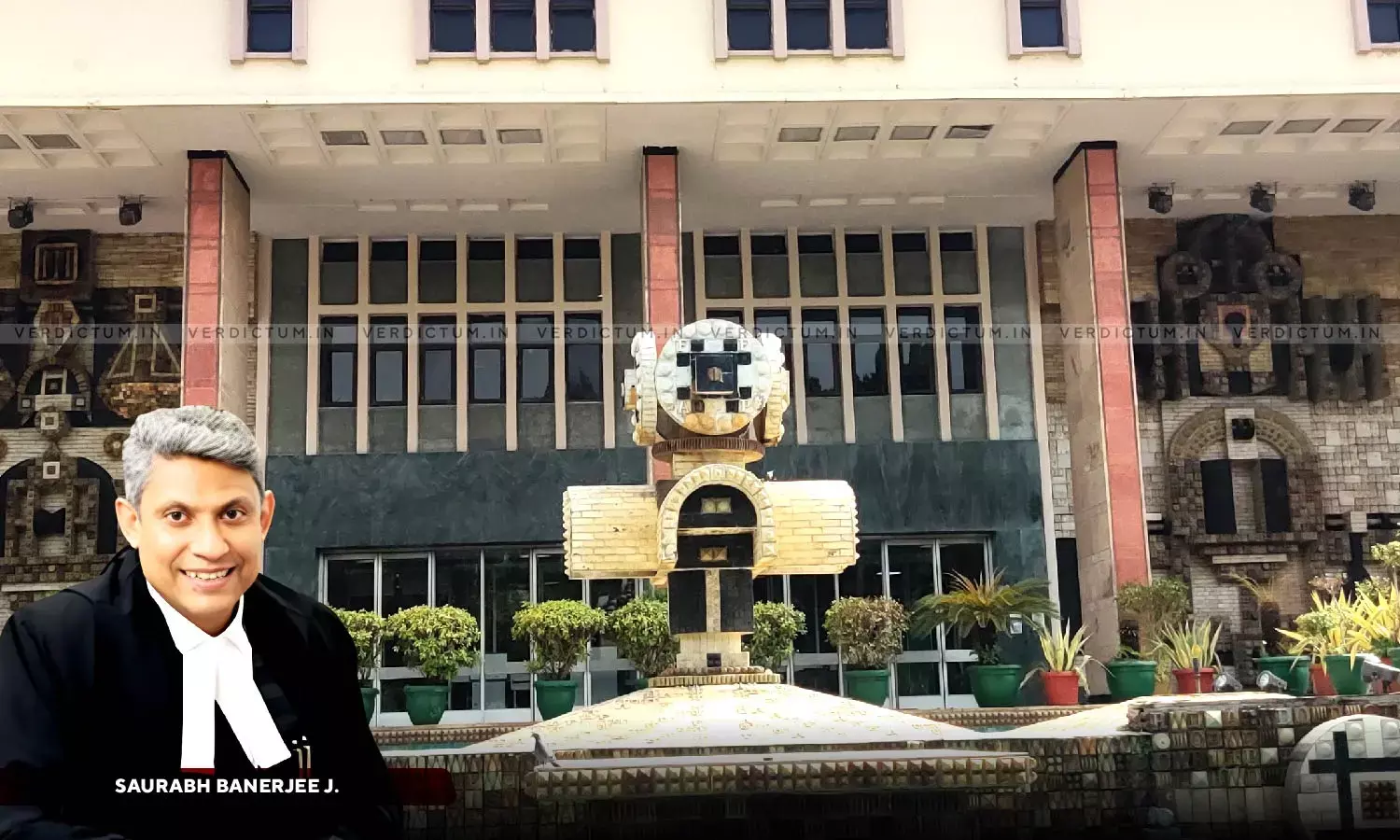
The Delhi High Court has held that the marriage of the accused to a third party, barring the prosecutrix, is sufficient to create ‘grave suspicion’ in the mind of a Court.
The Court dismissed a criminal revision petition filed by the accused seeking discharge, and upheld the Trial Court's order framing charges under Sections 376(2)(n) and 377 of the Indian Penal Code, 1860.
The Court observed that while exercising its revisional jurisdiction, it must limit its scrutiny to a prima facie assessment of the material on record rather than conducting a meticulous mini-trial.
The Bench of Justice Saurabh Banerjee held, "In the present proceedings, the marriage of the petitioner to a third party barring the prosecutrix (without telling her/ behind her back: which are subject matter of trial) are sufficient to create ‘grave suspicion’ in the mind of a Court."
Advocate Prince Arora appeared for the Petitioner, while APP Raghuinder Verma appeared for the Respondents.
Brief Facts
The matter arose out of a criminal revision petition wherein the petitioner sought the setting aside of an order passed by the learned Trial Court framing charges against him under Sections 376(2)(n) and 377 of the Indian Penal Code, 1860, and consequently prayed for his discharge.
The prosecutrix and the petitioner came into contact with each other through a matrimonial application, which subsequently culminated in friendship. The petitioner travelled from his native place in Uttarakhand to Delhi to meet the prosecutrix and discuss their proposed marriage.
It was alleged by the prosecutrix that the petitioner called her to a hotel in Delhi where he established physical relations with her on the false promise of marriage. Thereafter, the petitioner repeatedly engaged in sexual relations with her at various hotels on the same pretext. The prosecutrix further alleged that she was forcibly subjected to unnatural sexual acts without her consent on certain occasions. Upon subsequently discovering that the petitioner had solemnized marriage with another woman, the prosecutrix lodged the first information report (FIR) against him.
Contentions of the Parties
The Petitioner contended that the learned Trial Court erred in law by failing to appreciate that the relationship inter-se the parties continued for a long period of three years, which strongly implied that the physical relations were entirely consensual.
It was further argued that the version of the prosecutrix was fabricated, as hotel records indicated she had voluntarily submitted her identity documents at the reception, thereby contradicting her claim of being a mere guest. Furthermore, the learned counsel submitted that since the prosecutrix had met and established physical relations with the petitioner even after discovering his marriage to another woman, her allegations were prima facie inconsistent.
It was also urged that the electronic evidence in the form of an audio recording had been wrongly relied upon by the learned Trial Court without forensic authentication.
Per contra, the State and the prosecutrix, vigorously opposed the petition and supported the impugned order framing charges. They contended that there was sufficient incriminating material on record, including the statements of the prosecutrix recorded under Sections 161 and 164 of the Code of Criminal Procedure, to prima facie make out the alleged offences. It was submitted that the petitioner had subsequently enticed the prosecutrix to meet him by promising to divorce his wife, and that the validity of the audio recordings was a matter to be determined during the trial.
Observations and Findings of the Court
The High Court observed that the learned Trial Court had duly applied its judicial mind to the chargesheet and the statements on record, which prima facie evinced the involvement of the petitioner.
The Court noted that the fact that the petitioner established physical relations with the prosecutrix for a considerable duration without disclosing his marriage to another woman created a grave suspicion, which could not be brushed aside at the stage of framing of charges.
The Court further observed that while exercising its revisional jurisdiction, it was required to undertake only a prima facie assessment of the material on record and was prohibited from entering into a meticulous appreciation of evidence or conducting a mini-trial.
It was held that interference in revision was warranted only in exceptional circumstances where the impugned order suffered from manifest illegality, patent perversity, or jurisdictional error.
"Consequently, where the evidence on record is capable of giving rise to two plausible views, and the material creates only a ‘mere suspicion’ rather than a ‘grave suspicion’ qua the involvement of the petitioner/ accused with respect to the alleged offence, the Court would be justified in discharging the petitioner/ accused", it added.
Distinguishing the judicial precedents cited by the petitioner, the Court found that the present case did not merely represent a consensual relationship gone sour, as the petitioner had married a third party behind the back of the prosecutrix.
The Court held that the subsequent acts and the veracity of the electronic evidence were strictly matters to be adjudicated during a full-fledged trial.
Finding no infirmity in the approach of the lower court, the High Court dismissed the petition and sustained the charges framed against the petitioner.
Cause Title: Anurag v. State and Anr. [Neutral Citation: 2026:DHC:5693]
Appearances:
Petitioner: Advocate Prince Arora, Advocate Wazid Ali, Advocate Mitabh Gosain
Respondents: Additional Public Prosecutor Raghuinder Verma, Advocate Aditya Vikram Singh, Advocate Upasna Bakshi, Sub-Inspector Ravinder Kumar, Advocate Isha Khanna