“Purity Of Trial In POCSO Matters Of Paramount Importance”: Supreme Court Cancels Bail Of Accused In Gang Rape Case
The Apex Court held that in cases involving sexual offences against children, the safety of the victim and the need to preserve the purity of the trial process must outweigh considerations favouring the grant of bail, and that bail granted on irrelevant considerations or by ignoring material factors warrants interference.
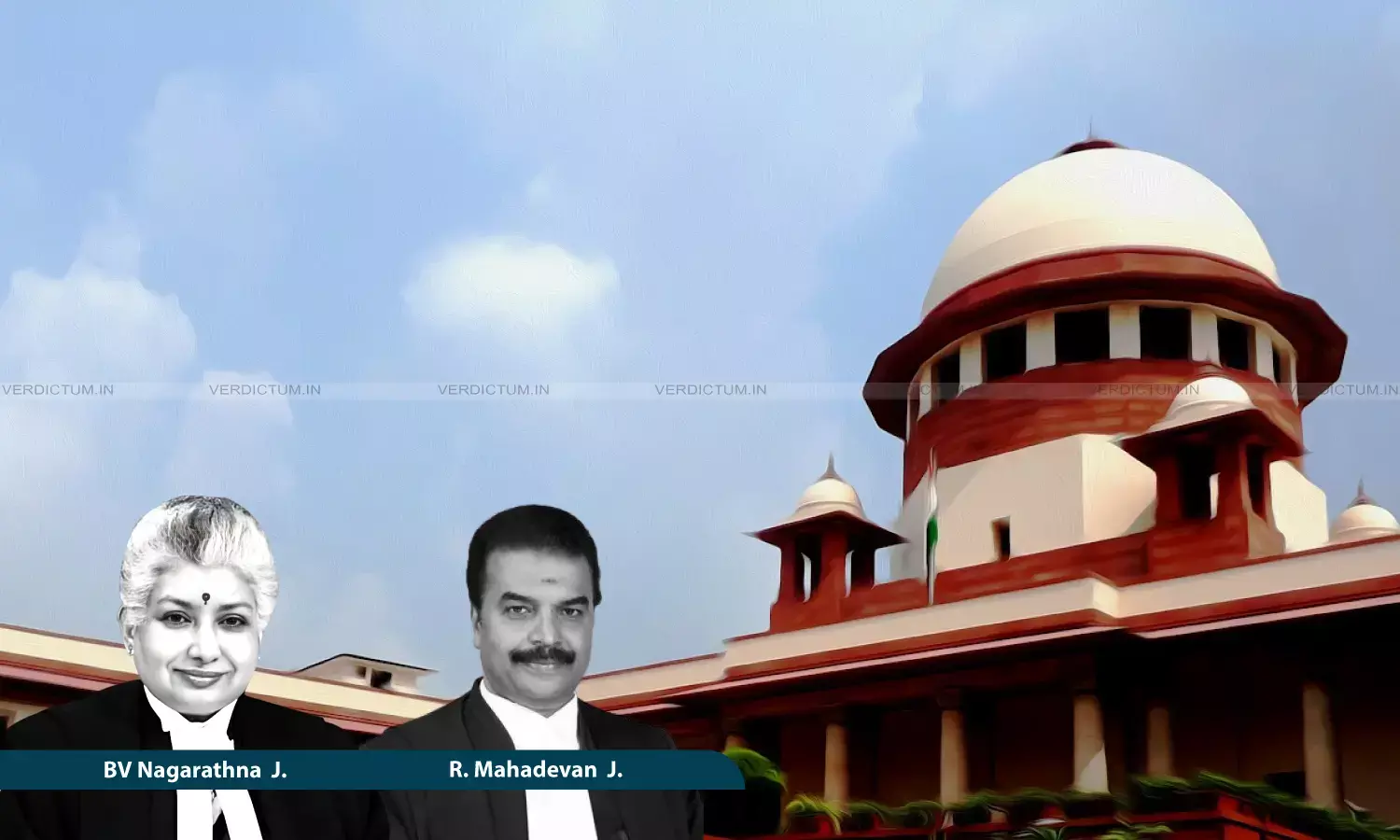
Justice B.V. Nagarathna, Justice R. Mahadevan, Supreme Court
While cancelling the bail of an accused in a gang rape case, the Supreme Court held that preservation of a fair and untainted trial assumes paramount importance in cases involving serious sexual offences against minors.
The Apex Court emphasised that bail granted without considering the gravity of the allegations, statutory rigour, and the vulnerability of the victim cannot be sustained.
The Court was hearing a criminal appeal challenging a judgment of the Allahabad High Court which had granted bail to the accused in a case involving offences under the Protection of Children from Sexual Offences Act, 2012.
A Bench comprising Justice B.V. Nagarathna and Justice R. Mahadevan observed that “the safety of the victim and the need to preserve the purity of the trial process assume paramount importance” and that where release of the accused gives rise to a real apprehension of intimidation or interference with the course of justice, bail ought not to be continued.
The appellant was represented by Md. Ali, AOR, while the respondents were represented by Vishwa Pal Singh, AOR.
Background
The appeal arose from an order passed by the Allahabad High Court granting bail to the accused in connection with an FIR registered for offences punishable under provisions of the Bharatiya Nagarik Suraksha Sanhita, 2023 and the Protection of Children from Sexual Offences Act, 2012. The allegations pertained to the commission of aggravated sexual offences against a minor.
After registration of the FIR, an investigation was carried out, statements of relevant witnesses were recorded, and the age of the victim was verified through documentary material. Upon completion of the investigation, a chargesheet was filed before the competent court.
The accused was initially denied bail by the trial court. However, the High Court allowed the bail application and enlarged the accused on bail, subject to conditions.
Aggrieved by the grant of bail, the appellant approached the Supreme Court seeking cancellation.
Court’s Observation
The Supreme Court examined the principles governing the grant and cancellation of bail, particularly in cases involving offences against children. The Court reiterated that while bail is not to be refused mechanically, it cannot be granted by ignoring material considerations such as the nature and gravity of the offence, the statutory framework, and the potential impact on the victim and witnesses.
The Court rejected the submission of a consensual relationship advanced on behalf of the Respondent as wholly untenable in law, “particularly where the allegations extend beyond a single accused and involve coercion, intimidation and multiple perpetrators”.
The Bench noted that offences under the Protection of Children from Sexual Offences Act, 2012, are grave and attract stringent statutory safeguards, reflecting the legislative intent to protect children from sexual exploitation. In such cases, the Court held, the vulnerability of the victim and the likelihood of intimidation or influence assume critical importance.
The Court found that the High Court, while granting bail, failed to accord due weight to the seriousness of the allegations, the material collected during the investigation, and the stage of the proceedings. It further observed that the High Court had overlooked relevant factors bearing on the risk to the victim and the integrity of the trial.
Furthermore, the Apex Court held that “the High Court failed to apply the settled parameters governing the grant of bail, including the gravity of the offence, the vulnerability of the victim and the likelihood of witness intimidation.”
Emphasising that the presence of the accused in the same locality as the victim could create a real and imminent apprehension of fear, trauma, or witness intimidation, the Court held that such considerations are central to the assessment of bail in cases of sexual offences against minors.
While rejecting the reliance placed on a series of previous rulings of the Supreme Court by the accused-respondent, the Court reiterated that “mechanical reliance on precedent without factual correlation is impermissible as authoritatively held by the Constitution Bench in Padmausundara Rao (Dead) and others v. State of Tamil Nadu and others.”
The Bench reiterated that where an order granting bail suffers from material omissions, ignores relevant considerations, or results in a miscarriage of justice, the Supreme Court is empowered to interfere and cancel bail, even in the absence of supervening circumstances, while highlighting that “in the present case, the grant of bail by the High Court is vitiated by material misdirection and non-consideration of relevant factors rendering the same manifestly perverse.”
Conclusion
Holding the order of the High Court granting bail as unsustainable in law, the Supreme Court set aside the impugned order and cancelled the bail granted to the accused.
The accused was directed to surrender before the jurisdictional court within the stipulated period, failing which appropriate steps were to be taken to secure custody in accordance with law. The appeal was allowed.
Further, while stating that “POCSO Act is a beneficial legislation enacted to protect children from sexual offences and that proceedings under the said Act warrant prompt and sensitive handling”, the Apex Court directed the Trial Court to accord priority to the case and proceed expeditiously.
Cause Title: X v. State of Uttar Pradesh And Another (Neutral Citation: 2026 INSC 44)
Appearances
Appellant: Md. Ali, AOR, with Advocate Shalu
Respondents: Vishwa Pal Singh, AOR, with Advocates Ghanshyam Singh, Adesh Kumar Gill, Mukesh Kumar, Ashutosh Bhardwaj, Suraj Pal Singh Mina, Nagendra Singh, Srishti Mishra, Naman Raj Singh and Parth Singh