If Indemnity holder Incurred Absolute Liability, He is Entitled To Call Upon Indemnifier To Pay It Off: Supreme Court
The Court held that while interpreting an indemnity clause in a Consent Award arising from arbitration under the Arbitration and Conciliation Act, 1996, the obligation to indemnify is triggered upon crystallisation of liability, and cannot be deferred until final appellate adjudication.
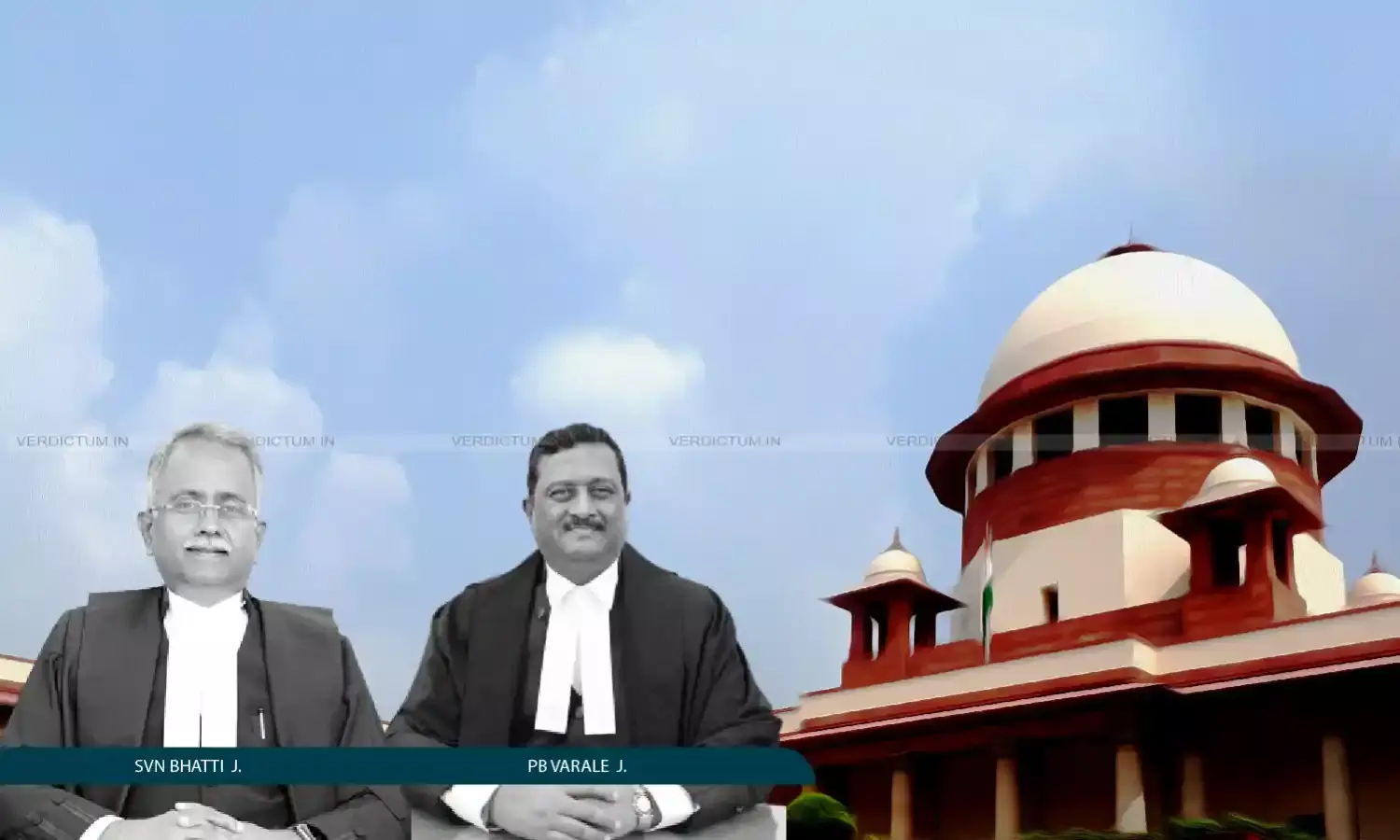
The Supreme Court observed that if the indemnity holder has incurred a liability, and that liability is absolute, he is entitled to call upon the indemnifier to save him from that liability and pay it off.
The Court was hearing a civil appeal arising from the enforcement of a Consent Award issued by the Singapore International Arbitration Centre (SIAC), which pertained to the scope and timing of an indemnity obligation undertaken by the promoters in favour of the appellant company.
A Bench of Justice S.V.N. Bhatti and Justice Prasanna B. Varale observed: “if the indemnity holder has incurred a liability, and that liability is absolute, he is entitled to call upon the indemnifier to save him from that liability and pay it off..
If liability is payable only after confirmation by the Supreme Court, the Promoters can choose not to pursue the appeal to the Supreme Court, so no liability is confirmed against the Promoters. This would render the undertaking under Paragraph 32(a) meaningless. Nullity cannot be the intention of the parties to the Consent Award”, the Court added.
Senior Advocates Dhruv Mehta and Diya Kapur represented the appellants and respondents, respectively.
Background
The dispute arose from a Share Purchase Agreement and a subsequent Deed of Compromise between VPS Healthcare Private Limited and the promoters of Rockland Hospitals Limited (later renamed Medeor Hospitals). The compromise was recorded in a Consent Award dated and passed by SIAC.
Under the terms of the compromise, the promoters undertook to defend specified proceedings and ensure that no liability arising from such litigation would be recovered from VPS/Medeor. The clause also contained an indemnity provision requiring the promoters to discharge liability within 30 days of confirmation by the highest appellate forum.
Subsequently, in arbitration proceedings initiated by Ernst & Young, an award was passed against Medeor, directing payment of substantial sums. To secure a stay of execution, Medeor was required to deposit over ₹15 crore. The appellants sought enforcement of the Consent Award to recover this amount from the promoters.
The High Court deferred enforcement, holding that the indemnity obligation would arise only after confirmation of liability by the highest court of appeal.
Court’s Observation
The Supreme Court undertook a detailed construction of the Consent Award, particularly Paragraph 32(a), which contained multiple obligations, including defence of proceedings, indemnification, and protection against recovery.
The Court found that the High Court erred in isolating the clause requiring payment after confirmation by the highest court, while ignoring the broader and immediate obligation of the promoters to ensure that no liability is recovered from VPS/Medeor.
It held that the clause requiring discharge within 30 days of final confirmation represents only a timeline for an extreme eventuality and cannot be treated as the sole trigger for liability.
“… The remedies clause permitting appeals up to the Highest Court merely authorises the Promoters. Further, the fifth limb granting thirty days after confirmation by the Highest Court is for an extreme scenario in which liability survives every appellate challenge. It is not the primary trigger for the Promoters’ obligation. Treating the fifth limb as a necessary prerequisite to the Promoters’ obligation would render the fourth limb otiose”, the Bench remarked.
The Court further observed that the obligation to “ensure” that no liability is recovered from VPS/Medeor is absolute in nature and not contingent. It noted that such language imposes a present and enforceable obligation to insulate the indemnity holder from liability.
Applying principles of indemnity law, the Court relied on Khetarpal Amarnath and reiterated:
“If the indemnity holder has incurred a liability, and that liability is absolute, he is entitled to call upon the indemnifier to save him from that liability and pay it off.”
The Court held that the requirement imposed by the High Court directing the deposit of the arbitral award amount constituted a crystallised liability. The actual deposit of ₹15.86 crore by Medeor further established that the liability had already materialised.
Rejecting the promoters’ contention, the Court held that waiting for confirmation by the highest appellate forum would render the protective clause meaningless and defeat the commercial intent of the agreement. It was observed that such an interpretation would allow the indemnifier to indefinitely delay performance by prolonging litigation.
The Court also emphasised that contractual clauses must be read harmoniously, and no part of the agreement can be rendered otiose. The High Court’s approach of prioritising one limb of the clause over others was held to be legally unsustainable.
“Purposive construction is unavailable in the present case because a literal and plain reading of Paragraph 32(a) of the Consent Award, taking every limb together and none in isolation, ensures an immediate enforceable obligation, … the present case is one of discharge of a crystallised liability, and it is not a case of indemnity that matures only upon the confirmation by the Highest Court of Appeal”, the Court concluded.
Conclusion
The Supreme Court held that the indemnity obligation of the promoters was triggered upon crystallisation of liability and did not depend upon final confirmation by the highest court of appeal.
Accordingly, the Court set aside the judgment of the High Court and allowed the enforcement petition. The promoters were directed to pay or deposit ₹15.86 crore within 30 days for the benefit of VPS/Medeor, subject to the outcome of pending proceedings.
Cause Title: VPS Healthcare Private Limited & Anr. v. Prabhat Kumar Srivastava & Ors. (Neutral Citation: 2026 INSC 361)
Appearances
Appellants: Dhruv Mehta, Sr. Adv.; Haris Beeran; Azhar Assees; Anand B. Menon; Prateek Singh Chaudhary; Shreya Sethi; Anirudh Bhatia; Rizwana R. Raj; Shaswat Jena; Radha Shyam Jena, AOR
Respondents: Diya Kapur, Sr. Adv.; Daya Krishan Sharma, AOR; Rohit Vats; Naman Gupta; Rohit Yadav; Ankit Bhanot, Advocates