

HRA, Transport And Other Allowances Cannot Be Excluded From Overtime Wages: Supreme Court
The Court was of the opinion that different Ministries cannot assign varying meanings to a statutory provision when its intent is clear from the plain reading of Section 59(2) of the 1948 Act.

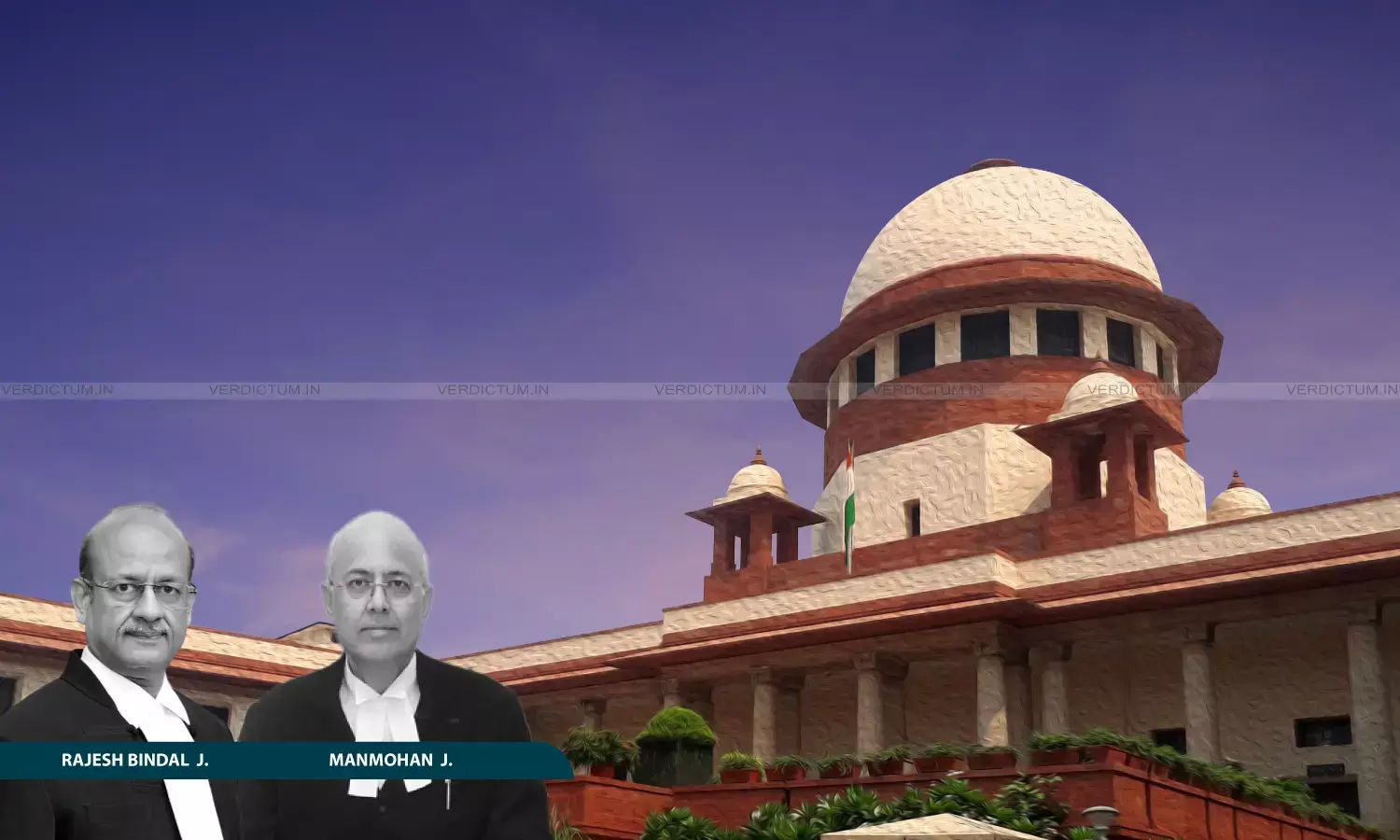
Justice Rajesh Bindal, Justice Manmohan, Supreme Court
The Supreme Court has held that compensatory allowances such as House Rent Allowance (HRA), Transport Allowance, Clothing and Washing Allowance and Small Family Allowance must be included while computing overtime wages, as they fall within the expression “ordinary rate of wages” under Section 59(2) of the Factories Act, 1948.
The Court held that a plain reading of the provision under the 1948 Act makes its intent clear and that Union Ministries cannot assign differing meanings to an Act of the Parliament, rejecting the Union of India’s reliance on executive instructions and office memoranda to exclude compensatory allowances from overtime calculations.
Accordingly, a bench of Justice Rajesh Bindal and Justice Manmohan while upholding the High Court’s interpretation held, “The High Court has rightly opined that it is well-settled principle of statutory construction that the Legislature never wastes its words. Notably, when the statute provides for only two specific exclusions: bonus and wages for overtime work, in the absence of any formal rules governing the exclusion of other entitlements, the Executive cannot, through a mere Office Memorandum, read additional exclusions into the Act that the Legislature did not contemplate. The High Court further noted that the employees had been in receipt of overtime allowances calculated by including HRA, TA, SFA, etc., for a considerable duration. The sudden exclusion of these allowances via the Office Memorandum dated 26.06.2009, lacks legal authority and is contrary to the literal mandate of Section 59 of the 1948 Act”.
The Court further held that neither the Central Government nor the State Governments can, through executive instructions or rules, dilute or override the statutory mandate of Section 59 of the 1948 Act, and any interpretation contrary to the clear language of the statute would be impermissible in law.
For the facts, the matter originated when the Heavy Electricals Factory Employees’ Union raised claims for payment of overtime wages by including compensatory allowances such as HRA, Transport Allowance, Clothing and Washing Allowance and Small Family Allowance, contending that their exclusion was contrary to Section 59 of the Factories Act, 1948.
The claim was upheld by the Central Administrative Tribunal, which held that such allowances formed part of the “ordinary rate of wages” for the purpose of overtime computation. Pursuant to which, the Union of India challenged the award before the Madras High Court.
However, the High Court also affirmed the Tribunal's view and rejected the government’s reliance on executive instructions excluding compensatory allowances.
Aggrieved by the High Court’s decision, the Union of India filed civil appeals before the Supreme Court, giving rise to the present proceedings.
The Court after considering the provisions under the 1948 Act, and the submissions of the parties noted that the statutory language was clear and unambiguous and that executive instructions could not override or dilute the mandate of the statute.
The bench categorically noted in the judgment the separate powers of the State government from the Centre that has been provided under the relevant Act. The bench said that on a conjoint reading of the provisions of the Factories Act, 1948 and the General Clauses Act, 1897 makes it clear that the power to frame rules, grant exemptions, or issue orders under the Act vests exclusively in the “State Government” as defined under Section 3(60) of the General Clauses Act, post–Seventh Constitutional Amendment.
Furthermore, Sections 64 and 65 of the 1948 Act confer rule-making and exempting powers solely on the State Government (and the Chief Inspector subject to its control), including in matters under Chapter VI such as determination of the “ordinary rate of wages” for overtime under Section 59(2). Even Chapter XI, comprising Sections 112 and 113, does not empower the Central Government to issue clarifications or frame rules, limiting its role only to issuing directions to State Governments for implementation of the Act.
The Court rejected the Union of India’s reliance on executive circulars, holding that different Ministries cannot assign varying interpretations to a central statute, particularly when the legislative intent is explicit.
Consequentially, the appeals filed by the Union of India were dismissed, and the High Court’s interpretation was upheld.
Cause Title: Union of India v. Heavy Electricals Factory Employees’ Union (Neutral Citation 2026 INSC 74)
Appearances:
Petitioner: Shreekant Neelappa Terdal
Respondent: Vijay Kumar