

Disability Pension Can't Be Awarded To Army Personnel If Disease Was Attributable To Smoking: Supreme Court
The Court relied on a medical report which said that the stroke was not attributable to service but due to the habit of smoking bidis, that too ten bidis per day.

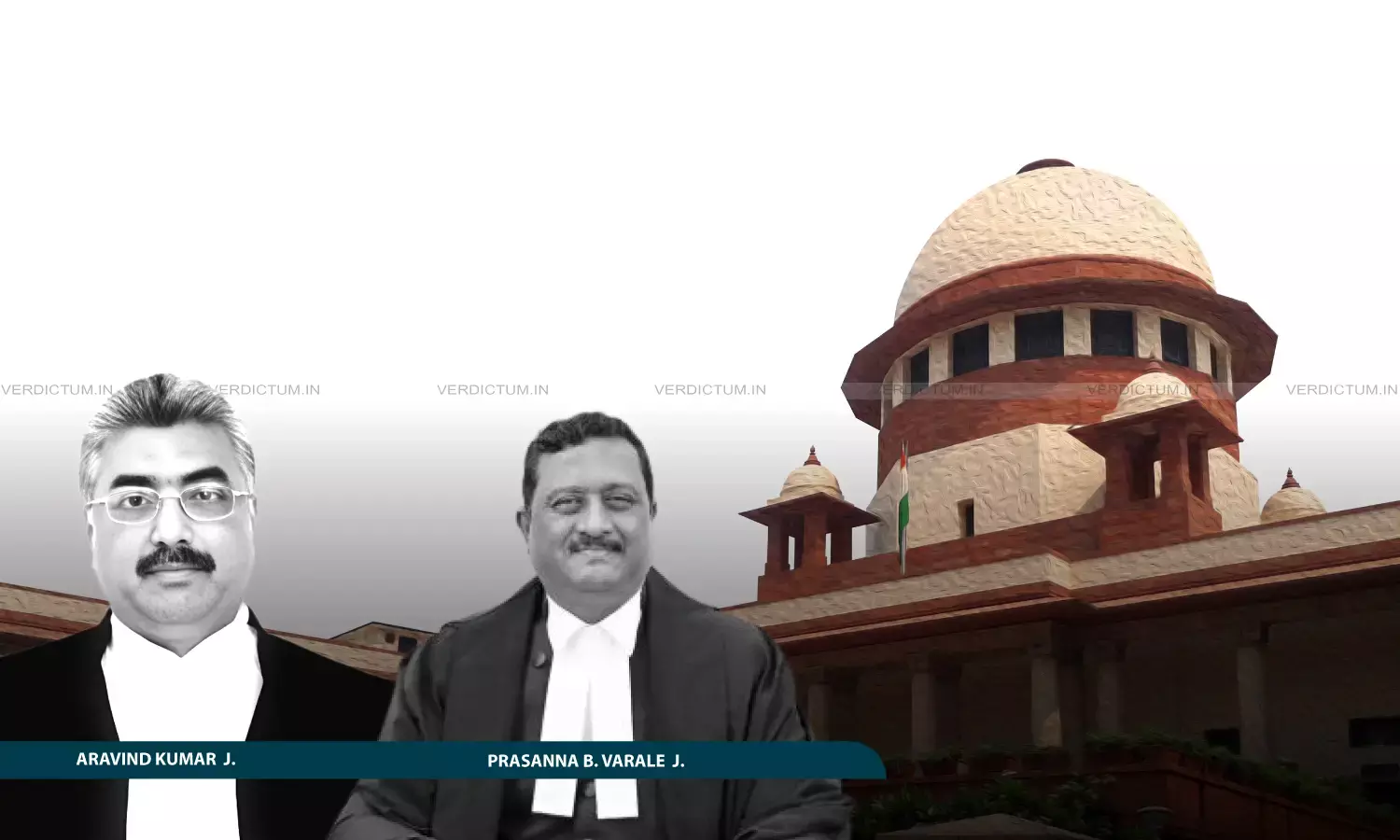
The Supreme Court has observed that disability compensation/pension cannot be awarded to the Army personnel if the disease was attributable to the habit of smoking bidis.
The Court was hearing an appeal assailing the order/judgment passed by the Armed Forces Tribunal, which had refused to grant pension for disablement.
The Bench of Justice Aravind Kumar and Justice PB Varale observed, "In the instant case, the Medical Review Board has clearly opined that on account of continuous smoking, the disease of “Stroke Ischemic RT MCA TERRITORY” attributable to the appellant could have occasioned and as such Medical Board has concluded that it is neither attributable to service nor aggravated due to service conditions. The judgment of Bijender Singh Vs. Union of India & Ors. in Civil Appeal Nos.4458-4459/2024 relied upon by the learned counsel appearing for the appellant when perused would clearly show that it was a clear case where the appellant therein was working in Siachen Glacier which is high altitude posting from May 1988 to 20.09.1988 and the opinion rendered by the Medical Board that the disability assessed at 15% to 19% was not attributable or aggravated by military service was not accepted by this Court."
AOR Kaushal Tandon appeared for the Appellant, whereas ASG Satya Darshi Sanjay appeared for the Respondents.
The Court relied on the fact that the Tribunal took note of Regulation 173 of Pension Regulations for the Army, 1961 and paragraph 6 of the Guide to Medical Officers, 2002 which would indicate that “compensation cannot be awarded for any disablement or death arising from intemperance in the use of alcohol, ‘tobacco’ or drugs or sexually transmitted disease, as these are the matters within the member’s own control.”
It was held, "In the instant case having perused the First Medical Report and the opinion of the Medical Board, it would leave no manner of doubt in us that the disease of “Stroke Ischemic RT MCA TERRITORY” was not attributable to service nor aggravated on account of service and we say so for the simple reason that in both the reports, it was clearly indicated that the appellant was in the habit of smoking bidis that too ten bidis per day..."
The Court said that it is trite position of medical law that an ischemic stroke occurs when a blood clot or fatty plaque (atherosclerosis) blocks an artery leading to brain, restricting oxygen which reduces blood flow and causing brain tissue damage and the medical opinion categorizing risk factors includes high blood pressure (hypertension), smoking, diabetes, high cholesterol, i.e., dyslipidemia, obesity and atrial fibrillation.
The Court, accordingly, dismissed the Appeal while noting that the facts of the judgment Bijender Singh vs. Union of India(Supra) were entirely different from the present case.
Hence, the Court refused to interfere with the order of the Tribunal.
Cause Title: Sarevesh Kumar v. Union of India & Ors. [Civil Appeal No. 773/2024]
Appearances:
Appellant: Advocate on Record Kaushal Yadav, Advocate Nandlal Kumar Mishra, Advocate Onkar Nath Sharma, Advocate Ritul Tandon, Advocate Naina Garg, Advocate Priyanka.
Respondents: Additional Solicitor General Satya Darshi Sanjay, Advocate on Record Mukesh Kumar Maroria, Advocate Shubh Sharma, Advocate Shubham P. Mishra, Advocate Khushal Kolwar, Advocate Nikita Sethi, Advocate Divyam Aggarwal, Advocate Satya Jha, Advocate Sudhakar Kulwant, Advocate Praneet Pranav, Advocate Raman Yadav, Advocate Rekha Pandey.