Presumption U/S 139 N.I. Act Can’t Be Rebutted At Pre-Trial Stage; Defence Of No Enforceable Debt To Be Tested During Trial: Supreme Court
The Court held that once the foundational ingredients of Section 138 of the N.I. Act are satisfied, the statutory presumption in favour of the holder of the cheque operates, and can be rebutted only during trial, not at the stage of issuance of process.
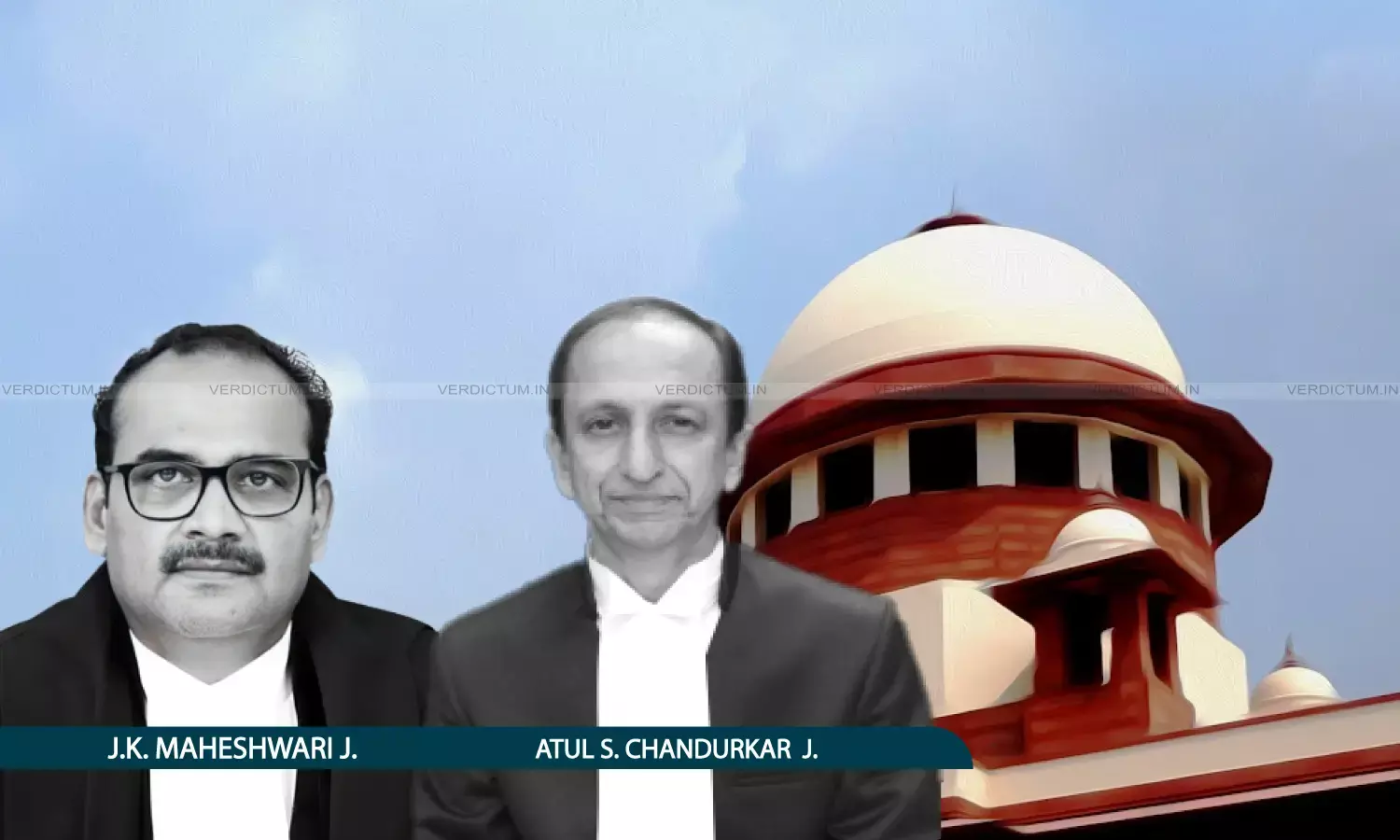
The Supreme Court has held that at the stage of issuance of process in a complaint under Section 138 of the Negotiable Instruments Act, the statutory presumption under Section 139 cannot be dislodged merely based on a defence that the cheque was not issued towards a legally enforceable debt, and such rebuttal can only be undertaken during trial.
The Court was hearing a criminal appeal challenging the orders of the Sessions Court and the Bombay High Court, which had set aside the magistrate's order issuing process under Section 138 of the N.I. Act on the ground that no legally enforceable debt existed.
A Bench of Justice J.K. Maheshwari and Justice Atul S. Chandurkar observed: “At the stage of issuance of process, the statutory presumption under Section 139 of the N.I. Act cannot be dislodged in a summary manner merely by contending that the cheque issued was not for any legally enforceable debt or liability”.
“Once the basic ingredients of Section 138 of the N.I. Act are duly satisfied by the complainant, the rebuttal of statutory presumption by the drawer can only be made during the course of trial”, the Bench added.
Senior Advocates Mukul Rohatgi and Dr A.M. Singhvi represented the petitioners and the respondents, respectively.
Background
The appellant had filed a complaint alleging dishonour of a cheque of ₹50 crores issued by the respondent. The cheque had been issued in the context of a settlement arrangement involving disputes between the appellant and her husband, with the respondent acting as a mediator and guarantor by issuing the cheque.
The cheque, upon presentation, was dishonoured with the remark “payment stopped by drawer.” A statutory notice under Section 138 was issued, and upon failure of payment, the complaint came to be filed before the Magistrate.
The Magistrate, upon being satisfied that the ingredients of Section 138 were made out, issued process. However, the Sessions Court set aside this order, holding that there was no legally enforceable debt, particularly as the underlying settlement agreement was not signed by the respondent. The High Court upheld this view.
Court’s Observation
The Supreme Court clarified that at the stage of issuance of process, the Magistrate is required only to examine whether the basic ingredients of Section 138 are satisfied, namely issuance of a cheque, its dishonour, issuance of a statutory notice, and failure to pay within the stipulated period.
It held that once these foundational facts are established, the statutory presumption under Section 139 comes into operation.
The Court reiterated that Section 139 embodies a reverse onus clause, requiring the Court to presume that the cheque was issued towards the discharge of a legally enforceable debt or liability. It was observed that such a presumption is mandatory in nature and operates once execution of the cheque is admitted or proved.
Relying on precedents, the Court noted that the presumption includes the existence of a legally enforceable debt and is intended to enhance the credibility of negotiable instruments.
The Court emphasised that the burden to rebut this presumption lies on the accused and can only be discharged during trial by leading evidence or relying on material brought on record. It was observed that permitting such a rebuttal at the pre-trial stage would defeat the statutory scheme and render the presumption nugatory even before evidence is led.
The Court found that the Sessions Court had misdirected itself by examining the enforceability of the underlying transaction and concluding that no legally enforceable debt existed. It held that such a determination involves disputed questions of fact, which cannot be adjudicated at the stage of issuance of process. The High Court, in affirming this approach, also fell into error.
The Court observed that the Sessions Court had given undue weight to the absence of a signed agreement and the nature of disputes between the parties, while ignoring the undisputed facts of issuance and dishonour of the cheque.
“In such a situation, when the basic ingredients of Section 138 stand duly satisfied and the statutory presumption under Section 139 gets triggered, coming to a conclusion that the cheque was not issued for a legally enforceable debt at the pre-trial stage itself without granting an opportunity to the complainant to substantiate her case by leading evidence would amount to ignoring the statutory presumption that the cheque had been issued for a legally enforceable debt or liability, … as a consequence, the presumption under Section 139 of the N.I. Act gets washed away even prior to the commencement of the trial”, the Court concluded.
Conclusion
The Supreme Court held that the Sessions Court and the High Court erred in setting aside the order issuing process by prematurely evaluating the existence of a legally enforceable debt.
It restored the complaint filed under Section 138 of the N.I. Act and directed that the matter proceed to trial, where the accused would have the opportunity to rebut the statutory presumption in accordance with the law.
The criminal appeal was accordingly allowed.
Cause Title: Renuka v. State of Maharashtra & Anr. (Neutral Citation: 2026 INSC 327)
Appearances
Petitioner: Senior Advocates Mukul Rohatgi & Siddharth Bhatnagar; Advocates Ranjeeta Rohatgi, Gaurav Srivastava, Shrika Gautam & Yuvraj Kashyap
Respondents: Senior Advocates Dr A.M. Singhvi & Kavin Gulati; Advocates C.D. Mehta, Mahesh Agarwal, Ankur Saigal, Bhavik Mehta, Kajal Dalal, Deepshika Mishra, Prakruti; AOR E.C. Agrawala; AOR Aaditya Aniruddha Pande