

Supreme Court Rejects Pay Parity For Guest Lecturers, Mandates Honorarium As Per UGC Norms
The Court has modified a Kerala High Court directive that granted guest lecturers pay parity with regular Assistant Professors, ruling that contractual employees cannot claim the same emoluments as permanent faculty.

The Supreme Court observed that Guest Lecturers perform distinct duties compared to regularly appointed teachers and are bound by the specific terms of their contracts and University Grants Commission (UGC) guidelines.
The Court was hearing a special leave petition challenging the judgment passed by the Kerala High Court, whereunder the High Court held that the writ petitioners were not entitled to claim the benefits of regularisation on the premise that the University was extracting work from teachers and directed the University to disburse to the writ applicants the emoluments equal to the gross salary drawn by regularly appointed Assistant Professors.
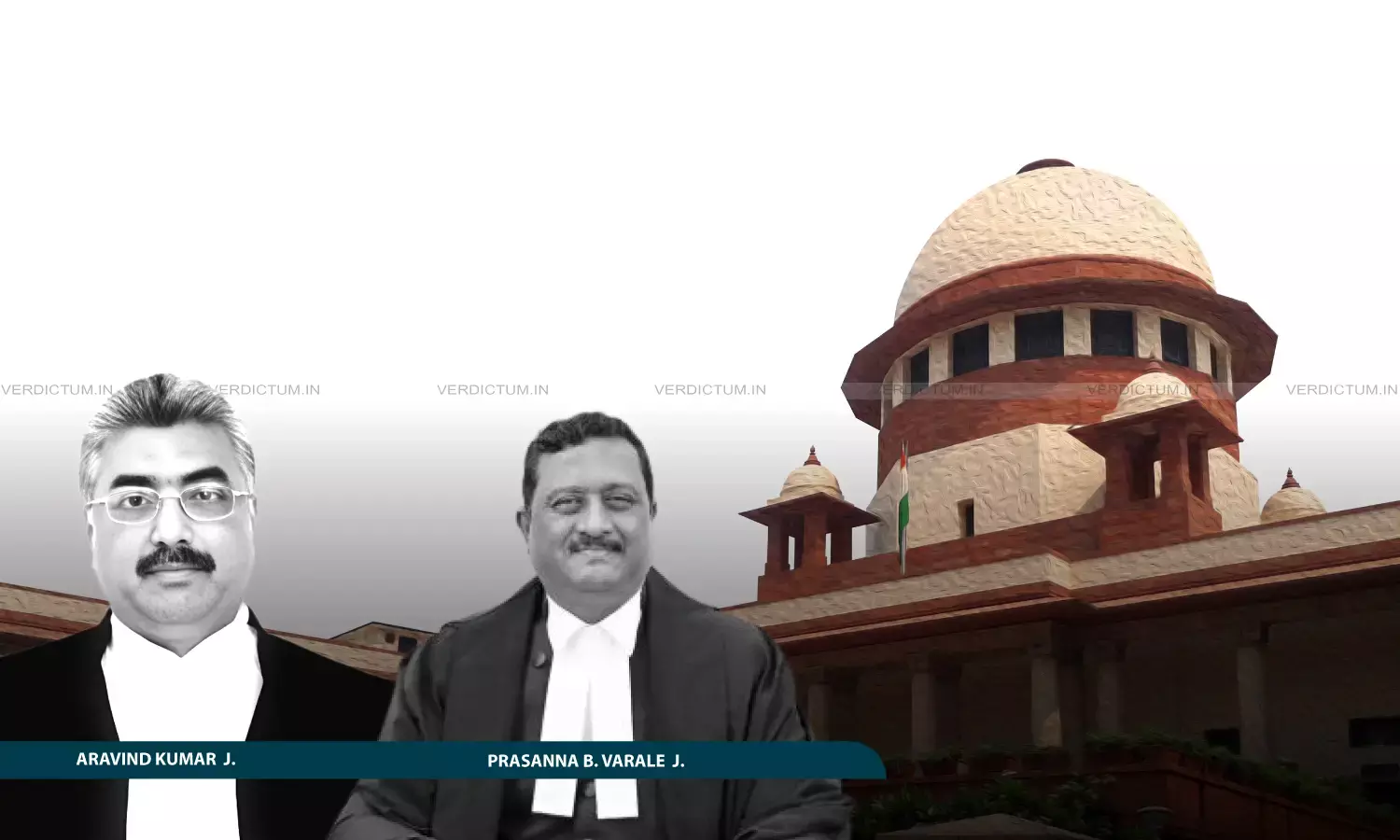
The Bench of Justice Aravind Kumar and Justice PB Varale observed, "This finding of the learned Single Judge as modified and approved by the Division Bench not being in consonance with the pleadings and also contrary to the pleadings as well as settled position of law, namely, that the writ applicants as Guest Lecturers, could not be discharging the same duties as that of the regularly appointed teachers would not be entitled to same pay. Hence, it would not detain us further to set aside the said finding and accordingly, it is set aside."
Senior Advocate Vibha Dutta Makhija appeared for the Appellants, while Senior Advocate K.P. Kylasnatha Pillay appeared for the Respondents.
Brief Facts of the Case
The writ applicants/Respondents were appointed on various dates by the Appellant-University on a contract basis as Guest Lecturers. On account of their prayer for regularisation having not been considered, resulted in writ petitions being filed by the writ applicants/Respondents whereby the Single Judge directed the University to take a call for regularisation of services and the University may make a request to the appropriate Government for increasing the number of sanctioned posts, if necessary, or regularize them in the existing sanctioned posts. Being aggrieved by the same writ appeals came to be filed challenging the orders.
The Division Bench of the High Court, by the impugned order, held that the writ applicants/Respondents have not worked for more than ten years against the sanctioned posts and as such they were not eligible for being considered for regularisation. After noticing the University was resorting to contract appointments for discharging its teaching obligations and has been extracted work from the teachers who have been appointed as Guest Lecturers, would amount to exploitation and as such by setting aside the order of the Single Judge partly, directed the University to disburse the employees’ emoluments equal to the gross salary of regularly appointed Assistant Professors by restricting it to the period of three years prior to the said order. Hence, the University was before the Supreme Court.
Observations of the Court
The Court set aside the finding recorded by the Single Judge as affirmed by the Division Bench insofar as the parity issue was concerned as, firstly, there was no prayer sought by writ petitioners with regard to the pay parity either in the writ application or in any other pleading; secondly, it was not even raised during the course of the argument, either before the Single Judge or before the Division Bench.
The Court said, "The Division Bench, in the quest of doing substantial justice, seems to have extended the benevolence by arriving at a conclusion that writ applicants had worked for a long number of years, and as such they would be entitled to pay parity, namely, the pay scale paid to Assistant Professors who were regular appointees. In fact, the University, while assailing the order of the learned Single Judge in the intra- court appeal, has specifically raised a ground in this regard, as evident from the writ appeal whereunder it was specifically contended that functions and responsibilities of the Guest Lecturers are different and distinct from those of regularly appointed Assistant Professors."
The Court said that the writ applicants, having entered into a contract from year to year and continued as such, cannot now take umbrage at the long number of years of service having been put in by them as Guest Lecturers to seek pay parity or contend that they ought to have been regularized.
"The revised guidelines of UGC dated 28.01.2019, which is placed on record, would indicate that the honorarium for guest faculty has been fixed at a maximum of Rs. 50,000/-. Though, a fervent appeal has been made by the learned Senior Advocate along with other advocates appearing for the writ applicants that the relief that has been granted by the High Court extending the pay parity to the petitioners to that of the salary paid to the Assistant Professors, is attractive at the first blush, we are unable to accept the said contention in view of our findings and observations made hereinabove and in the light of the UGC guidelines glaring at them", the COurt said.
It was observed that the petitioners have now attained the age of superannuation and even for the purposes of extending the financial benefits, the said contention raised by the writ applicants for being regularized and paid salary equivalent to that of the Assistant Professors, cannot be accepted and hence, was rejected.
"It is also trite law that when there is contractual employment, it would not be appropriate for the writ applicants to contend that the said contract has to be ignored and they ought to be treated on par with other teachers, who were regularly appointed. Hence, the finding of the Division Bench that the services of the writ applicants had been exploited as observed by the Division Bench, was not warranted and to that extent also the finding recorded by the Division Bench stands set aside", the Court observed.
The Court concluded that the Respondents herein would be entitled to consolidate remuneration of Rs.50,000/- per month as per UGC guidelines and same shall be paid by the appellant-University for the period of five years prior to their order of termination instead of three years as restricted by the Division Bench, as it would meet the ends of justice.
Accordingly, the Court modified the impugned order.
Cause Title: Sree Sankaracharya University Of Sanskrit & Anr. v. Unnikrishna Pillai J. [SLP(C) Nos.17549-17553/2022]
Appearances:
Appellants: Senior Advocate Vibha Dutta Makhija, Senior Advocate K.P. Kylasnatha Pillay, Advocate on Record Keith Varghese, Advocate on Record Rashmi Singhania, Advocate on Record Abid Ali Beeran P, Advocate Praveen Gaur, Advocate Nitish Pande, Advocate Sarath S Janardanan, Advocate Sriram P, Advocate Muhammed Haneeff, Advocate Mh Asif Ali, Advocate Ashik Ali, Advocate Vishnupriya P Govind.
Respondents: Senior Advocate K.P. Kylasnatha Pillay, Advocate on Record Abid Ali Beeran P, Advocate on Record Keith Varghese, Advocate on Record Harshad V. Hameed, Advocate on Record Rashmi Singhania, Advocate Sarath S Janardanan, Advocate Sriram P, Advocate Muhammed Haneeff, Advocate Mh Asif Ali, Advocate Ashik Ali, Advocate Vishnupriya P Govind, Advocate Dileep Poolakkot, Advocate Ashly Harshad, Advocate Mahabir Singh, Advocate Arunender Thakur, Advocate Anshul Saharan, Advocate Nitish Pande.