

Orissa Panchayat Samiti Act| Election Tribunal Can Declare Any Candidate Duly Elected If Returned Candidate’s Election Found Invalid: Supreme Court
The Apex Court held that the statutory scheme governing election disputes under the Orissa Panchayat Samiti Act permits the Election Tribunal to declare another candidate duly elected where the election of the returned candidate is found invalid.
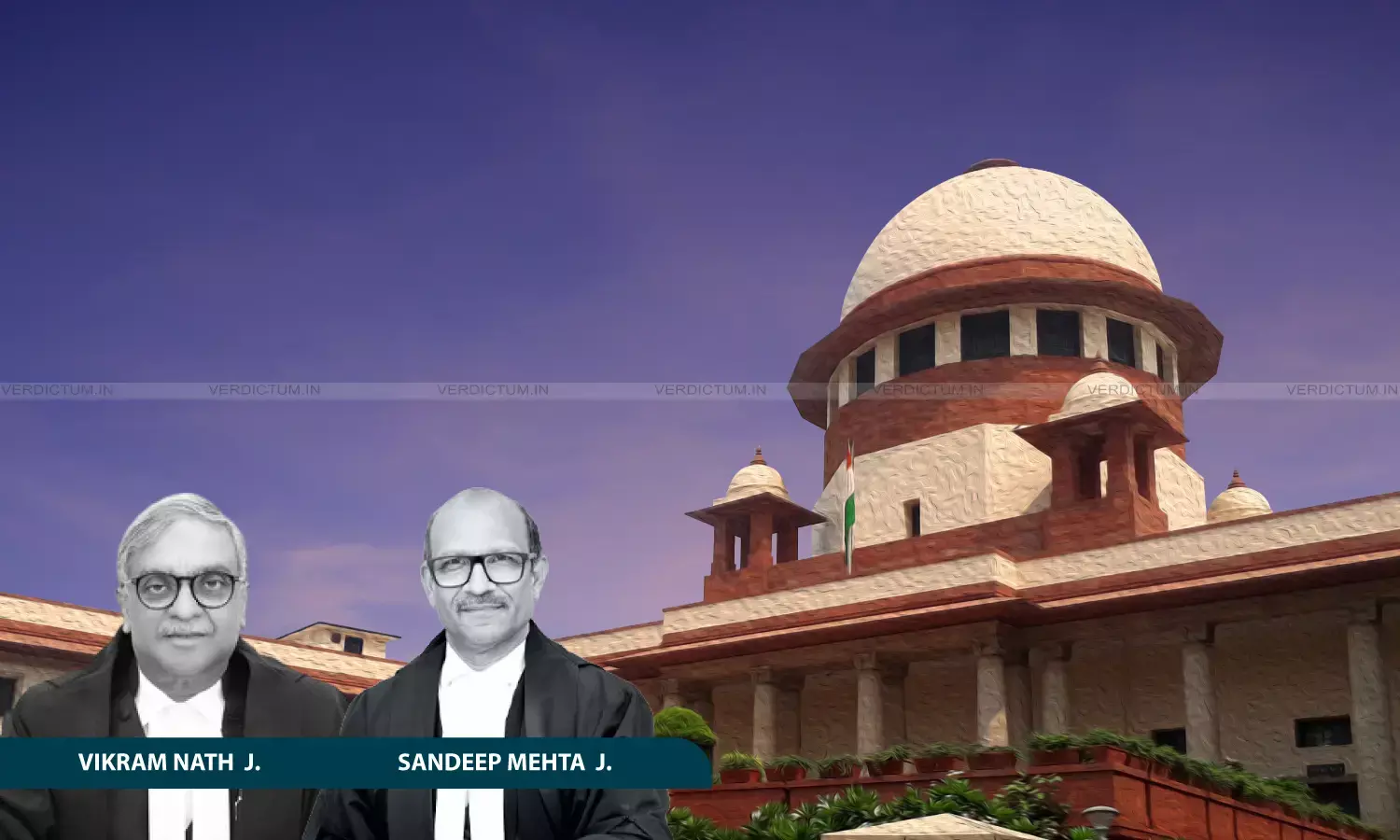
Justice Vikram Nath, Justice Sandeep Mehta, Supreme Court
The Supreme Court held that under Section 44-J(2)(b) of the Orissa Panchayat Samiti Act, 1959, the Election Tribunal has the jurisdiction to declare another candidate duly elected once the election of the returned candidate is found invalid.
The Court restored the declaration made by the Election Tribunal appointing the election petitioner as Chairman of the Delang Panchayat Samiti after the returned candidate was disqualified.
The Court was hearing appeals arising from a challenge to the election of the returned candidate as Panchayat Samiti Member and Chairman of the Delang Panchayat Samiti.
A Bench of Justice Vikram Nath and Justice Sandeep Mehta held: “Sections 44-E and 44-J of the 1959 Act make it amply clear that the former provision permits the election petitioner to claim relief not only for having the election of the returned candidate declared invalid, but also for declaring the election petitioner duly elected to the post. The latter provision, i.e., Section 44-J(2)(b), confers jurisdiction upon the Civil Judge/Election Tribunal to declare any other candidate as duly elected in cases where the election of the originally returned candidate is found to be invalid”.
Background
The dispute arose from elections held for the post of Panchayat Samiti Member and Chairman of the Delang Panchayat Samiti. The appellant-election petitioner and the respondent-returned candidate were elected as members from their respective constituencies. Subsequently, they contested the election for the post of Chairman of the Delang Panchayat Samiti.
The returned candidate was declared elected as Chairman. The election petitioner challenged the election by filing an election petition before the Civil Judge (Senior Division), acting as the Election Tribunal.
The election petition was based on the allegation that the returned candidate had incurred disqualification under Section 45(1)(v) of the Orissa Panchayat Samiti Act on account of having a third child after the prescribed cut-off date. In support of the plea of disqualification, the election petitioner examined herself and other witnesses and produced documentary evidence.
Despite being afforded opportunities, the returned candidate neither cross-examined the witnesses nor adduced evidence in her defence. As a result, the evidence produced by the election petitioner remained uncontroverted.
The Election Tribunal allowed the election petition, declared the election of the returned candidate invalid, and further declared the election petitioner as duly elected Chairman of the Delang Panchayat Samiti, being the candidate who had secured the next highest number of votes.
The returned candidate preferred an appeal before the Election Appellate Tribunal. While the appellate authority upheld the finding that the returned candidate stood disqualified and her election was invalid, it set aside the consequential declaration in favour of the election petitioner and directed a fresh election for the post of Chairman.
Both parties approached the High Court, challenging different aspects of the appellate decision. The High Court dismissed the writ petitions and affirmed the order directing a fresh election, which led to the appeals being heard before the Supreme Court.
Court’s Observation
The Supreme Court first considered the findings regarding the disqualification of the returned candidate. The Court noted that the Election Tribunal had recorded that the election petitioner had led evidence establishing the disqualification and that such evidence remained uncontroverted as the returned candidate had not cross-examined the witnesses.
The Court observed that, despite being granted sufficient opportunities, the returned candidate failed to contest the evidence placed on record. The conduct of avoiding cross-examination of witnesses indicated an attempt to delay the proceedings and defer the inevitable consequence of disqualification.
In view of the material available on record, the Court held that the concurrent findings of the Election Tribunal, the Election Appellate Tribunal and the High Court declaring the returned candidate disqualified did not warrant interference.
The Court then examined whether the Election Tribunal was justified in granting consequential relief by declaring the election petitioner as duly elected.
Referring to Sections 44-E and 44-J of the Orissa Panchayat Samiti Act, the Court observed that the statutory scheme governing election petitions clearly contemplates the grant of such relief. Section 44-E permits an election petitioner not only to challenge the validity of the returned candidate’s election but also to seek a declaration that he or she has been duly elected.
Section 44-J further empowers the Election Tribunal, upon finding the election of the returned candidate invalid, either to declare a casual vacancy or to declare another candidate duly elected, depending upon what is appropriate in the circumstances of the case.
The Court held that the Election Tribunal had exercised this jurisdiction correctly.
The Bench noted that only two candidates had contested the election for the post of Chairman of the Delang Panchayat Samiti. Once the election of the returned candidate was set aside, the election petitioner remained the only other candidate who had contested the election.
The Court observed that directing a fresh election despite this position would defeat the purpose of the statutory provisions, which are designed to provide an effective remedy in election disputes without unnecessarily reopening the electoral process.
The Court further noted that the elections had been conducted several years earlier and the dispute had already consumed considerable time through proceedings before the Election Tribunal, the appellate authority and the High Court. In such circumstances, compelling the election petitioner to contest a fresh election after successfully establishing the disqualification of the returned candidate would result in injustice.
The Court therefore concluded that the Election Appellate Tribunal had committed an error in reversing the declaration made by the Election Tribunal and directing a fresh election. The High Court, in affirming this view, had also erred.
Conclusion
The Supreme Court set aside the orders of the Election Appellate Tribunal and the High Court insofar as they denied the consequential relief granted by the Election Tribunal.
The Court restored the declaration issued by the Election Tribunal declaring the election petitioner duly elected as Chairman of the Delang Panchayat Samiti and directed that consequential steps be taken within two weeks.
The appeal was accordingly allowed, and the connected special leave petition was dismissed.
Cause Title: Ramadebi Rautray v. State of Odisha & Ors. (Neutral Citation: 2026 INSC 243)
Appearances
Appellant: Umakant Misra, Advocate; Tushar Garg, AOR; Prabhati Nayak, Advocate; Debabrata Dash, Advocate
Respondent: Kedar Nath Tripathy, AOR; Aditya Narayan Tripathy, Advocate
