

Functional Disability Must Reflect Actual Loss Of Earning Capacity: Supreme Court Enhances Motor Accident Compensation
Court sets aside Madras High Court’s reduction, holds that neurological impairments and cognitive deficits rendered claimant incapable of gainful employment.

The Supreme Court has held that in motor accident compensation cases, where injuries result in severe cognitive and neurological impairment, the assessment of functional disability must be grounded in the actual loss of earning capacity suffered by the victim, and not confined to the percentage of physical disability.
In the matter, the Motor Accidents Claims Tribunal (MACT) had awarded compensation of ₹65.53 lakh, assessing disability at 63%. However, the Madras High Court reduced the compensation to ₹35.61 lakh by scaling down functional disability to 30%. Accordingly, while setting aside the impugned order of the High Court, the Bench emphasised that functional disability cannot be mechanically reduced without cogent reasons, especially when expert medical evidence remains unchallenged. It noted that the claimant, who was employed as a Manager, required high cognitive functioning, skills that were substantially impaired due to the accident.
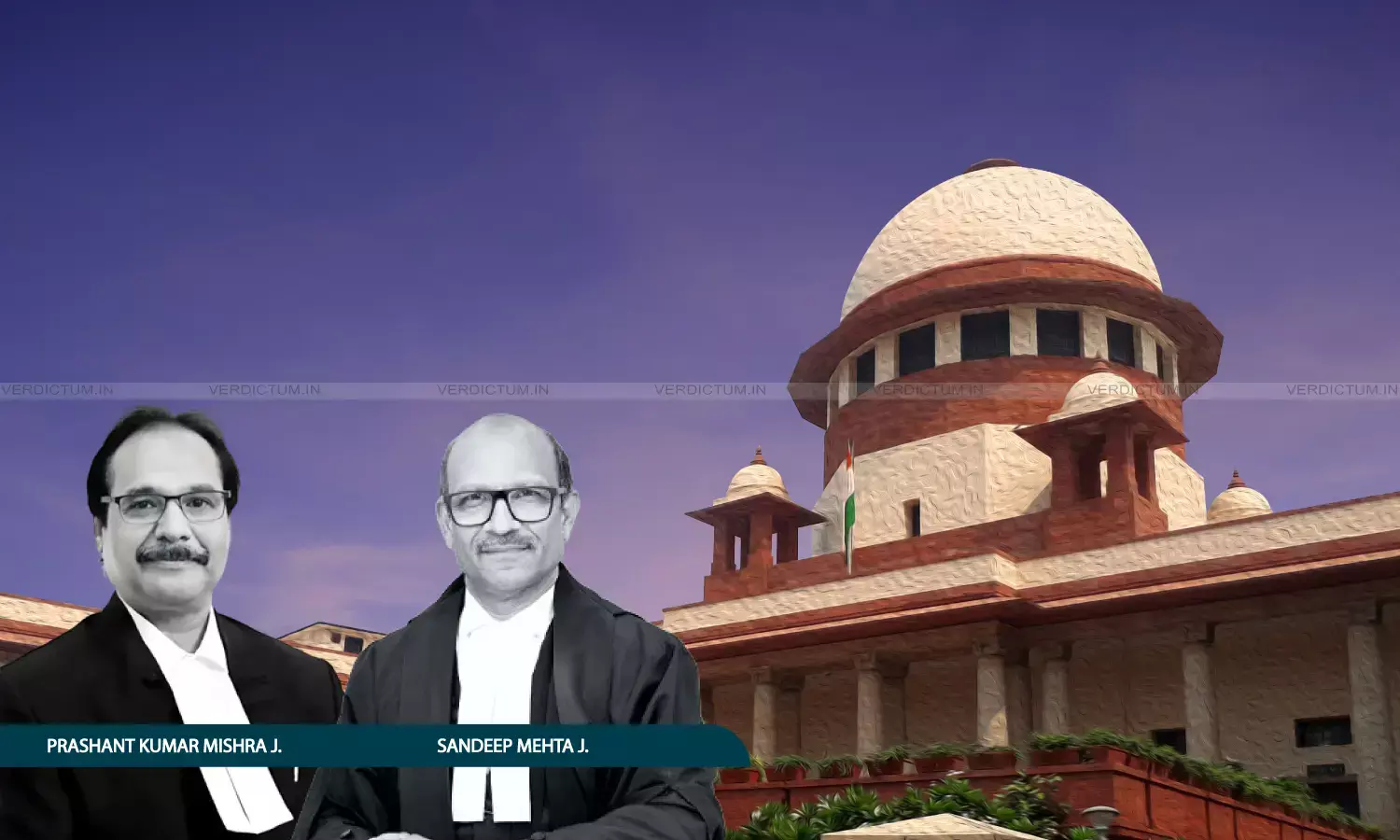
Justice Prashant Kumar Mishra and Justice Sandeep Mehta noting the role of the appellant-claimant as a Manager in a private company, and the nature of injuries which were not merely orthopaedic in nature, but had significant neurological sequelae, observed, “…In such circumstances, and bearing in mind the settled principle that functional disability must reflect the actual loss of earning capacity, we are persuaded to hold that the disability in the present case, for the purpose of computation of compensation, deserves to be reckoned at 100%. It is beyond the pale of doubt that, having suffered such grave medical and neurological impairments, the appellant-claimant would neither be considered suitable for the managerial post nor would he be capable of effectively discharging the onerous responsibilities attached to the said post, particularly in light of his present condition, which is likely to deteriorate progressively over time”, the Bench further noted.
Senior Advocate Haripriya Padmanaban appeared for the appellant and Prerna Mehta, AOR appeared for the respondent.
The Court was dealing with an appeal arising from a 2016 road accident in Coimbatore, where the claimant suffered grievous injuries including head trauma, partial blindness, and fractures.
Relying on the principles laid down in Raj Kumar v. Ajay Kumar (2011) 1 SCC 343, the Court reiterated that the true test is the impact of disability on earning capacity, not merely the percentage of physical impairment.
The Court found that the claimant’s injuries, comprising cognitive deficits, partial blindness, and mobility issues had effectively destroyed his ability to perform managerial functions or engage in any meaningful employment. Accordingly, it held that functional disability must be treated as 100%.
Recomputing compensation on this basis, the Court enhanced the award to ₹97.73 lakh, with interest at 7.5% per annum from the date of filing of the claim petition.
Importantly, the Court also criticized the High Court for interfering with the MACT’s findings without proper reappreciation of evidence, reiterating that appellate courts must provide clear and convincing reasons when modifying factual determinations in welfare legislation like the Motor Vehicles Act.
"…a role inherently dependent upon sustained cognitive functioning, including memory retention, analytical ability, executive decision-making, coordination and effective communication. The neuropsychological report on record evidences severe impairment in verbal and visual memory, frontal lobe dysfunction, and an IQ score of 65 placing him within the category of Mild Intellectual Disability. When these physical and neurological impairments are cumulatively evaluated, it becomes manifest that the appellant-claimant’s ability to effectively discharge his pre-accident duties stands substantially and irreversibly impaired. The evidence does not indicate a mere diminution in efficiency, rather, it demonstrates a profound erosion of the faculties essential for gainful employment in his chosen field. These impairments strike at the core competencies indispensable for the effective discharge of managerial responsibilities and substantially undermine the appellant-claimant’s ability to perform the essential functions inherent in such a position”, the Court said.
The Bench categorically noted, “…we deem it appropriate to reiterate that when an appellate court interferes with findings of fact duly recorded by the Motor Accidents Claims Tribunal, particularly on issues such as assessment of disability and loss of earning capacity, it is incumbent upon it to undertake a thorough reappreciation of the evidence and to assign cogent, clear and convincing reasons for departing from the conclusions arrived at by the 31 Motor Accidents Claims Tribunal...”.
“…Such an obligation is heightened in proceedings under the Motor Vehicles Act, 1988, which is a beneficial and welfare oriented legislation enacted with the object of ensuring expeditious relief and just compensation to victims of motor accidents and their families. The statutory framework is designed to advance social justice and to provide solace and financial security to those who suffer on account of road accidents. Any interference with a reasoned award of the Motor Accidents Claims Tribunal must, therefore, be consistent with the spirit and object of the enactment and supported by sound judicial reasoning” it further observed.
Cause Title: R. Halle v. Reliance General Insurance Company Limited [Neutral Citation: 2026 INSC 260]
Appearances:
Appellant: Haripriya Padmanaban, Sr. Adv., S. Prabu Ramasubramanian, Raghunatha Sethupathy B, AOR, Manoj Kumar A., Trisha Chandran, Vinayaga Vignesh I, Advocates.
Respondent: Prerna Mehta, AOR.