

High Courts Cannot Use Article 227 Powers To Reject Or Strike Off Plaint When CPC Remedy Exists: Supreme Court
Restores civil suit, holds supervisory jurisdiction cannot bypass Order VII Rule 11 CPC; calls alternative remedy a “near total bar”

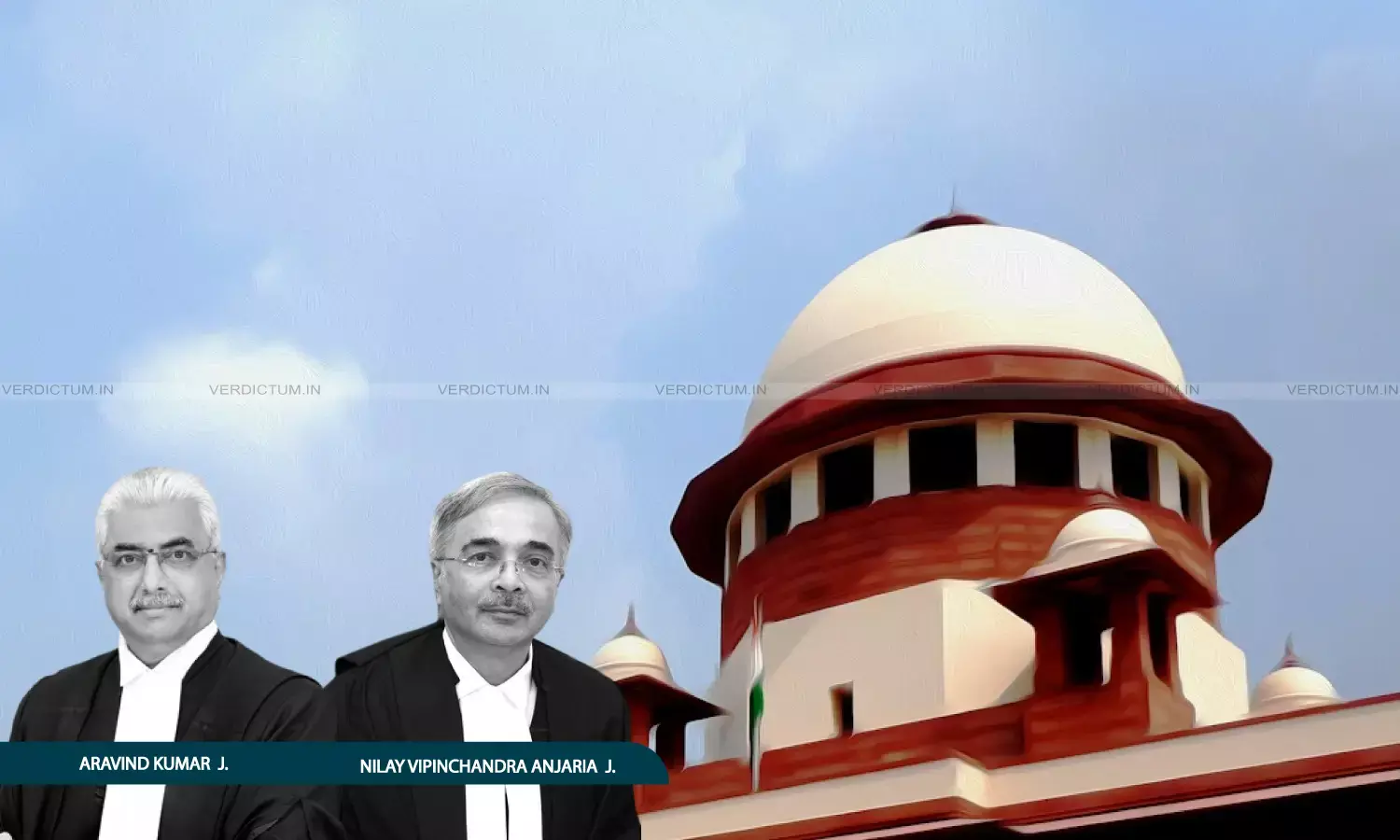
Justice Aravind Kumar, Justice N.V. Anjaria, Supreme Court
The Supreme Court on the limits of High Courts’ supervisory powers, has held that a High Court cannot invoke Article 227 of the Constitution to India to strike off a plaint when a specific statutory remedy under the Code of Civil Procedure, 1908 (CPC) is available.
Restoring the civil suit that had been struck off by the Madras High Court, the Court ruled that the existence of Order VII Rule 11 CPC is a “near total bar” to the exercise of Article 227 of the Constitution of India jurisdiction for rejection of a plaint.
Justice Aravind Kumar and Justice N.V. Anjaria observed, “…it would logically follow that the High Court would not only discourage but desist from exercising jurisdiction under Article 227 of the Constitution in respect of a challenge for which a separate, distinct, and specific remedy or statutory provision is available under the statute concerned. Availability of an alternative civil remedy and/or under the CPC shall be treated as complete and near total bar on the High Court to venture to invoke and exercise its power available under Article 227 of the Constitution, except where exercise of supervisory jurisdiction becomes absolutely necessary”.
“…this court is of the view that High Court committed a manifest error in exercising its powers under Article 227 of the Constitution to strike down the plaint. It ought to have asked the defendant to take recourse to, in accordance with law, when specific provisions available in the Code of Civil Procedure, 1908 in the nature of Order VII Rule 11. The impugned judgment and order of the High Court, therefore, deserves to be set aside”, the bench further observed.
Abdulla Naseeh V.T., AOR appeared for the petitioner and Senior Advocate V Prabhakar appeared for the respondent.
In the present matter, a suit for permanent injunction filed before the District Munsif Court, Tambaram, concerning possession over immovable property. The defendants disputed the plaintiff’s title and alleged that the sale deed relied upon was fabricated.
Therefore, instead of moving an application before the trial court under Order VII Rule 11 CPC, the defendants approached the High Court under Article 227 of the Constitution of India.
The High Court allowed the civil revision petition and struck off the plaint, holding the suit to be false and based on forged documents.
The Supreme Court thus while setting aside that order, emphasised that Article 227 of the Constitution of India confers supervisory, not appellate jurisdiction, which must be exercised sparingly and only in exceptional cases of grave miscarriage of justice.
The Court reiterated that this power cannot be used to “supplant a statutory legal remedy under the CPC,” nor can it operate “as the cloak of an appeal in disguise.” Where the CPC provides a specific mechanism, such as rejection of plaint under Order VII Rule 11, parties must first exhaust that remedy.
The Bench also clarified that Order VI Rule 16 CPC (striking out pleadings) cannot be stretched to justify striking down an entire plaint. That provision, the Court said, is confined to removing unnecessary, scandalous, frivolous or abusive portions of pleadings, and is distinct from rejection of plaint under Order VII Rule 11 CPC.
Cause Title: P.Suresh v. D.Kalaivani & Ors. [Neutral Citation: 2026 INSC 121]
Petitioner: Abdulla Naseeh V.T., AOR, Musthafa Atheeq, Rachel Sara James, Riya Nourin, Advocates.
Respondents: V Prabhakar, Sr. Adv., S. Rajappa, AOR, Jyoti Parashar, R Gowrishankar, G Dhivyasri, Saurabh Tiwari, Advocates.