

Section 66 Companies Act | Reduction Of Share Capital Can Be Confirmed Without Valuation Report From Registered Valuer: Supreme Court
The Apex Court held that reduction of share capital under Section 66 of the Companies Act, 2013 can be effected through a special resolution and confirmation by the Tribunal even without a valuation report from a registered valuer, since the statute does not mandate such disclosure as essential material for approving capital reduction.
The Supreme Court has held that the statutory framework governing the reduction of share capital does not mandate the furnishing of a valuation report by a registered valuer, and therefore absence of such a report cannot invalidate the process if the statutory requirements are otherwise fulfilled.
The Court was hearing appeals challenging the reduction of share capital undertaken by a telecom holding company through cancellation of shares held by certain minority investors pursuant to a special resolution approved by shareholders and confirmed by the National Company Law Tribunal.
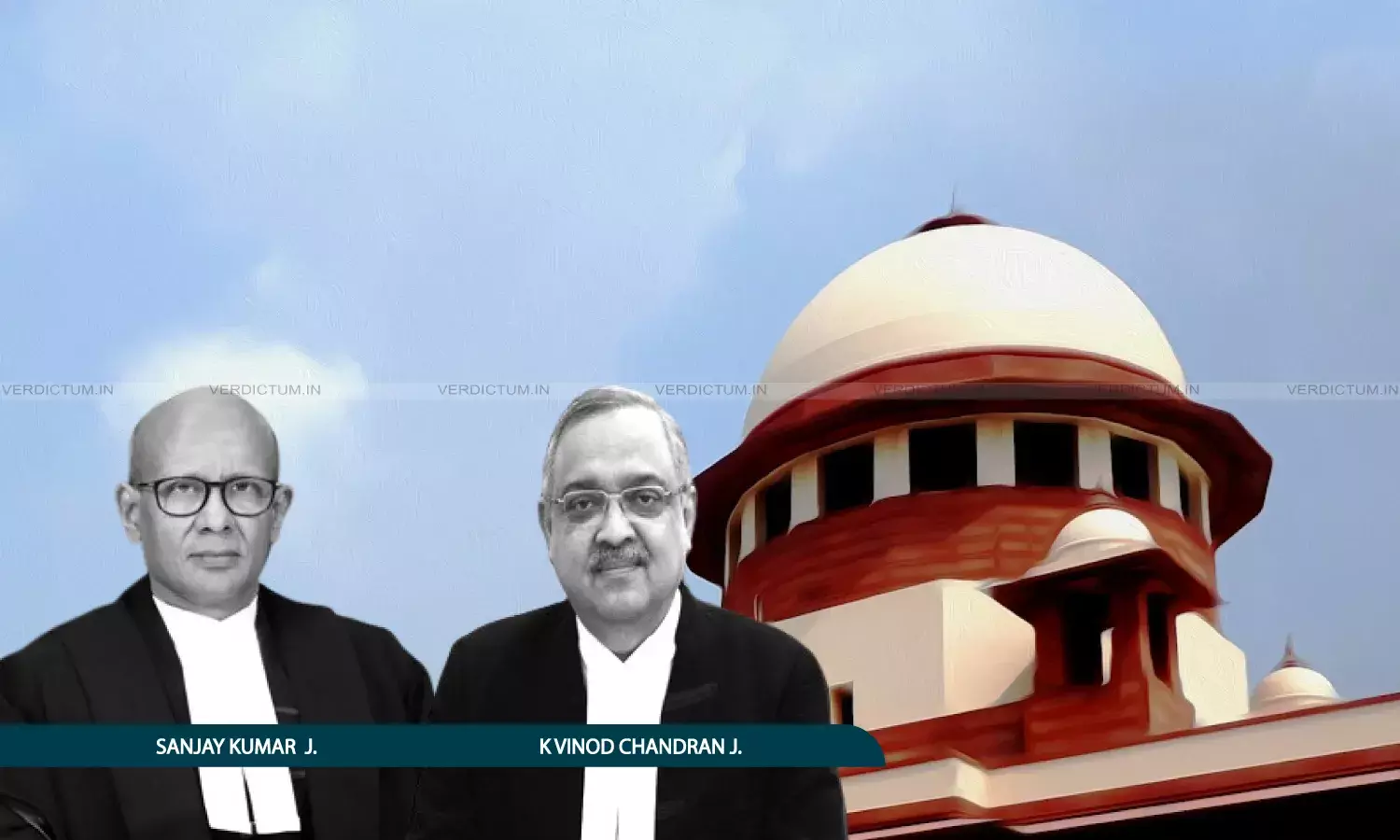
A Bench of Justice Sanjay Kumar and Justice K. Vinod Chandran observed that the Companies Act does not require valuation by a registered valuer for reduction of share capital and held that “reduction of share capital can be achieved by a special resolution and confirmation by the Tribunal, without a report of valuation from an approved/registered valuer.”
Background
The dispute arose after the company resolved to reduce its share capital under Section 66 of the Companies Act, 2013, by cancelling shares held by certain minority shareholders and providing them with an exit price per share.
The resolution for the reduction of capital was passed by an overwhelming majority of shareholders through a special resolution. The company thereafter approached the National Company Law Tribunal seeking confirmation of the capital reduction.
Minority shareholders challenged the process, contending that the valuation adopted for determining the exit price was unfair and that relevant valuation material had not been disclosed to them. It was also argued that the valuation exercise was flawed and lacked transparency.
The NCLT examined the objections but confirmed the capital reduction, subject to certain modifications regarding the deduction of dividend distribution tax while determining the payable amount.
Appeals filed before the National Company Law Appellate Tribunal were dismissed, leading to further appeals before the Supreme Court.
Court’s Observation
The Supreme Court first examined the statutory framework governing the reduction of share capital under Section 66 of the Companies Act, 2013. The Court observed that the provision permits a company to reduce its share capital through a special resolution passed by the shareholders, subject to confirmation by the National Company Law Tribunal. The legislative safeguards are therefore twofold: approval by the shareholders and scrutiny by the Tribunal after hearing stakeholders.
Addressing the central contention of the appellants regarding non-disclosure of valuation reports, the Court held that Section 66 does not require a valuation report from a registered valuer. The Bench noted that the Companies Act specifically mandates valuation in several other provisions, such as Sections 62, 230, and 236, demonstrating that whenever the legislature intended valuation to be compulsory, it explicitly incorporated such a requirement. In contrast, the absence of a similar requirement in Section 66 indicates that valuation is not a statutory prerequisite for the reduction of share capital.
In this context, the Court held that reduction of share capital can be achieved by a special resolution and confirmation by the Tribunal, without a report of valuation from an approved/registered valuer, and hence, it does not fall within the ambit of a relevant material; without the complete disclosure of which the reduction of capital cannot be acted upon. The Bench therefore rejected the argument that failure to circulate the valuation report along with the notice invalidated the process.
The Court further observed that, despite the absence of a statutory mandate, the respondent company had nevertheless undertaken a valuation exercise and had also obtained a fairness report from an independent agency. These documents, the Court noted, were kept available for inspection at the company’s registered office for a considerable period before the shareholders’ meeting. The notice convening the meeting disclosed the price at which the shares were proposed to be cancelled, thereby enabling shareholders to take an informed decision.
Rejecting the allegation that the notice issued to shareholders constituted a “tricky notice,” the Court held that the doctrine applies only where material information is deliberately concealed or where the notice is framed in a manner that misleads shareholders about the substance of the proposed transaction. In the present case, the Court found that the price offered for the reduction of share capital had been disclosed and the relevant documents were available for verification. The Bench therefore held that the notice could not be characterised as misleading or deficient in disclosure.
The Court also addressed the challenge to the independence of the valuation exercise on the ground that the valuer was allegedly associated with the company’s internal auditor. The Bench held that mere association with the internal auditor does not by itself establish bias or lack of independence. Referring to established principles governing allegations of bias, the Court observed that bias must be demonstrably real and not based on conjecture or mere probability. The Court further noted that the valuation had been supported by a fairness report issued by a separate agency and had also been affirmed by other independent financial institutions.
Turning to the methodology adopted for determining the exit price, the Court considered the objection to the application of the Discount for Lack of Marketability (DLOM). The appellants had contended that DLOM was inappropriate in the present case because the reduction of share capital effectively resulted in a forced exit for minority shareholders.
The Court held that the application of DLOM cannot be treated as impermissible per se. Referring to accounting and valuation standards recognised in India, the Bench observed that DLOM reflects the principle that an asset lacking market liquidity may command a lower price than a readily marketable asset. The Court further noted that the respondent company’s shares were not listed and had been delisted long before, resulting in the absence of marketability. In such circumstances, the application of a marketability discount could not be considered inherently unreasonable.
The Court also examined whether the valuation offered to the shareholders was unfair or prejudicial. It noted that the price ultimately approved by the Tribunal represented an improvement over earlier buyback offers made by the company. The Bench further observed that the shareholders had earlier been given the benefit of a rights issue that substantially increased their holdings, resulting in significantly higher returns when the capital reduction was implemented.
The Court reiterated that the reduction of share capital is essentially a matter within the domestic domain of the company, subject to statutory safeguards. The role of the Tribunal in such cases is limited to examining whether the scheme is fair, just, and not prejudicial to any class of shareholders or creditors. The Court held that mere dissatisfaction with the price offered cannot by itself establish prejudice unless it is demonstrated that the valuation is egregiously unreasonable or the process fundamentally unfair.
Applying these principles, the Court concluded that the statutory requirements under Section 66 had been satisfied, the shareholders had approved the resolution with an overwhelming majority, and no material irregularity or unfairness had been established in the process adopted by the company.
Conclusion
The Supreme Court held that the statutory requirements for reduction of share capital under Section 66 had been complied with and that the absence of a mandatory valuation report could not invalidate the process.
Finding no procedural illegality or unfair prejudice to the shareholders, the Court upheld the orders confirming the reduction of share capital.
Accordingly, the appeals were dismissed.
Cause Title: Pannalal Bhansali v. Bharti Telecom Limited & Ors. (Neutral Citation: 2026 INSC 213)
Appearances
Appellants: Senior Advocate K. Parmeshwar
Respondents: Senior Advocates Ramji Srinivasan and Shyam Divan
