

Section 35 Of SARFAESI Act Cannot Override Any Constitutional Provision: Supreme Court
The Apex Court held that although Section 35 of the SARFAESI Act accords overriding effect to the statute over other enactments or instruments, such overriding force cannot extend to or prevail over provisions of the Constitution.
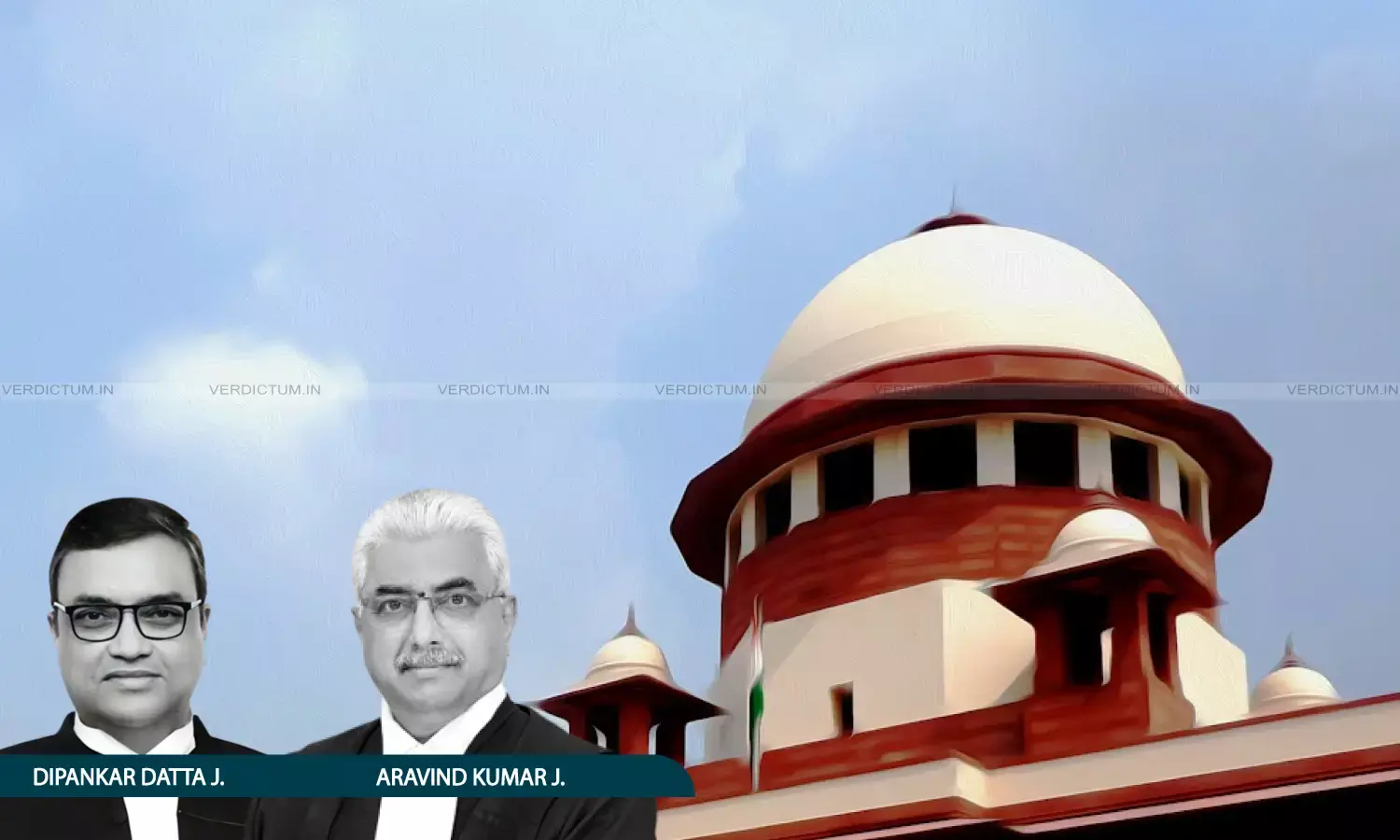
The Supreme Court has held that the overriding clause contained in Section 35 of the Securitisation and Reconstruction of Financial Assets and Enforcement of Security Interest Act, 2002, does not and cannot override any provision of the Constitution.
The Court was examining whether an action initiated by a financial corporation under the SARFAESI Act could be sustained in a situation where the constitutional framework governing the subject matter operated in a distinct and overriding manner.
A Bench comprising Justice Dipankar Datta and Justice Aravind Kumar observed: “Section 35 of the SARFAESI Act, though gives overriding effect to the provisions thereof notwithstanding anything to the contrary contained in any other enactment for the time being in force or any instrument having effect by virtue of any such law, the same cannot and does not override any provision of the Constitution, to wit, Article 371A thereof in this case which contains special provisions for the State of Nagaland”.
Senior Advocate Manish Singhvi represented the appellants, while Advocate Kaushik Choudhury, AOR, represented the respondents.
Background
The appellant, North Eastern Development Finance Corporation Ltd., had extended financial assistance to the respondent company for setting up a cold storage unit. The loan transaction was structured through a combination of agreements, including a loan agreement, an agreement involving a Village Council, and a deed of guarantee.
Following default in repayment, the appellant then initiated recovery proceedings by invoking provisions of the SARFAESI Act and took physical possession of the respondent’s assets pursuant to orders passed under Section 14 of the Act.
The respondent challenged the recovery action before the High Court, contending that the invocation of the SARFAESI Act was without jurisdiction. The High Court accepted the challenge and set aside the recovery proceedings, leading to the present appeal before the Supreme Court.
Court’s Observation
The Supreme Court examined the scope and effect of Section 35 of the SARFAESI Act, which provides that the provisions of the Act shall have effect notwithstanding anything inconsistent therewith contained in any other enactment, observing that the clause is limited in its operation to other enactments or instruments and that it “cannot and does not override any provision of the Constitution”. The Court, therefore, rejected the contention that Section 35 of the SARFAESI Act could be pressed into service to overcome constitutional limitations applicable in the present case.
The Bench then took note of the fact that the SARFAESI Act was not applicable in the State of Nagaland at the relevant point of time, stating that the State of Nagaland had adopted the SARFAESI Act only by a notification dated 10 December 2021. Consequently, any action taken under the SARFAESI Act before that date was held to be without jurisdiction.
The Court further examined whether the appellant could otherwise sustain an action under the SARFAESI Act by demonstrating the existence of a valid security interest. It was observed that the statutory scheme of SARFAESI predicates enforcement action on the existence of a security interest created in favour of a secured creditor. The Court found that no mortgage or security interest, as contemplated under the SARFAESI Act, had been created in favour of the appellant.
The Court noted that the arrangement relied upon by the appellant involved a guarantee and mortgage in favour of the Village Council, constituted under the Nagaland Village and Area Councils Act, 1978. The Court held that such an arrangement did not confer upon the appellant the status of a secured creditor under the SARFAESI Act, nor did it entitle the appellant to invoke the machinery of the Act for recovery.
The Court held that since the appellant lacked jurisdiction to invoke the SARFAESI Act in the first place, the High Court was justified in entertaining the writ petition and setting aside the proceedings, notwithstanding the existence of alternate statutory remedies. It concluded that the invocation of SARFAESI by the appellant was legally unsustainable on multiple counts.
Conclusion
The Supreme Court upheld the High Court’s conclusion that the appellant had invoked the SARFAESI Act without jurisdiction and that the statutory override under Section 35 could not be pressed into service to overcome constitutional limitations.
Accordingly, the appeal was dismissed, while leaving it open to the appellant to pursue recovery of its dues through other remedies available in accordance with the law.
Cause Title: North Eastern Development Finance Corporation Ltd. v. M/s L. Doulo Builders and Suppliers Co. Pvt. Ltd (Neutral Citation: 2025 INSC 1446)
Appearances
Appellant: Manish Singhvi, Senior Advocate, with Advocates Rituraj Biswas, Mayan Prasad, Chandan Kumar (AOR), Sujaya Bardhan, Aayush Garg, and Sami Ahmed
Respondent: Advocates Kaushik Choudhury (AOR), Madhurjya Choudhury, Saksham Garg, and Jyotirmoy Chatterjee
