

Liability To Pay Penalty Imposed Under Employees Compensation Act Cannot Be Fastened On Insurance Company: Supreme Court
The Apex Court held that after the 1995 amendment severed compensation and interest from the penalty component under Section 4A(3), the legislative scheme makes the penalty for delayed payment the personal liability of the employer, and such statutory obligation to deposit compensation within one month cannot be diluted or shifted onto the insurer through contractual arrangements.
The Supreme Court has held that the liability to pay a penalty under Section 4A(3)(b) of the Employees’ Compensation Act, 1923, cannot be fastened upon the insurer, as the penalty flows from the employer’s default in complying with the statutory mandate to deposit compensation within one month.
The Court was hearing a civil appeal filed by New India Assurance Co. Ltd. challenging the Delhi High Court’s decision to fasten liability for penalty under Section 4A(3)(b) upon the insurer in addition to compensation and interest.
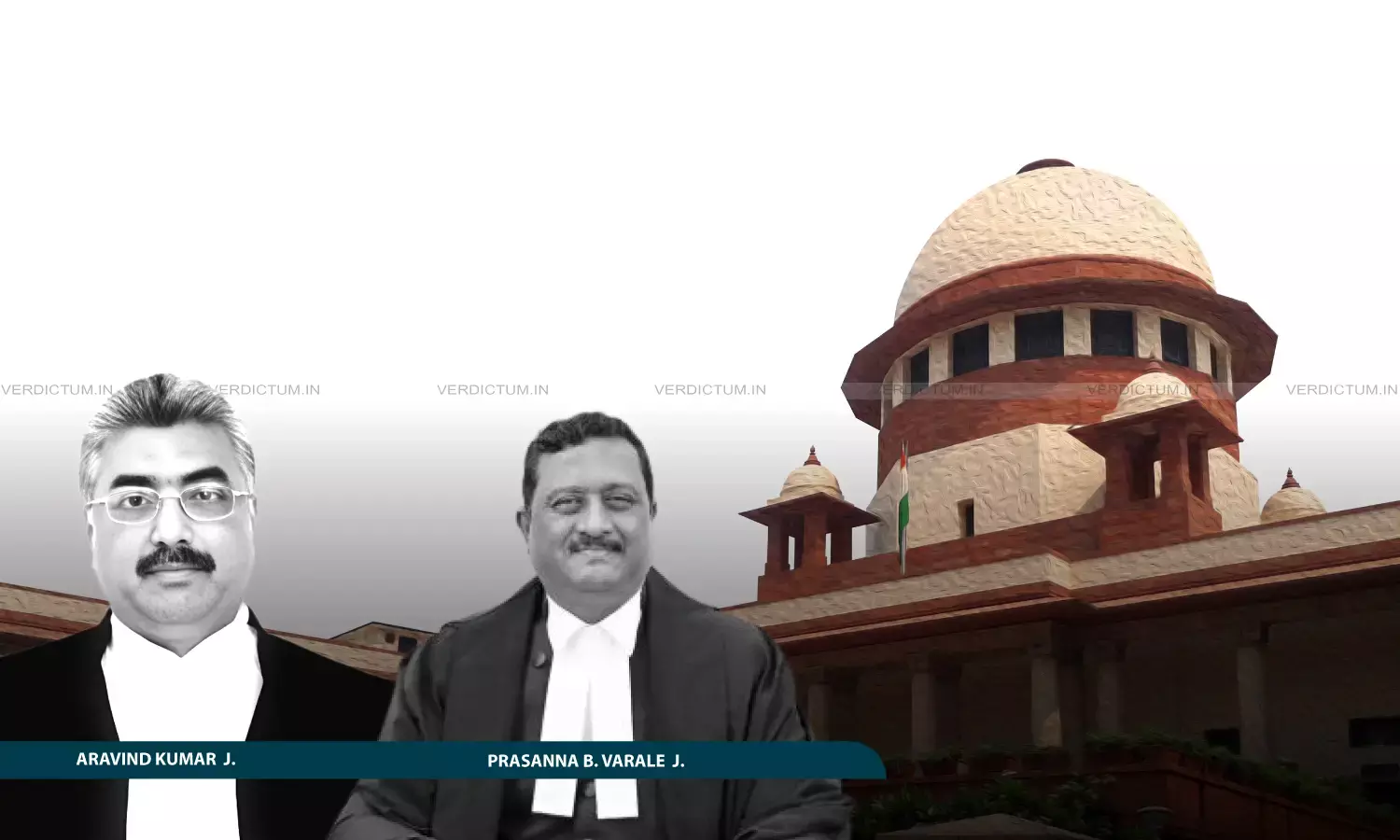
A Bench comprising Justice Aravind Kumar and Justice Prasanna B. Varale while allowing the appeal and restoring the Commissioner’s order insofar as it imposed a penalty upon the employer alone, observed that after the 1995 amendment, “the three components i.e., compensation, interest and penalty have been severed to form part of two different clauses within the same sub-section (3) i.e., Clause (a) which includes compensation and interest component and Clause (b) which solely includes the penalty component.”
The Court held that the 1995 amendment marked a conscious legislative departure, underscoring: “…the legislative intent behind severing the penalty component was to address larger predicament of easing the burden of indemnifiers who were adversely impacted by the obligation to pay the penalty which was not even the natural corollary of the obligation on their part under the indemnity contract to pay compensation and interest, rather such additional burden by way of penalty arose consequent to the default of obligation on the part of employer to pay compensation within the stipulated period of one month from the date it fell due.”
Background
The legal heirs of a deceased employee had approached the Commissioner under the Employees’ Compensation Act after the employee died during the course of employment. The Commissioner held that the death occurred in the course of employment and awarded compensation along with 12% interest from the date of the incident.
Since the employer had failed to deposit the compensation within one month from the date it fell due, a show cause notice was issued under Section 4A(3)(b). Upon failure of the employer to justify the delay, a penalty to the extent of 35% of the compensation amount was imposed.
In appeal, the High Court shifted the primary liability for payment of compensation, interest and penalty from the employer to the insurer. While the insurer accepted liability to pay compensation and interest, it challenged the imposition of a penalty upon it before the Supreme Court.
Court’s Observation
The Supreme Court commenced its analysis by reiterating that the Employees’ Compensation Act is a social welfare legislation intended to ensure expeditious payment of compensation to employees or their dependents. However, it clarified that the present controversy was confined to determining whether the insurer could be saddled with a penalty under Section 4A(3)(b).
Tracing the legislative evolution of Section 4A, the Court noted that before the 1995 amendment, compensation, interest and penalty formed part of a single clause and were connected by the expression “together with”, thereby enabling the entire liability to be indemnified by insurers under existing contracts.
The Bench further explained that when a penalty was inseparably linked with compensation and interest, insurers were compelled to discharge even the penalty component. This diluted the deterrent effect intended against employers who failed to comply with the statutory timeline.
The Court therefore underscored that the statutory obligation to deposit compensation within one month is central to the scheme of the Act, holding that “when the statute itself has obligated the employer to make the payment within one month, such obligation cannot be countenanced as sub-servient to any contractual obligation or bypassing the statutory obligation, as the same would tantamount to disregard of the legislative intent envisaged under the said provision.”
Relying upon the precedent in Ved Prakash Garg v. Premi Devi (1997) and subsequent decisions, the Court reiterated that while insurers are liable to indemnify compensation and interest, the penalty under Section 4A(3)(b), being attributable to the employer’s personal fault and negligence, cannot be shifted onto the insurer.
The Bench also rejected the argument that the insurance policy automatically covered the penalty component, noting both the absence of the policy on record and the overriding nature of the statutory mandate.
Conclusion
The Supreme Court allowed the appeal and set aside the High Court’s order to the extent it imposed liability for a penalty under Section 4A(3)(b) upon the insurer.
The liability to pay penalty was fastened exclusively upon the employer, who was directed to deposit the amount within eight weeks.
The remaining findings of the High Court, including liability of the insurer to pay compensation and interest, were left undisturbed.
Cause Title: New India Assurance Co. Ltd. v. Rekha Chaudhary & Ors. (Neutral Citation: 2026 INSC 177)
Appearances
Appellant: Salil Paul, Adv.; Manjeet Chawla, AOR; Sahil Paul, Adv.; Sandeep Dayal, Adv.; Kanupriya Mehta, Adv.; Jyoti, Adv.
Respondents: Ashish Pandey, AOR
