

No Reference To Specific Instance Of Cruelty Or Harassment: Apex Court Acquits Mother-In- Law In Dowry Death Case
The Supreme Court also held that it is one thing to make a demand for dowry and another thing to inflict cruelty or harassment in connection with such a demand for dowry.

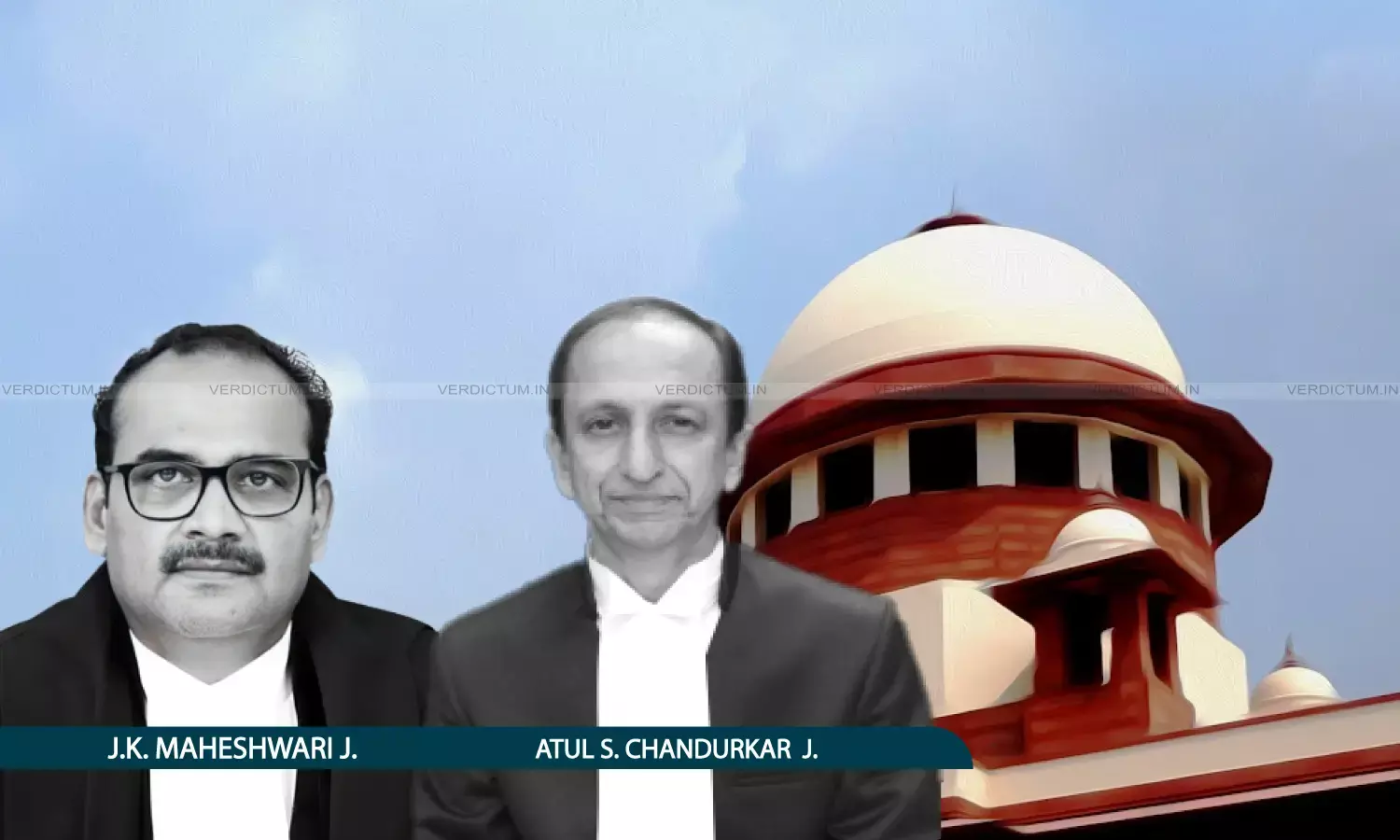
The Supreme Court has acquitted a woman in a case of dowry death of her daughter-in-law after noting that the family members did not refer to any specific instance of cruelty or harassment being caused by the mother-in-law to the deceased. The Apex Court also held that it is one thing to make a demand for dowry and another thing to inflict cruelty or harassment in connection with such a demand for dowry.
The appellant approached the Apex Court challenging her conviction for the offence punishable under Section 304-B and Section 316 of the Indian Penal Code. She was sentenced to imprisonment of seven years.
The Division Bench of Justice J.K. Maheshwari and Justice Atul S. Chandurkar held, “Except for using the expression “mental and physical harassment” the witness has not deposed about any specific instance narrated to him by the deceased that could indicate that his sister was subjected to cruelty or harassment specifically by the appellant. His deposition is in general terms without giving any specific details of any instance of cruelty or harassment meted out to his sister by the appellant. The other witnesses examined including PW3 and PW4 are also members of the family of the deceased but they have also not referred to any specific instance of cruelty or harassment being caused by the appellant to the deceased. It is one thing to make a demand for dowry and another thing to inflict cruelty or harassment in connection with such demand for dowry. For sustaining the conviction under Section 304-B of the Penal Code, it would be necessary for the prosecution to bring on record at least some instance of cruelty or harassment being caused to the woman in connection with any demand for dowry that results in her death occurring otherwise than under normal circumstances within seven years of the marriage. Such evidence, however, is missing in the present case.”
Factual Background
The appellant’s son was married to one Alka @ Pooja. The brother of the woman alleged that his sister was being harassed by her husband, her mother-in-law, the appellant, her brothers-in-law, as well as her sisters-in-law, who were demanding an amount of Rs 2 lakh and a car in dowry. This demand for dowry by the family members from her matrimonial home was informed to the informant. One day, the informant received information that his sister had been murdered. Accordingly, the First Information Report was lodged on the same day against the husband of the deceased, her mother-in-law and other relatives. On completion of the investigation, the chargesheet was submitted, and the appellant, including the other accused, were charged under Sections 498-A, 304-B and Section 316 of the Penal Code along with Sections 3 and 4 of the Dowry Prohibition Act, 1961.
The Additional Sessions Judge convicted the husband, his brother and his mother. All three convicted accused preferred separate appeals challenging their conviction. The Single Judge of the Allahabad High Court allowed the appeal preferred by the husband's brother and acquitted him of all charges. The husband’s conviction was confirmed under Sections 304-B and 316 of the IPC. However, during the pendency of the said appeal, he expired, and hence, his appeal was dismissed. The appellant’s conviction was also upheld under Sections 316 and 304-B. Her sentence was, however, reduced to seven years. It was against this conviction that the appellant approached the Apex Court.
Reasoning
Referring to Section 304-B (1), the Bench explained that it would be necessary for the prosecution to show that the death was caused otherwise than under normal circumstances within seven years of the marriage and that soon before the death, the victim was subjected to cruelty or harassment by her husband or any relative of her husband for or in connection with any demand for dowry.
The Bench noticed that the death of the appellant’s daughter-in-law had occurred otherwise than under normal circumstances, in view of the fact that it was a case of suicide. Noting that the death occurred within seven years of the marriage, the Bench held that it would be necessary to examine whether any evidence was led to prove beyond a reasonable doubt that, soon prior to committing suicide, the appellant’s daughter-in-law was subjected to cruelty or harassment by the appellant.
On a perusal of the facts of the case, the Bench noted that, as per the deposition of the informant, who is the brother of the deceased, except for general statements about mental and physical harassment being inflicted on his sister by the members of her matrimonial family, there was not a single instance specifically attributed to the appellant. “Except for using the expression “mental and physical harassment” the witness has not deposed about any specific instance narrated to him by the deceased that could indicate that his sister was subjected to cruelty or harassment specifically by the appellant”, it added.
The Bench also took note of the fact that the High Court acquitted the appellant of the charge under Sections 3 and 4 of the Act of 1961 and 498A of IPC, and the same had attained finality. Dealing with the conviction under Section 316 of the Penal Code, the Bench noticed that the deceased was carrying a fetus of thirty-four weeks when she committed suicide. However, considering the fact that the charge against the appellant under Section 304-B of the Penal Code was not proved by the prosecution, the Bench held that there would be no basis whatsoever to sustain the appellant’s conviction under Section 316 of the Penal Code.
“It is also to be noted that the appellant was not present at her son’s matrimonial home when the death took place on 03.08.2011. This fact stands admitted by PW2/Anil Singh Tomar. We, therefore, find that there is no material whatsoever to sustain the appellant’s conviction under Section 316 of the Penal Code”, it added.
Thus, allowing the appeal, the Bench acquitted the appellant of the charges under Sections 304-B and 316 of the Penal Code.
Cause Title: Munni Devi v. State of Uttar Pradesh (Neutral Citation: 2026 INSC 136)