

Non-Parties Can Also Be Held Liable For Contempt: Supreme Court Warns Against Delayed Appeals To Evade Compliance
The Court urged High Courts to deal firmly with litigants who adopt such tactics, particularly when the defaulting party is the State or its instrumentalities within the meaning of Article 12 of the Constitution of India

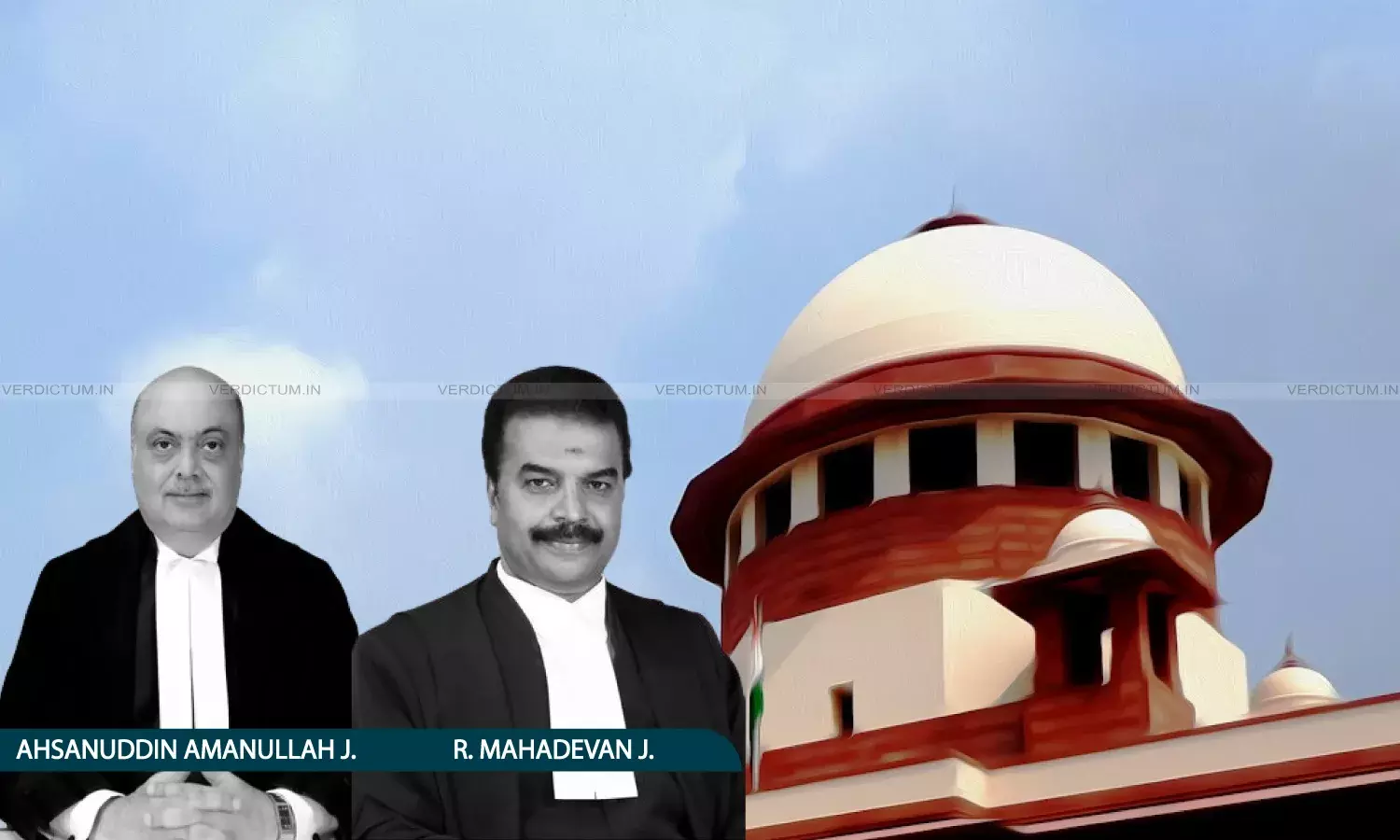
The Supreme Court has reiterated that non-parties who knowingly assist in violating a court order may also be held liable for contempt, while strongly criticising the growing practice of filing delayed appeals merely to avoid compliance with judicial directions.
The Bench deprecated this practice, observing that it reflects a deliberate attempt to delay or defeat implementation of judicial orders and undermines the authority and majesty of courts. It warned that such conduct may, in certain circumstances, even border on criminal contempt. Further expressing concern over the broader impact of such practices, the Court urged High Courts to deal firmly with litigants who adopt such tactics, particularly when the defaulting party is the State or its instrumentalities within the meaning of Article 12 of the Constitution of India. Unless courts respond decisively, there is a real risk of erosion of public faith in the judicial system, the Bench noted.
A Bench comprising Justice Ahsanuddin Amanullah and Justice R. Mahadevan made these observations while deciding a contempt petition, arising from the alleged non-compliance of the Court’s earlier order dated 20-05-2025.
The Bench categorically observed, “Delayed filing of appeals should be the exception, but in recent times, the exception has practically evolved to become the rule. Orders passed by the Courts are not complied with for a long time, and when Contempt Petitions are filed, belated appeals, with tremendous delay, are preferred. The (alleged) continuing contumacious conduct of the defaulting party is sought to be justified on the mere production of a Diary/Filing/Stamp Reporting Number showing that an appeal has been preferred, so as to obtain multiple adjournments in contempt matters”.
“We, in no uncertain terms, deprecate these practices. It is felt that by such modus operandi, disobedient litigants act brazenly which has the further effect of bringing down the authority and majesty of the Courts and the rule of law, interfering in the administration of justice. The same may well, in certain situations, border on criminal contempt”, it further noted.
Arpit Gupta, AOR appeared for the petitioner and Vikrant Singh Bais, AOR appeared for the respondent
At the outset, the Court emphasised the limited scope of contempt jurisdiction, noting that contempt proceedings are meant to ensure compliance with judicial orders and cannot be converted into a forum to examine the merits of the underlying judgment. Referring to precedents including J.S. Parihar v. Ganpat Duggar (1996) 6 SCC 291and Snehasis Giri v. Subhasis Mitra (2023) 18 SCC 529, the Bench reiterated that courts exercising contempt powers cannot revisit the correctness of the original decision but must only determine whether the order has been obeyed.
Significantly, the Court addressed the liability of third parties or non-parties in contempt proceedings. It observed that a person who is not formally a party to the original case may still be proceeded against for contempt if it is shown that the person had knowledge of the court order and actively assisted or facilitated its violation. In such circumstances, the non-party may be treated as an accessory to the breach of the order and made answerable under contempt jurisdiction.
The Bench also rejected attempts by the alleged contemnors to justify non-compliance on the ground of administrative difficulties. It held that if a party believes that compliance with a judicial order is impossible or impracticable, the proper course is to approach the court promptly through appropriate legal proceedings seeking modification or clarification. Failure to do so within the prescribed time cannot later be used as a defence in contempt proceedings, it noted.
“The High Courts should deal with such unscrupulous litigants, moreso when they happen to be ‘State’, within the meaning of Article 12 of the Constitution, or like bodies, with an iron hand. Unless the High Courts, so also this Court deal with these aspects firmly, we run the clear risk of erosion of the unflinching faith that the ordinary litigants of this country repose in the Judiciary at all levels. It is the solemn duty of all of us manning the Courts across the hierarchy to ensure that the public faith never wavers”, the judgment read.
While noting that a prima facie case of contempt appeared to be made out, the Court granted the alleged contemnors a final opportunity to comply fully with the earlier order, directing that the matter be listed again after fifteen days. The Bench clarified that failure to file a compliance affidavit by the next hearing may result in the Court proceeding to frame formal charges of contempt.
Cause Title: Israr Ahmad Khan v. Amarnath Prasad & Ors. [Neutral Citation: 2026 INSC 209]
Appearances:
Petitioner: Arpit Gupta, AOR.
Respondent: Vikrant Singh Bais, AOR, Shoeb Alam, Sr. Adv., Siddhartha Iyer, AOR, Aman Gupta, Srishti Ghoshal, Payal Rani, Advocates.