

Supreme Court Urges Centre And States To Digitise Land Records Using Blockchain Technology To Prevent Recurring Property Disputes
Court flags need for tamper-proof registration systems while deciding long-standing property dispute

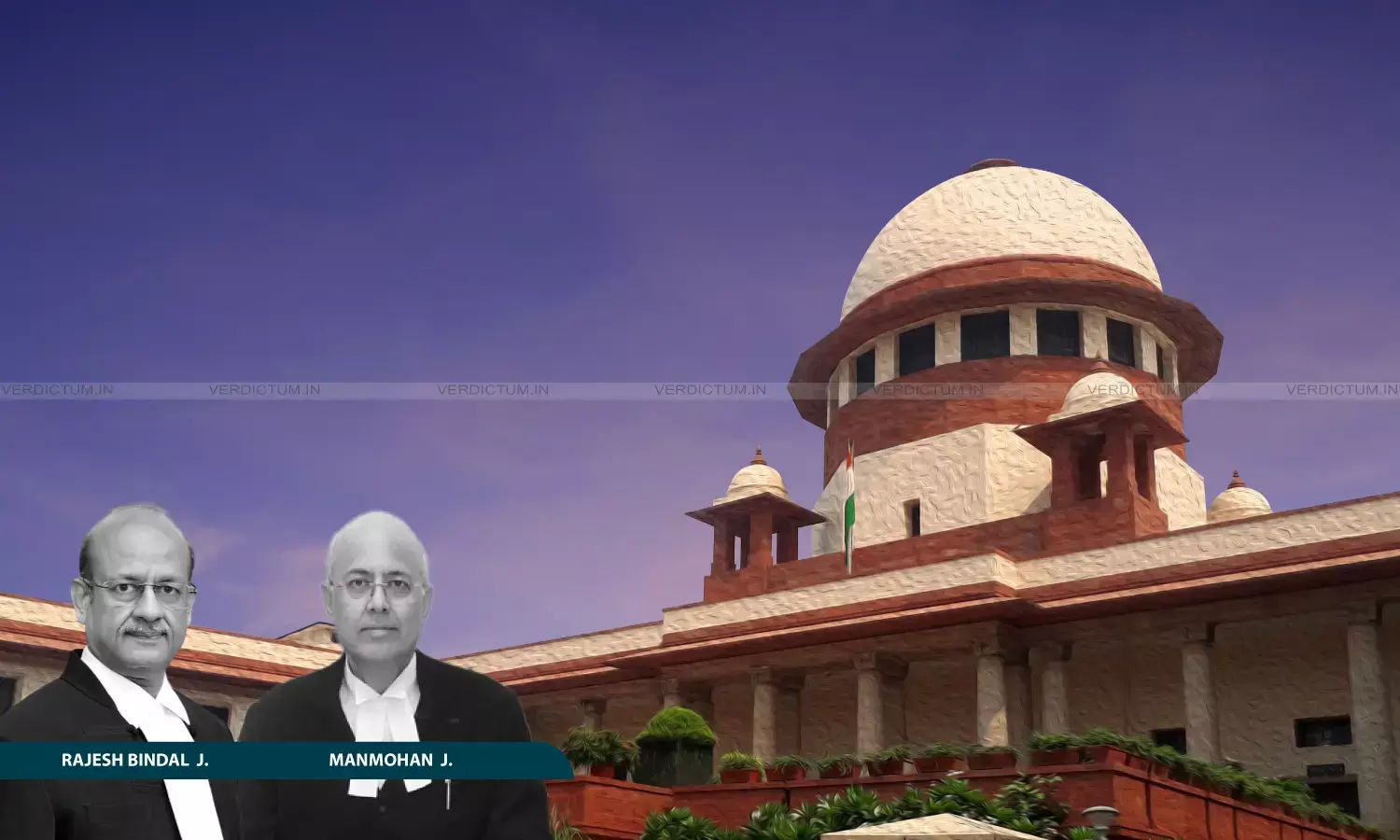
Justice Rajesh Bindal, Justice Manmohan, Supreme Court
The Supreme Court has urged the Union and State Governments to urgently digitise registered documents and land records using secure, tamper-proof technologies such as Blockchain, observing that technological intervention is necessary to prevent recurring property disputes and to preserve the sanctity of registered instruments.
The Court observed that many experts believe Blockchain technology, a shared digital ledger system would ensure that once a transaction such as a sale, mortgage, or similar conveyance is recorded, it becomes immutable and cryptographically secured. The Bench remarked that adoption of such technology would significantly reduce long standing litigation arising from allegations of manipulation, forgery, or sham transactions.
Accordingly, a division bench comprising Justice Rajesh Bindal and Justice Manmohan noted, “…this Court deems it necessary to suggest to the Union and State Governments the urgent need for the digitization of registered documents and land records using secure, tamper-proof technologies such as Blockchain. Many experts believe that Blockchain, a shared, digital record book (ledger) system would ensure that once a transaction of a sale or mortgage or like nature is recorded, it becomes immutable and cryptographically secured”.
Suggesting that such systems could drastically reduce avoidable litigation and administrative burden on courts, the bench further observed, “Such reforms are essential to minimize the scourge of forgery and ‘clever drafting’ that clogs our judicial system. Registered documents must inspire absolute confidence to ensure the ease of doing business and to uphold the sanctity of property titles in a modern economy”.
Advocate Bhardwaj S Iyengar appeared for the appellant, and Advocate Savyasachi appeared for the respondent.
The observations were made while deciding a long-pending civil appeal relating to a 1971 registered sale deed, where one party had sought to challenge the document as a sham transaction. Emphasising the systemic nature of such disputes, the Court noted that challenges to old registered documents frequently clog civil courts and undermine certainty in property transactions.
The appeal before the Court arose from a dispute over a registered sale deed executed in 1971, which the respondent had sought to portray as a mortgage transaction in disguise. While the trial court had accepted the challenge, the appellate court reversed the finding.
Reiterating the settled principles, the Court held that a registered sale deed carries a strong presumption of validity, and allegations that such a document is a sham or nominal transaction cannot be entertained in the absence of clear pleadings and cogent evidence. The Court said that Sections 91 and 92 of the Indian Evidence Act, 1872 bar attempts to contradict the terms of a registered document through vague oral assertions.
The bench further cautioned that permitting casual challenges to registered instruments would erode public confidence in the registration system and create uncertainty in land titles. It observed that property transactions form the backbone of economic stability and that legal systems must promote finality and reliability in such dealings.
Allowing the appeal, the Court upheld the validity of the registered sale deed while setting aside the challenge.
Cause Title: Hemalatha (D) By LRS. v. Tukaram (D) By LRS. & Ors. [Neutral Citation: 2026 INSC 82]
Appearance:
Appellants: Bhardwaj S Iyengar, Anshuman Ashok, Vikas Upadhyay, AOR Ranveer Singh, Advocates
Respondents: Savyasachi, Abhay Choudhary M, Tarun Kumar Thakur, Anuradha Mutatkar, AOR
Click here to read/download the Judgment