

Section 47 CPC Cannot Be Invoked After Decree Is Fully Executed: Supreme Court
Post-execution challenge to delivery of possession not maintainable

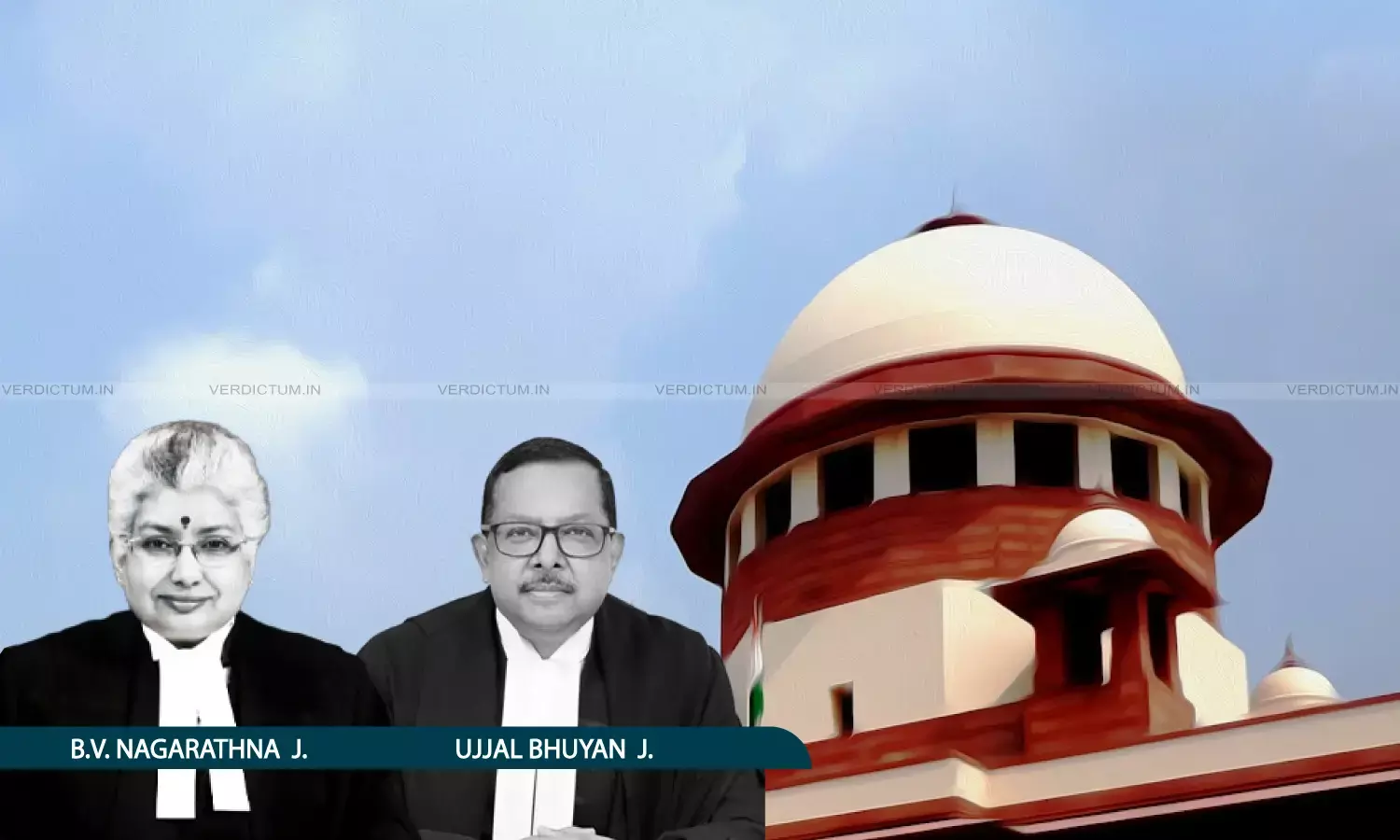
The Supreme Court has held that an application under Section 47 of the Code of Civil Procedure, 1908 (CPC) cannot be entertained once a decree has already been executed and the execution proceedings stand concluded, observing that all objections relating to execution must be raised during the pendency of execution proceedings and not thereafter.
It was held that Section 47 of the CPC is confined to questions arising during the execution, discharge or satisfaction of a decree, and cannot be invoked after the execution proceedings have been closed and the decree satisfied.
A Bench comprising Justice B.V. Nagarathna and Justice Ujjal Bhuyan noted, “On a reading of Section 47 of the CPC it becomes evident that all questions arising between the parties to the suit in which the decree was passed or their representatives relating to the execution discharge or satisfaction of the decree must be determined by the Court executing the decree and not by a separate suit. This means that the said questions must be determined during the process of the execution of the decree it is during the pendency of the execution and proceeding and not subsequently when the execution proceeding is closed and the decree has been executed to the satisfaction of the executing court…”.
Advocate V.K. Monga appeared for the appellant.
The present matter dates back to a Title Suit of 1983, which was initially dismissed but partly decreed in appeal in 1999, declaring the appellant’s right, title and interest. The decree attained finality and was put into execution.
By an order dated 26-08-2006, the Civil Judge (Senior Division), Anandpur, recorded full satisfaction of the decree, relying on the reports of the Civil Court Commissioner and the bailiff confirming lawful delivery of possession. Notably, no objections were raised by either party at that stage.
However, several months later, the State authorities filed an application under Section 47 CPC, alleging that possession had been wrongly delivered in respect of wrong plot, and sought to set aside the delivery of possession.
Pursuant to which the executing court entertained the application, and the Orissa High Court declined to interfere.
Now, in appeal the division bench of the Supreme Court noted that the respondents had failed to raise any objection during the execution proceedings, and had even filed a memo before the executing court expressly stating that no anomaly had been reported in the delivery of possession.
The Court observed that permitting such applications after execution would defeat the very object of finality in judicial proceedings and allow parties to approbate and reprobate at will
Accordingly, the Court allowed the appeal, set aside the impugned orders of the High Court and the executing court, and restored the finality of the executed decree.
Cause Title: Ananda Chandra Panda (Dead) Through LRs v. The Collector, Keonjhar & Anr. [Neutral Citation: 2026 INSC 91]
Appearances:
Appellants: V.K. Monga, Sanjay K. Das, Swetaketu Mishra, Gouri Monga, Advocates.
Click here to read/download the Order