

UAPA| "Terrorist Act" Not Confined To Use Of Bombs & Explosives; But Includes Design, Intent, And Effect To Act: Supreme Court
The Court defined a "terrorist act" as a dual-element offence requiring both an intent or likelihood to threaten national sovereignty and security, and the actual or potential causing of specific statutory consequences.

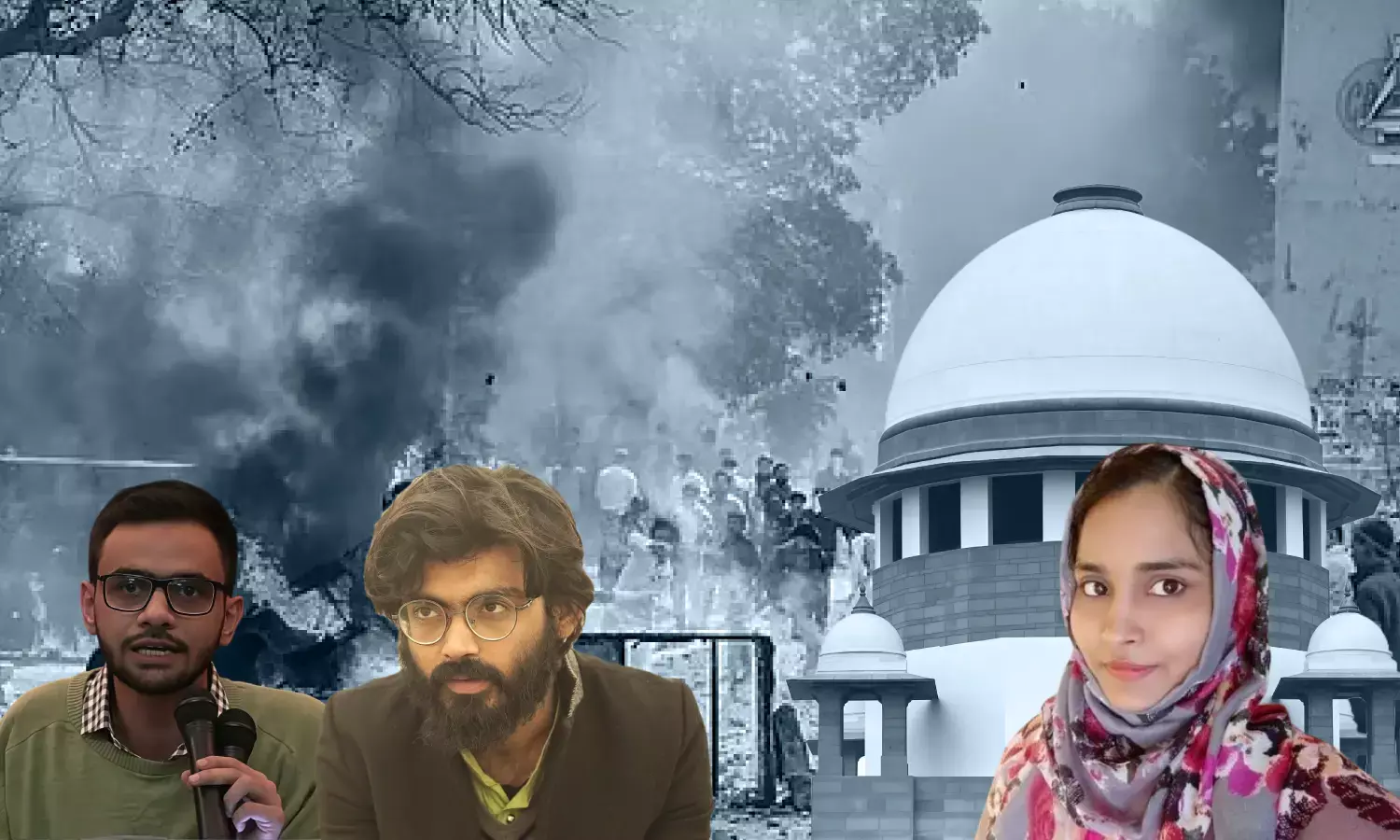
The Supreme Court, while delivering the judgment on the bail pleas of Umar Khalid, Sharjeel Imam and others, has observed that ‘Terrorist Act’ under Section 15 of the Unlawful Activities (Prevention) Act, 1967 (‘UAPA’) is not confined to the use of bombs, explosives, firearms, or other conventional weapons alone but also involves the design, intent, and effect of the act.
The Court also observed that while constitutional safeguards protected against unconscionable detention, they did not authorize a mechanical override of laws designed to protect national security.
The Bench of Justice Aravind Kumar and Justice NV Anjaria observed, “Section 15 of the Act defines what constitutes a “terrorist act” for the purposes of the statute. The definition is structured around two essential elements. First, the act must be done with intent to threaten, or be likely to threaten, the unity, integrity, security, including economic security, or sovereignty of India, or with intent to strike terror in the people or any section thereof. Second, the act must be of such a nature as to cause, or be likely to cause, the consequences enumerated in the provision…The means by which such acts may be committed are not confined to the use of bombs, explosives, firearms, or other conventional weapons alone. Parliament has consciously employed the expression “by any other means of whatever nature”, which expression cannot be rendered otiose. The statutory emphasis is thus not solely on the instrumentality employed, but on the design, intent, and effect of the act. To construe Section 15 as limited only to conventional modes of violence would be to unduly narrow the provision, contrary to its plain language.”
Senior Advocates Kapil Sibal, Abhishek Manu Singhvi, Salman Khurshid, Siddharth Luthra, Siddhartha Dave, Siddharth Aggarwal and Advocate Gautam Khazanchi appeared on behalf of the Appellants, whereas Solicitor General Tushar Mehta and Additional Solicitor General S.V. Raju appeared for the Respondents.
Factual Background
Appeals were filed assailing a common judgment and order passed by the Delhi High Court, which affirmed the rejection of bail applications filed by the Accused-Appellants. At the inception, the Appellants were booked under Sections 147, 148, 149 and 120B of the Indian Penal Code. Upon completion of investigation, a charge-sheet came to be filed alleging offences under Sections 120B read with Sections 109, 114, 124A, 147, 148, 149, 153A, 186, 201, 212, 295, 302, 307, 341, 353, 395, 420, 427, 435, 436, 452, 454, 468, 471 and 34 of the Indian Penal Code, as also under Sections 13, 16, 17 and 18 of the UAPA, Sections 25 and 27 of the Arms Act, and Sections 3 and 4 of the Prevention of Damage to Public Property Act, 1984.
Case of the Prosecution
It was the case of the prosecution that the incidents of violence were not isolated or spontaneous but were the outcome of a larger conspiracy in which several accused persons are alleged to have participated at different stages and in different capacities. It was alleged that the conspiracy was hatched with the object of orchestrating riots in the National Capital Territory of Delhi as a form of protest against the enactment of the Citizenship Amendment Act, 2019 and the proposed National Register of Citizens.
According to the prosecution, the conspiracy culminated in the deliberate incitement of widespread communal violence in February 2020. The acts allegedly committed during this period were not spontaneous but were the outcome of coordinated efforts to inflame tensions, mobilise crowds, and execute violent actions across various parts of Delhi. The riots were stated to have resulted in grave consequences, including the loss of 54 lives, among them a senior police officer and an Intelligence Bureau official, as well as grievous injuries to several police personnel and civilians. In addition, extensive damage was caused to over 1,500 public and private properties, alongside substantial intangible harm to public order, social harmony, and the nation at large.
Observations of the Court
The first issue which was raised for the consideration of the Court was whether the prolonged incarceration, coupled with the absence of any realistic prospect of early conclusion of trial, rendered continued detention constitutionally impermissible and the mandate of Article 21 of the Constitution is at peril.
Clarifying the legal contours within which the plea of delay operates in prosecution under UAPA, the Court observed, “Delay engages Article 21 at two distinct constitutional planes. First, delay may be of such magnitude and character that continued detention becomes per se unconstitutional, irrespective of the strength of the prosecution case. Second, delay may be pressed as a circumstance to contend that the statutory satisfaction under Section 43D(5) stands diluted or displaced. The present case, on an examination of the record, does not meet either threshold. The inquiry that follows is therefore confined to whether the delay alleged is of such a nature as to constitutionally eclipse the statutory embargo, and not whether delay exists in the abstract.”
The Court clarified that the central issue was how to balance the constitutional right to a speedy trial under Article 21 with the strict statutory restrictions on bail under Section 43D(5) of the UAPA. While the appellants argued that their prolonged incarceration rendered their detention punitive, the Court maintained that delay alone did not serve as an automatic "trump card" for release.
The Court observed that the delay in this specific case arose from the complexity of the evidence and procedural requirements rather than prosecutorial negligence. It noted that the defence had contributed to the timeline through various applications and objections, meaning the incarceration had not yet become constitutionally unjustifiable. Consequently, the Court ruled that the proper response was not immediate bail, but rather disciplined judicial oversight to ensure an expeditious trial. It concluded that any future evaluation for bail must consider a "composite balancing" of the gravity of the offence, the specific role of the accused, and the strength of the prima facie case.
It was observed, “It therefore becomes necessary to state, with clarity, the governing approach. In prosecutions alleging offences which implicate the sovereignty, integrity, or security of the State, delay does not operate as a trump card that automatically displaces statutory restraint. Rather, delay serves as a trigger for heightened judicial scrutiny. The outcome of such scrutiny must be determined by a proportional and contextual balancing of legally relevant considerations, including (i) the gravity and statutory character of the offence alleged, (ii) the role attributed to the accused within the alleged design or conspiracy, (iii) the strength of the prima facie case as it emerges at the limited threshold contemplated under the special statute, and (iv) the extent to which continued incarceration, viewed cumulatively in the facts of the case, has become demonstrably disproportionate so as to offend the guarantee of personal liberty under Article 21…Thus, when the composite evaluation yields a clear conclusion that continued detention has crossed the bounds of constitutional permissibility that the Court may justifiably intervene notwithstanding statutory restrictions.”
Secondly, the Court examined the statutory framework of Section 43D(5) of the UAPA, noting that it represents a deliberate legislative departure from ordinary bail principles. Unlike general criminal law, this provision restricts the court’s discretion by mandating that bail be denied if there are reasonable grounds to believe the accusation is "prima facie true." The Court clarified that this does not require a "mini-trial" or a weighing of evidence; instead, it demands a threshold inquiry into whether the prosecution's allegations, taken at face value, satisfy the legal ingredients of the offences. The goal is to ensure judicial restraint while fulfilling the legislative intent to address organized threats to national sovereignty, the Court said.
Thirdly, the Court further emphasized that this inquiry must be accused-specific rather than case-centric. It distinguished between "conspiratorial centrality"—roles involving orchestration and mobilization—and mere "peripheral association."
“The correct application of Section 43D(5), therefore, requires the Court to undertake a structured inquiry confined to the following: i. whether the prosecution material, accepted as it stands, discloses a prima facie case satisfying the statutory ingredients of the offence alleged; ii. whether the role attributed to the accused reflects a real and meaningful nexus to the unlawful activity or terrorist activity proscribed under the Act, as distinguished from mere association or peripheral presence; and iii. whether the statutory threshold is crossed qua the individual accused, without embarking upon an assessment reserved after full- fledged trial. Where these requirements are met, the statutory restraint on the grant of bail must operate with full force; where they are not, the embargo stands lifted. This approach preserves the legislative purpose of the Act, and ensures that the exceptional nature of the bail regime under Section 43D(5) is neither diluted by overreach nor distorted by mechanical application.”, the Bench observed.
Fourthly, as already discussed above, the Court clarified that the definition of a "terrorist act" under Section 15 of the UAPA is not limited to conventional violence or the use of specific weapons, but is instead defined by the intent and effect of the action. The Court ruled that criminal liability under Section 18 extends to the planning, coordination, and mobilization behind such acts, requiring an accused-specific inquiry to determine if there is a prima facie nexus between an individual's conduct and these statutory ingredients before bail can be considered.
Fifthly, the Court established a vital distinction between the "prime conspirators" and others, ruling that bail applications must be individualized rather than based on a premise of collective equivalence. The Court said that the prosecution’s own narrative categorized Umar Khalid and Sharjeel Imam as the "ideological drivers" and masterminds who exercised command authority over the strategy, while the other appellants were viewed as local-level facilitators or field operatives responsible for site-specific logistics. Because the masterminds possess a greater capacity to mobilize resources or influence witnesses, the Court held that their risk profile justifies heightened caution; conversely, the necessity for continued detention is "attenuated" for minor participants whose roles were peripheral or reactive. Ultimately, the Court emphasized that while conspiracy law binds different actors together for the purpose of liability at trial, the regulation of liberty pending trial must be governed by proportionality, ensuring that pre-trial detention does not become an indiscriminate or punitive mechanism for those with limited attribution.
The Court individually analysed the role of each of the Appellants. For Sharjeel Imam, the Court said, “The Court accordingly finds that the prosecution material, read cumulatively and taken at face value, discloses reasonable grounds for believing that the accusations against the appellant are prima facie true. The material relied upon is not confined to abstract ideology. It comprises digital coordination, attribution of planning and mobilisation, presence supported by location records, a protected witness statement describing differentiated chakka jam strategy, and speech material exhorting disruption and choking of essential services.”
With respect to Umar Khalid, the Court observed, “When sustained blockades are alleged to be executed across multiple locations, when essential civic life is alleged to be paralysed, and when violence is alleged to erupt in a coordinated manner following such blockades, the Court cannot, at this stage, rule out the applicability of the statutory framework merely because the acts are couched in the language of protest… Having regard to the prosecution material as placed, including the chronology of meetings, the alleged articulation and propagation of the chakka jam strategy, the operation of coordinating committees and groups, the protected witness statements alleging preparatory and escalation-related discussions, the pleaded movement of protest activity into mixed-population zones, and the alleged systemic disruption of civic life in the National Capital, this Court is satisfied that reasonable grounds exist for believing that the accusations against Umar Khalid are prima facie true.”
Conclusion
The Court dismissed the appeals of Umar Khalid and Sharjeel Imam, concluding that the prosecution's material established a prima facie case of their central role in planning and mobilizing the alleged conspiracy. Although the Court acknowledged their substantial period of incarceration, it held that their detention had not yet crossed the threshold of constitutional impermissibility, given the complexity of the case and the strict mandates of Section 43D(5) of the UAPA. However, to balance the statutory embargo with the right to a speedy trial under Article 21, the Court granted both appellants the liberty to renew their bail applications after the examination of protected witnesses or within one year, whichever occurred earlier.
Further, the Court allowed the appeals of Gulfisha Fatima, Meeran Haider, Shifa-ur-Rehman, Mohd. Saleem Khan and Shadab Ahmed concluded that their continued incarceration was no longer indispensable for a fair trial. While the Court maintained the seriousness of the charges, it exercised constitutional discretion to prioritize individual liberty for these specific appellants, whose roles were deemed distinct from the primary conspirators. To protect national security and the integrity of the trial, the Court imposed stringent conditions, including a personal bond of ₹2,00,000, a travel ban outside Delhi, and the surrender of their passports. The appellants were directed to report to the Police Station twice a week and were prohibited from contacting witnesses or participating in any political rallies or social media activity related to the case.
“Before we conclude, it bears reiteration that a principle lies at the heart of constitutional adjudication in matters of this nature. The Constitution guarantees personal liberty, but it does not conceive liberty as an isolated or absolute entitlement, detached from the security of the society in which it operates. The sovereignty, integrity, and security of the nation, as well as the preservation of public order, are not abstract concerns rather they are constitutional values which Parliament is entitled to protect through law. Where a special statutory framework has been enacted to address offences perceived to strike at these foundations, courts are duty-bound to give effect to that framework, subject always to constitutional discipline.”, the Court concluded.
Accordingly, the Court rejected the appeals of Sharjeel Imam and Umar Khalid, whereas it allowed the appeals of Gulfisha Fatima, Meeran Haider, Shifa-ur-Rehman, Mohd Saleem Khan and Shadab Ahmed.
Cause Title: Gulfisha Fatima v. State (Govt. of NCT of Delhi) [Neutral Citation: 2026 INSC 2]
Appearances:
Appellants: Senior Advocates Siddharth Luthra, Kartik Murukutla, Salman Khurshid, Kapil Sibal, C. U. Singh, Trideep Pais, Siddharth Aggarwal, Abhishek Manu Singhvi, and Siddhartha Dave. AORs Farrukh Rasheed, Mansoor Ali, Shashank Singh, N. Sai Vinod, Devina Sehgal, Maulshree Pathak, and Fauzia Shakil. Advocates Shivam Sharma, Deeksha Dwivedi, Rahul Dev, Shifa, Gautam Khazanchi, Vaibhav Dubey, Bilal Mansoor, Aishwarya Singh, Pooja Deepak, Anshala Verma, Shivansh Sharma, Rubina Jawed, Saima Jawed, Bilal Anwar Khan, Anshu Kapoor, Sidra Khan, Mariya Mansuri, Varun Bhati, Ankit Singh, Sanya Kumar, Sahil Ghai, Aparajita Jamwal, Nikhil Pahwa, Saloni Ambastha, Sakshi Jain, Abhik Chimni, Bidya Mohanty, Katyayani Suhrud, Abhishek Kalaiyarsan, Aekansh Agarwal, Kanu Garg, Shri Singh, Faraz Maqbool, Kumar Vaibhaw, Sana Juneja, A. Sahitya Veena, Deepshikha, Arunima Nair, Vismita Diwan, Arshiya Ghosh, Sidhant Saraswat, Somaya Gupta, Chinmayi Chatterjee, Swati Khanna, Sarim Naved, Harsh Bora, Shahid Nadeem, Amit Bhandari, Muhammad Ali Khan, Omar Hoda, Eesha Bakshi, Namrah Nasir, Uday Bhatia, Siddharth Srivastava, Surya Kiran, Talib Mustafa, Ahmad Ibrahim, Tasmiya Taleha, Alekhya Shastry, Raksha Agrawal, Ayesha Zaidi, Abhishek Singh, Kartik Venu, Jeet Chakrabarti, and Sourav Verma.
Respondents: Solicitor General Tushar Mehta, Additional Solicitor General S.V. Raju and AOR Mukesh Kumar Maroria.