

Power Distributor Can’t Disconnect Supply In Absence Of Dues & Theft Of Electricity: Telangana HC Holds Disconnecting Power For Causing Pollution Arbitrary
The petitioner approached the Telangana High Court seeking a declaration that the action of the Distribution Company in disconnecting the Electricity supply to the Petitioner’s Stone Crushing Unit was illegal.

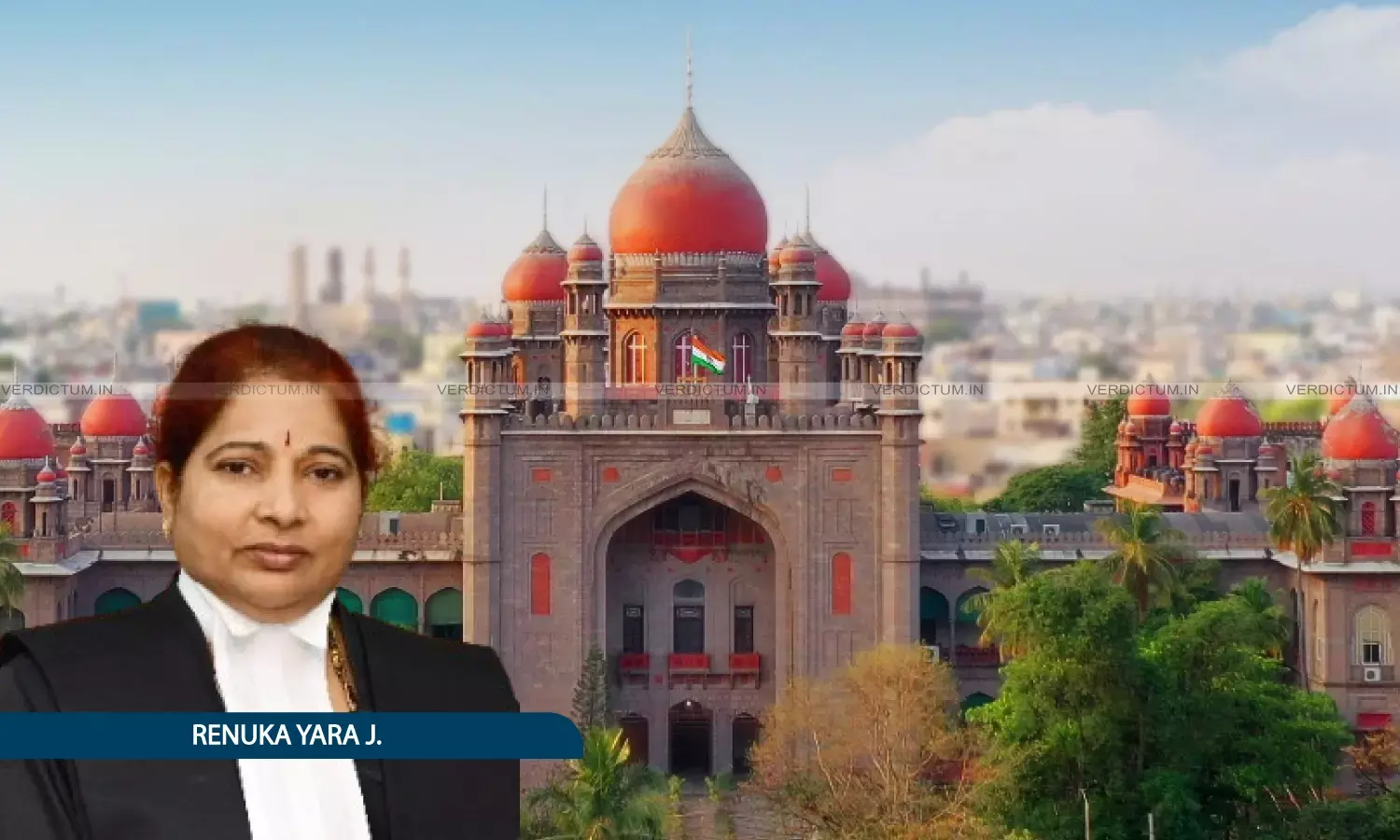
Justice Renuka Yara, Telangana High Court
While restraining the Telangana State Southern Power Distribution Company from disconnecting the electricity supply to a stone crushing unit without following the due process of law, the Telanagana High Court has held that Electricity Act does not give any right to a power supply distributor to disconnect the supply when the Unit has furnished security deposit, there are no dues and there is no theft of electricity.
The Court refused to accept the stand of the Respondent in justification of its action that the stone crushing unit was causing pollution.
The petitioner approached the High Court seeking a declaration that the action of the Respondents (Divisional Engineer and Assistant Divisional Engineer of Telangana State Southern Power Distribution Company Limited) in disconnecting the Electricity supply to the Petitioner’s Stone Crushing Unit without any notice or explanation was illegal, unconstitutional and violative of Articles 14, 19 and 21 of the Constitution and also the provisions of the Electricity Act 2003. The petitioners further sought restoration of the electricity supply.
The Single Bench of Justice Renuka Yara held, “In view of the above versions presented by both the learned counsel, it is seen that first and foremost, the Electricity Act does not give any right to the respondents to disconnect the power supply to Stone Crushing Units when the said Stone Crushing Units have furnished security deposit, when there are no dues and when there is no theft of electricity. Coming to the aspect of cooperating with other Departments of the State Government, no evidence is placed on record to believe the version that there is a request from Pollution Control Board to the Electricity Department, requesting to disconnect the power supply to the petitioner unit.”
Advocate Sankalp Pissay represented the Petitioner, while Assistant Government Pleader Jyothi Naik represented the Respondent.
Factual Background
The electricity supply to the Petitioner’s Stone Crushing Unit, along with the meter, was disconnected without any notice or prior intimation. The petitioner received a WhatsApp communication to submit the listed documents on the same day. The petitioner submitted PDF copies of the required documents. On account of the disconnection of the electric supply, the petitioner approached the Electricity Consumer Grievances Redressal Forum (CGRF).
Arguments
It was the petitioner’s case that the respondents are empowered to disconnect the electric supply when reasonable security is not furnished, when dues are not paid, and when there is theft of electricity with unauthorised connections. In the instant case, the reason for the disconnection did not fall under any of the aforementioned categories, thereby rendering the disconnection illegal.
Reasoning
The Bench was of the view that the Electricity Act does not give any right to the respondents to disconnect the power supply to Stone Crushing Units when the said Stone Crushing Units have furnished a security deposit, there are no dues, and there is no theft of electricity.
On a perusal of the evidence, the Bench found that when the petitioner received notice immediately, attested copies of the required permits and approvals were sent to the respondents, but there was no communication from the respondents as to whether the documents furnished would meet the requirements of the notice. “Without such reply and without any communication from Pollution Control Board, disconnecting power supply does constitute any arbitrary act on the part of the respondents and therefore, unsustainable”, it stated.
The Bench was informed that the power supply had been restored pursuant to an interim order. The Bench thus allowed the Petition by directing the respondents not to disconnect the electricity supply to the petitioner’s stone crushing unit without following the due process of law.
Cause Title: B. Vijay Kumar v. The State of Telangana (Case No.: W.P.No.520 of 2026)
Appearance
Petitioner: Advocate Sankalp Pissay
Respondent: Assistant Government Pleader Jyothi Naik