

Criminal Trials Cannot Rest On Incomplete Investigation When Readily Available Decisive Evidence Ignored: Rajasthan High Court Acquits POCSO Accused
Bench noted improbable prosecution story, prosecution’s failure to establish age of the prosecutrix and serious lapses in investigation

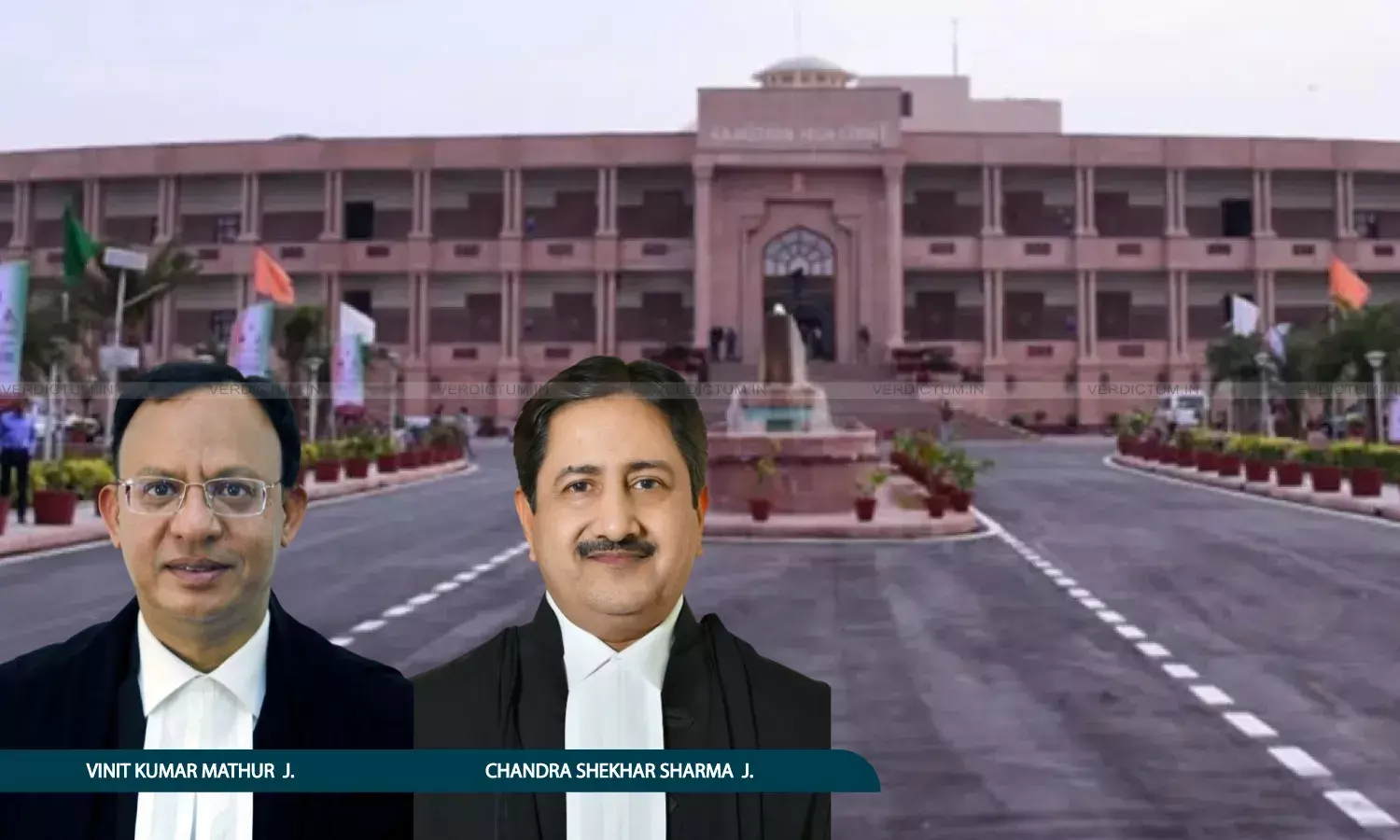
The Rajasthan High Court has set aside the conviction and life sentence imposed on a former Sarpanch, under the Protection of Children from Sexual Offences Act, 2012 (POCSO) and Section 376(2)(n) of the IPC, noting improbable prosecution story and serious lapses in investigation that deprived the Court of independent corroboration, further adding to the cumulative doubt.
On considering the prosecution’s failure to establish prosecutrix’s age at the time of the alleged incident, examination of witnesses, and CCTV footage, the bench observed that criminal trials cannot be founded upon incomplete investigation when decisive evidence was readily available but ignored.
A division bench comprising Justice Vinit Kumar Mathur and Justice Chandra Shekhar Sharma noting that observed, “The investigating officers (PW-18 Hazari Ram & PW-20 Bachhan Singh) further admitted that no CCTV footage was secured from the hotel or passport office, though such footage would have been the best available corroborative evidence. No inquiry was conducted from co-passengers who allegedly travelled with the prosecutrix. These serious lapses in investigation deprive the Court of independent corroboration and add to the cumulative doubt. Criminal trials cannot be founded upon incomplete investigation when decisive evidence was readily available but ignored”.
“When the evidence is appreciated cumulatively, it becomes evident that the prosecution case is riddled with inconsistencies, omissions, and investigative deficiencies. Proof beyond reasonable doubt is not a mere slogan; it is a constitutional safeguard protecting liberty. The minority of the prosecutrix is not conclusively established; the foundational story is improbable; the delay in FIR is unexplained; the earliest version is withheld; independent corroborative evidence is absent; and the medical evidence does not support the prosecution narrative. Criminal conviction cannot rest on suspicion or conjecture. The prosecution must prove its case beyond reasonable doubt, and the benefit of every reasonable doubt must enure to the accused”, the bench further observed.
Senior Advocate Vineet Jain appeared for the appellant and Rajesh Bhati, PP appeared for the respondent.
In the matter, according to the prosecution story, the incident occurred in May 2016 when the accused allegedly took the prosecutrix, said to be around 17 years old, from Sri Ganganagar to Sikar on the pretext of arranging her passport and sending her abroad. It was alleged that the accused sexually assaulted her multiple times during the journey in a sleeper bus and later at a hotel in Sikar, before bringing her back home.
An FIR was registered the following day, and the accused was later convicted by the trial court under IPC and POCSO provisions.
Now, challenging the conviction, the defence argued that the prosecution deliberately suppressed the most crucial evidence relating to the prosecutrix’s age, namely, records of the first school she attended.
While relying on a Secondary Board marksheet to claim minor age, the investigating officers admitted that they neither collected nor verified the earliest admission records, despite parents acknowledging the prosecutrix’s initial schooling elsewhere.
The defence also highlighted serious inconsistencies in the prosecution story, unexplained delay in lodging the FIR, non-examination of material witnesses, absence of CCTV footage from the hotel and passport office, and contradictions in medical evidence. The accused produced defence witnesses and hotel records showing his stay at a different hotel along with his brother, which the prosecution failed to effectively rebut.
Importantly, the medical evidence recorded absence of injuries and noted prior sexual intercourse weeks before the alleged incident, facts not reflected in the FIR or earlier statements, thereby weakening the allegation of repeated forcible assault.
After a detailed reappreciation of evidence, the High Court held that the prosecution had failed to prove the prosecutrix’s age beyond reasonable doubt, noting that suppression of the earliest school admission records warranted an adverse inference.
The Court also found the prosecution narrative riddled with improbabilities and investigative lapses. It observed that key witnesses such as first responders were withheld, crucial electronic evidence was not collected, and the hotel records relied upon by the prosecution did not support its case.
Therefore, holding that criminal conviction cannot rest on conjecture or suspicion, the Court ruled that the prosecution had failed to discharge its burden of proof. It set aside the conviction and sentence, acquitted the appellant of all charges, and directed compliance with Section 437A CrPC.
Cause Title: X v. State [Neutral Citation: 2026:RJ-JD:5728-DB]
Appearances:
Appellant: Vineet Jain, Sr. Advocate, Praveen Vyas, Advocates.
Respondent: Rajesh Bhati, PP, NL Joshi, Kirti Pareek, Advocates.