Deceased Driver Holding Valid Licence For Heavy Vehicles A Skilled Worker: Punjab & Haryana High Court Upholds Compensation In Motor Accident Case
The High Court held that where the driving licence of a deceased victim shows authorisation to drive heavy and medium goods vehicles, the deceased must be treated as a skilled worker.
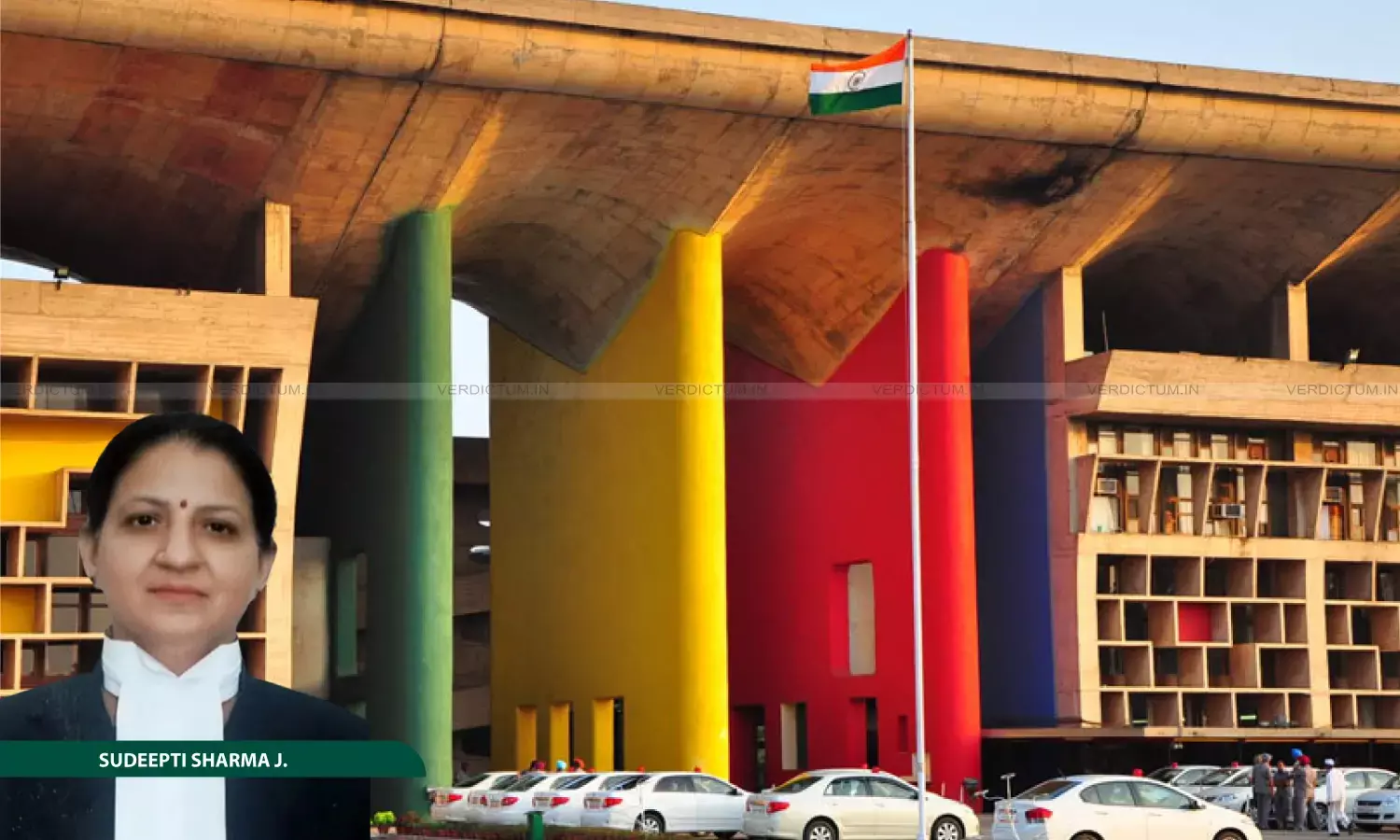
Justice Sudeepti Sharma, Punjab & Haryana High Court
The Punjab & Haryana High Court declined to interfere with the quantum of compensation awarded by a Motor Accident Claims Tribunal, holding that the Tribunal was justified in assessing the income of the deceased based on wage notifications applicable to skilled labour/heavy vehicle drivers.
The Court held that once the driving licence of the deceased established authorisation to drive heavy and medium goods vehicles, there remained no infirmity in treating the deceased as a skilled worker and applying the corresponding wage rates for the computation of compensation.
The Court was hearing an appeal filed by the insurer challenging the award passed by the Motor Accident Claims Tribunal, Kurukshetra.
A Bench of Justice Sudeepti Sharma decided the matter and held: “a perusal of the record shows that the driving licence of the deceased was produced and exhibited as Ex. R-6. The said licence clearly reflects that the deceased was authorised to drive heavy and medium goods vehicles. Thus, the deceased was duly qualified to be treated as a skilled worker in the category of heavy vehicle driver”.
Background
The appeal arose from an award passed by the Motor Accident Claims Tribunal, Kurukshetra, in a claim petition filed under Section 166 of the Motor Vehicles Act, 1988. The Tribunal had awarded compensation of ₹19,60,000 along with interest at the rate of 7.5% per annum in favour of the claimants.
The appellant insurance company challenged the award before the High Court, confining its challenge solely to the quantum of compensation.
The insurer contended that the Tribunal had erred in assessing the monthly income of the deceased at ₹15,680 by relying on the wage notification issued by the Deputy Commissioner, Kurukshetra, applicable to skilled labour/heavy vehicle drivers, instead of adopting the minimum wages applicable to skilled labour in the State of Haryana.
Court’s Observation
At the outset, the High Court reiterated the settled principle governing appellate interference with awards of Motor Accident Claims Tribunals, observing that a court sitting in appeal does not substitute its own view merely because another view is possible, and interference is warranted only where the findings suffer from perversity, illegality, or material irregularity.
Examining the record, the Court noted that the driving licence of the deceased had been produced and exhibited as Ex. R-6 before the Tribunal. A perusal of the licence clearly showed that the deceased was authorised to drive heavy and medium goods vehicles. On this basis, the Court held that the deceased was duly qualified to be treated as a skilled worker in the category of heavy vehicle driver.
The Court further observed that there was nothing on record to demonstrate that the wage rates notified by the Deputy Commissioner, Kurukshetra, were inapplicable to the deceased. In the absence of any cogent evidence to the contrary, the High Court held that the Tribunal was justified in relying upon the said notification for determining the monthly income of the deceased.
The Bench also placed reliance on the decision of the Supreme Court in Saroj & Ors. v. IFFCO-Tokio General Insurance Co. &Ors. (2024), wherein it was held that, unless shown otherwise, wage rates notified by competent authorities can be relied upon for assessing the notional income of a deceased person.
Applying these principles, the Court found no merit in the insurer’s contention that the Tribunal ought to have applied lower minimum wages. It held that the findings recorded by the Tribunal regarding the assessment of monthly income were based on material evidence and did not suffer from any infirmity or illegality.
Conclusion
The Punjab & Haryana High Court concluded that the Tribunal was justified in treating the deceased as a skilled heavy vehicle driver on the basis of his valid driving licence and in applying the relevant wage notification for computing compensation.
Accordingly, the Court dismissed the appeal filed by the insurance company, affirmed the award passed by the Motor Accident Claims Tribunal, and directed a refund of the statutory amount deposited by the insurer at the time of admission of the appeal.
Cause Title: National Insurance Company Limited v. Vimal Kaur & Ors. (Neutral Citation: 2025:PHHC:175734)
Appearances
Appellant: Vishavjeet Bedi, Advocate
Respondents: Harinder Singh Sandhu, Advocate