

District Magistrate's Role U/S 14 SARFAESI Act Is Purely Administrative & Not Adjudicatory: Punjab & Haryana High Court
The High Court reiterated that proceedings under Section 14 of the SARFAESI Act do not involve adjudication of borrower disputes, and deprecated repeated non-compliance by State authorities, imposing costs for delay in execution of possession orders.
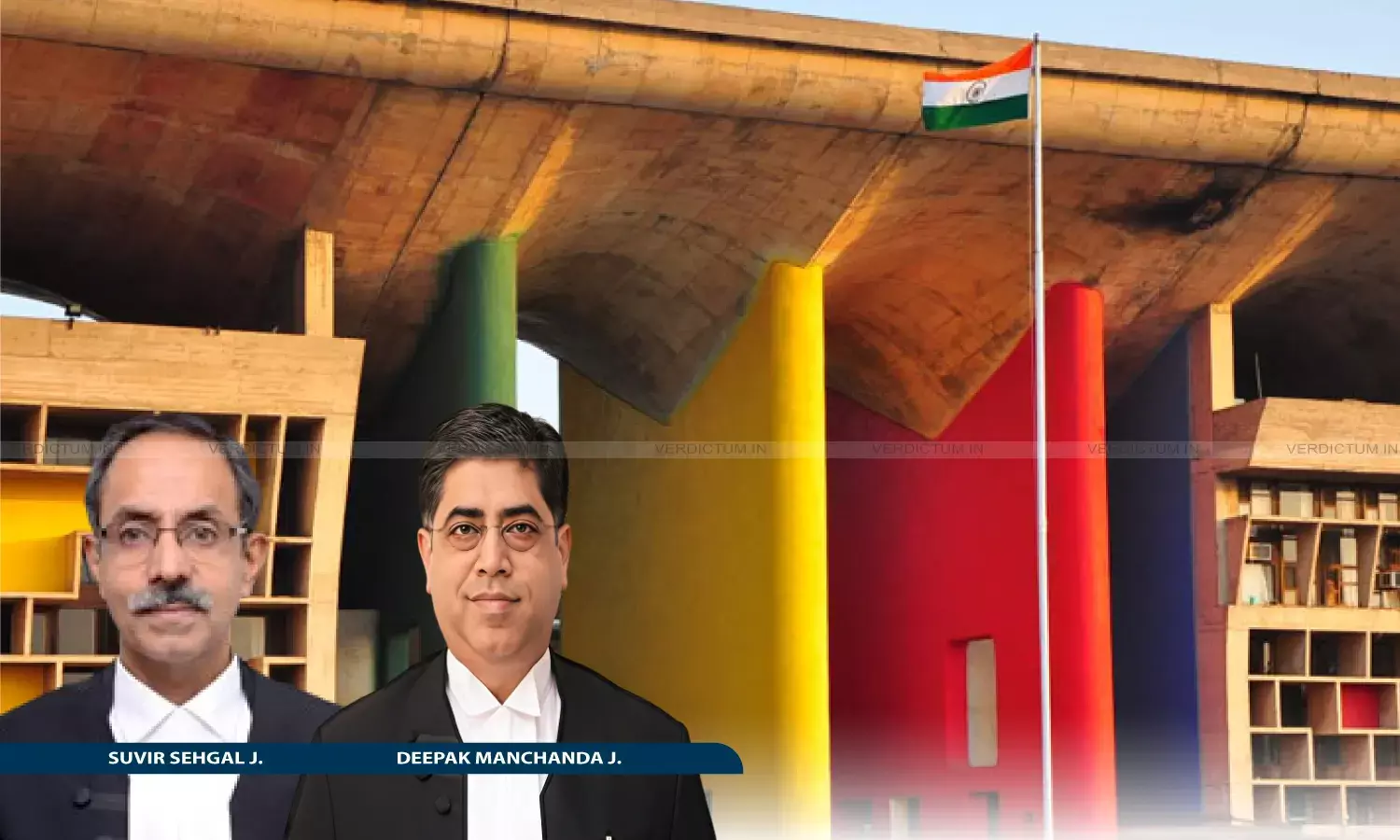
The High Court of Punjab & Haryana at Chandigarh, while imposing costs on the States of Punjab & Haryana for failure of State authorities to comply with and execute orders, observed that the role of the District Magistrate under Section 14 of the SARFAESI Act is purely administrative and not adjudicatory.
The Court was hearing a petition filed by a secured creditor seeking enforcement of an order passed by the District Magistrate directing the delivery of physical possession of secured assets, which remained unexecuted for several months.
A Division Bench of Justice Suvir Sehgal and Justice Deepak Manchanda observed: “The law is well settled that under Section 14 of the SARFAESI Act, the role of the District Magistrate is essentially administrative in nature and not adjudicatory. The District Magistrate is required to confine the examination strictly to the verification of the factual correctness of the contents of the application/petition/affidavit filed by the secured creditor. The scope of scrutiny does not extend to examining the legal validity or correctness of the measures taken by the secured creditor under the Act”.
“The District Magistrate is under a statutory obligation to act expeditiously and decide the application under Section 14 of the Act without entering into adjudicatory issues, limiting the consideration only to the factual assertions contained in the application submitted by the bank”, the Bench added.
Advocate Vineet Sehgal appeared for the petitioner, while the respondents were represented by Anant Kataria, DAG, Haryana.
Background
The petitioner, a financial institution and secured creditor, had initiated proceedings under the SARFAESI Act after default by the borrower and approached the District Magistrate under Section 14 seeking assistance for taking physical possession of secured assets.
An order was duly passed by the District Magistrate authorising possession; however, despite repeated communications, notices, and requests for police assistance, the order remained unexecuted for a prolonged period.
The petitioner contended that such inaction defeated the very object of the SARFAESI Act, which mandates expeditious recovery of secured debts and timely enforcement of security interests.
Court’s Observation
The Court examined the statutory scheme under Section 14 of the SARFAESI Act and reiterated that the role of the District Magistrate is limited to facilitating possession of secured assets upon satisfaction of factual compliance in the application. It emphasised that the Magistrate is not required to adjudicate disputes or examine the legality of measures taken by the secured creditor, noting that such issues fall exclusively within the jurisdiction of the Debt Recovery Tribunal under Section 17 of the Act.
Referring to the decision of the Supreme Court in R.D. Jain & Co. v. Capital First Ltd. (2023), the Court held that the function under Section 14 is essentially administrative and does not involve adjudicatory determination of borrower objections. It observed that “the Magistrate has to adjudicate and decide the correctness of the information given in the application and nothing more.”
The Court further underscored that once an order under Section 14 is passed, the concerned authorities are under a statutory obligation to execute the same expeditiously. The prolonged delay of several months in the present case, despite the absence of any stay or legal impediment, was held to be contrary to the statutory mandate and judicial directions.
The Court took serious note of repeated instances of non-compliance by State authorities in similar matters, observing that such conduct undermines the object of the Act and results in unnecessary litigation. It reiterated earlier directions requiring strict adherence to timelines for disposal and execution of Section 14 applications and emphasised that failure to comply may even attract contempt.
“What is even more surprising is that despite the aforementioned judgments being very well within the knowledge of the State authorities, the respondents have still failed to comply with the settled legal position and have unnecessarily delayed the process. Such conduct on the part of the respondents is wholly unjustified, cannot be countenanced, and deserves to be strongly deprecated, and the same is in the teeth of binding judicial precedents”, the Bench remarked.
Invoking the doctrine of stare decisis, the Court stressed that once the legal position stands settled by binding precedents, the State is duty-bound to follow and implement the same in letter and spirit. It observed that persistent disregard of such settled law “is in clear derogation of the settled principles of ‘stare decisis’ and legitimate administrative fairness, which the State is duty-bound to observe once the issue stands conclusively settled by the aforesaid judgments and has thereafter been reiterated in subsequent decisions”.
Conclusion
The High Court allowed the writ petition and directed the concerned authorities to hand over physical possession of the secured assets within a stipulated period, subject to the absence of any restraining order by a competent forum.
As a punitive measure for continued non-compliance, the Court imposed costs of ₹50,000 each on the States of Haryana and Punjab, directing the amount to be deposited with the Institute for the Blind, Sector-26, Chandigarh, within one month.
Cause Title: IIFL Home Finance Ltd. v. State of Haryana & Ors. (Neutral Citation: 2026:PHHC:037744-DB)
