“CBI May Have Coerced Witness”: Punjab & Haryana High Court While Acquitting Gurmeet Ram Rahim Singh In Journalist Murder Case
The High Court held that the prosecution's case rested primarily on the testimony of a single witness whose statement was found to be unreliable and possibly influenced by the CBI during the investigation.
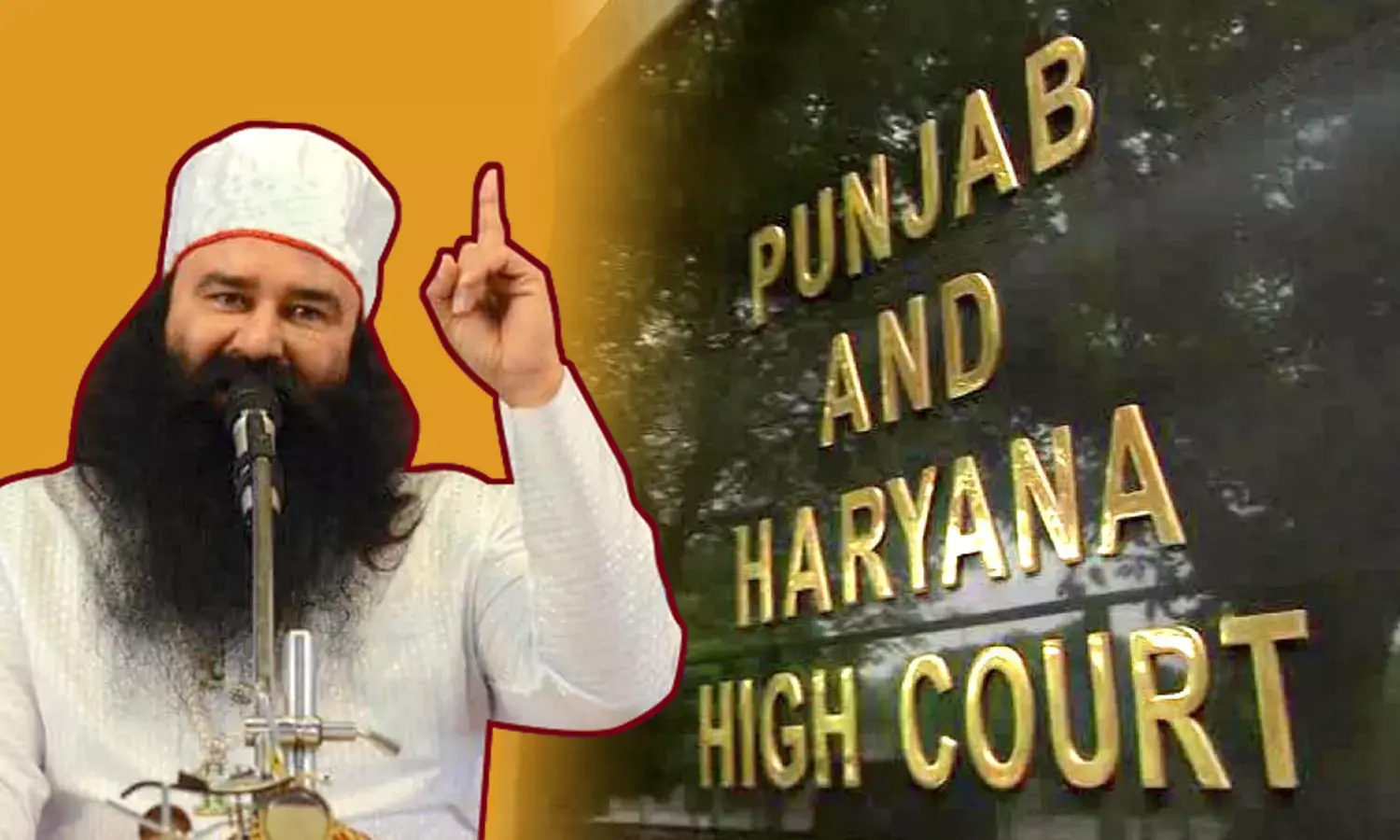
The Punjab & Haryana High Court, while acquitting Dera Sacha Sauda chief Gurmeet Ram Rahim Singh in the murder case of journalist Ram Chander Chhatrapati, observed that the material on record suggested the possibility that the witness may have been coerced by the Central Bureau of Investigation into testifying against the accused, and held that such uncorroborated testimony, unsupported by other reliable evidence, could not sustain a conviction.
The Court was hearing a batch of criminal appeals challenging the conviction and sentence imposed by the Special Judge (CBI), Panchkula, which had held the accused guilty of offences including murder and criminal conspiracy arising out of the killing of the journalist who had allegedly published articles critical of the Dera leadership.
A Division Bench comprising Chief Justice Sheel Nagu and Justice Vikram Aggarwal, while observing that “it appears that he was coerced by CBI into making a statement as CBI was under pressure to conclude the investigation”, further remarked that “it is a matter of grave concern that a premier Investigating Agency adopted this kind of methodology with a view to succeed in the matter, …the endeavour should have been to go to the bottom of the matter and bring out the truth.”
Background
The case originated from an incident in Sirsa, Haryana, where Ram Chander Chhatrapati, a journalist associated with an evening newspaper, was shot at outside his residence and later succumbed to injuries. According to the prosecution, the attack was carried out by two assailants allegedly acting pursuant to a conspiracy hatched by the Dera chief, while another accused was alleged to have supplied the weapon used in the crime.
An FIR was registered based on a complaint lodged by the son of the deceased, who stated that two persons armed with pistols had called the victim outside the house and opened fire. One of the alleged assailants was said to have been apprehended by police personnel present in the vicinity, while the other escaped.
During the investigation, weapons, cartridges and other items were allegedly recovered, and several witnesses were examined. Subsequently, the investigation was transferred from the Haryana Police to the Central Bureau of Investigation on the directions of the High Court. The CBI later filed a supplementary charge sheet alleging that the murder was committed pursuant to a conspiracy involving the Dera leadership.
The trial court eventually convicted the accused and sentenced them to life imprisonment, which was challenged before the High Court.
Court’s Observations
At the outset, the Punjab & Haryana High Court reiterated the settled principles governing appellate scrutiny in criminal cases. The Bench observed that “an Appellate Court may, after hearing the parties and perusing the record, affirm the findings of thetrial Court, reverse the same and acquit the accused or, while maintaining the finding on conviction, alter the nature and extent of the sentence, but not so as to enhance the same”.
The High Court then examined the legal framework governing the offence of criminal conspiracy under Sections 120-A and 120-B of the Indian Penal Code. Relying on precedents of the Supreme Court, including Major E.G. Barsay v. State of Bombay and Bilal Hajar v. State, the Bench observed that the meeting of minds between two or more persons to carry out an illegal act is the sine qua non of the offence of conspiracy. It was further noted that although all conspirators need not know every detail of the conspiracy, the existence of such an agreement must nonetheless be established.
The Court also referred to decisions such as Kehar Singh v. State (Delhi Administration), State of Maharashtra v. Som Nath Thapa, State (NCT of Delhi) v. Navjot Sandhu, and Yogesh v. State of Maharashtra to reiterate that the existence of a conspiracy may be inferred from surrounding circumstances and the conduct of the alleged conspirators. However, such inference must arise from a complete chain of circumstances that unmistakably points towards guilt, and suspicion cannot replace legal proof.
The Court observed that although the sons of the deceased had consistently alleged that the murder had been carried out at the instance of the Dera, the initial First Information Report recorded only a suspicion against persons associated with the Dera, and no specific individual was named at that stage. Significantly, no such allegation surfaced in the disclosure statements of the co-accused either. Even after the investigation was transferred to the Central Bureau of Investigation, the name of the Dera chief did not appear for several years during the course of the investigation.
The Bench noted that the prosecution’s case regarding conspiracy ultimately rested on the testimony of a single witness who surfaced during the later stages of the investigation. The witness, who had earlier been associated with the Dera, initially did not attribute any role in the present case when his statement was first recorded in connection with another murder investigation. Subsequently, he filed applications alleging that investigators had pressured him to implicate the Dera chief and sought protection from such alleged coercion.
The Court examined the sequence of events surrounding this witness’s statements. Nearly five years after the incident, the witness, for the first time, alleged that a direction had been given to eliminate the journalist following the publication of certain reports in Pura Sach. A statement to that effect was then recorded under Section 164 of the Code of Criminal Procedure before a Magistrate, and a supplementary charge sheet was later filed naming the Dera chief as an accused.
However, during the trial, the witness turned hostile and stated that he had earlier been coerced by investigators to make allegations. He was subsequently recalled and again supported the prosecution’s case. The Court observed that this conduct demonstrated significant inconsistency. The witness had remained silent for several years and had repeatedly shifted his stand, thereby raising serious doubts regarding his reliability. The Bench held that such vacillating testimony could not be safely relied upon without independent corroboration.
Referring to Supreme Court decisions including Jarnail Singh v. State of Punjab, Vikramjit Singh v. State of Punjab, and Sunil Kumar Shambhu Dayal Gupta v. State of Maharashtra, the Court reiterated that a witness who drastically changes his version on material aspects cannot be treated as reliable. The Bench also referred to Vadivelu Thevar v. State of Madras, which classifies witnesses as wholly reliable, wholly unreliable, and neither wholly reliable nor wholly unreliable, observing that testimony falling in the latter category requires material corroboration. In the present case, the Court found that the witness’s testimony lacked such corroboration.
The Court further noted that the investigation suffered from significant gaps. A crucial investigating officer who had recorded the statement of the injured journalist while he was undergoing treatment was not examined during the trial, and the statement itself was not produced. According to the Bench, this omission created serious doubt regarding the earliest version of the incident. Given that the charge against the Dera chief was based solely on the alleged conspiracy, the contents of that statement would have been of considerable importance, the Court remarked.
The medical records of the injured journalist also indicated that he remained conscious and oriented for several days after the incident. Despite this, no further attempt was made by the investigating agency to record his statement during that period. The Court observed that such omissions in the investigation created doubts which necessarily had to enure to the benefit of the accused.
The Bench also found that the prosecution had failed to produce independent evidence corroborating the witness’s claim regarding the alleged meeting and direction to eliminate the journalist. Even the investigating officer admitted during cross-examination that several aspects of the witness’s narrative had not been verified during the investigation.
The High Court further observed that the circumstances surrounding the witness’s statements suggested that he may have been coerced by the Central Bureau of Investigation into making an incriminating statement. The Bench noted that the witness had, in several applications, consistently alleged that he was being pressured by the investigating agency to implicate the accused. The Court described such a possibility as a matter of grave concern, observing that a premier investigating agency ought to focus on uncovering the truth rather than adopting methods aimed merely at securing a particular outcome in the case.
Upon evaluating the entire material on record, the Court concluded that the prosecution had failed to establish the alleged conspiracy beyond a reasonable doubt. Consequently, the conviction recorded by the trial court in respect of the charge of criminal conspiracy could not be sustained.
Conclusion
Consequently, the High Court held that the appeals filed by the co-accused were devoid of merit. The Court accordingly dismissed their appeals and upheld the judgment of conviction and order of sentence passed by the trial court.
However, the Court allowed the appeal filed by Gurmeet Ram Rahim Singh, holding that the prosecution had failed to prove the charge of criminal conspiracy against him beyond a reasonable doubt. The Bench therefore set aside the judgment of conviction and order of sentence insofar as it related to him and acquitted him of the charge framed against him.
Cause Title: Gurmeet Ram Rahim Singh v Central Bureau of Investigation (Neutral Citation: 2026:PHHC:035021-DB)
Appearances
Appellants: Senior Advocate R. Basant; Senior Advocate R.S. Rai; Senior Advocate Ashwani Kumar Singh; Senior Advocate Amit Jhanji.
Respondents: Senior Advocate R.S. Bains; Special Public Prosecutor Ravi Kamal Gupta; Special Public Prosecutor Akashdeep Singh.