

Reformative Tendency By Not Indulging In Other Offence Is Sufficient Mitigating Circumstances To Reduce Punishment: Punjab & Haryana High Court
The Court modified the punishment in a death caused due to rash and negligent driving case.

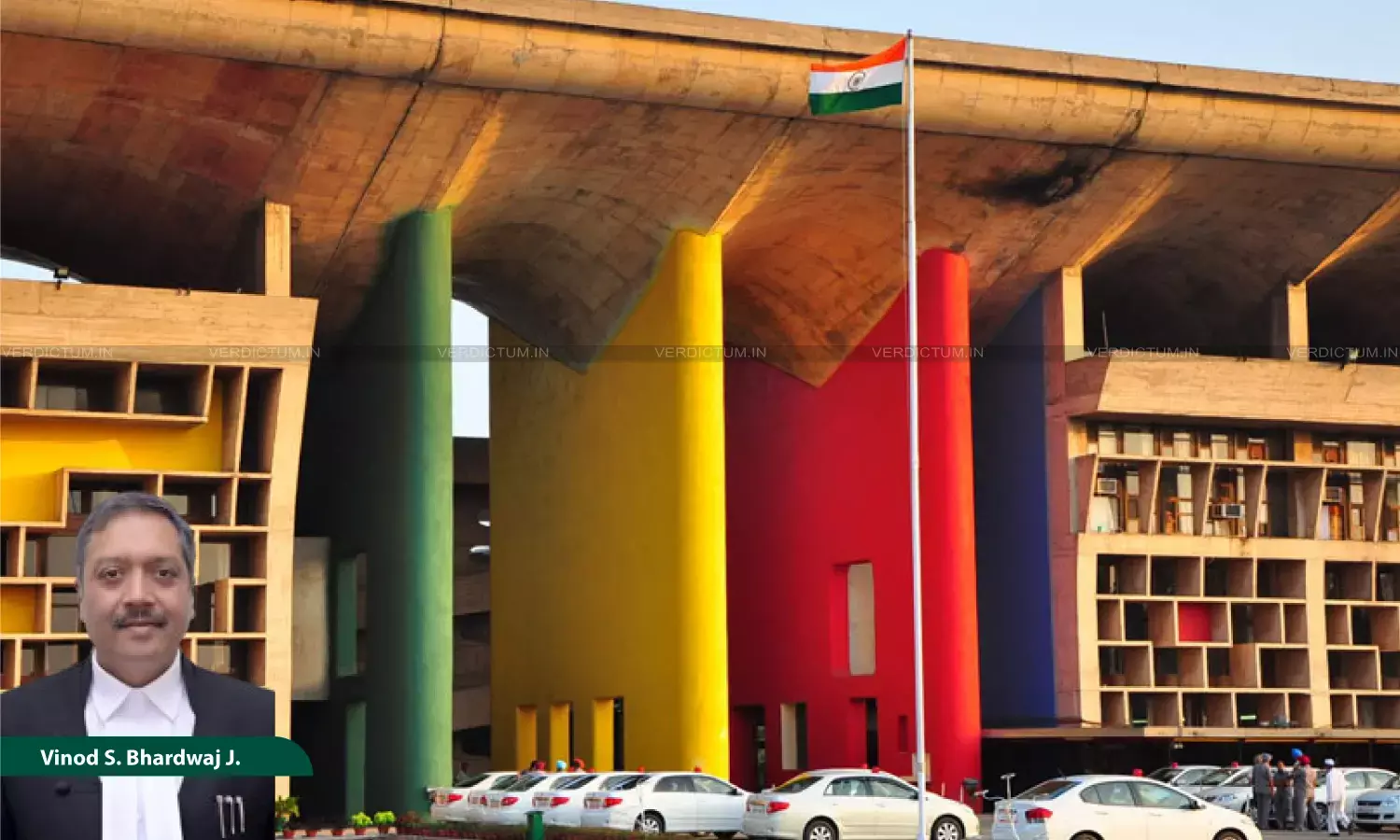
Justice Vinod S. Bhardwaj, Punjab & Haryana High Court
The Punjab and Haryana High Court, while hearing a case under Sections 279 and 304-A of the Indian Penal Code, 1860 (“IPC”), observed that the reformative tendency shown by the convict by not indulging in any other offence is sufficient to reduce the quantum of sentence.
The Bench of Justice Vinod S. Bhardwaj observed, “I find that the protracted criminal trial and the consequent agony faced by the petitioner, the actual sentence, out of total sentence, already undergone by the petitioner, the reformative tendency shown by the petitioner by not indulging in any other offence as well as the legal principles reproduced above are sufficient mitigating circumstances to reduce the quantum of sentence awarded to the petitioner.”
Advocate Ritam Aggarwal appeared for the Petitioner, whereas Additional PP, Alankrit Bhardwaj, appeared for the Respondent.
Background
A criminal revision was filed against the judgment of conviction and order of sentence passed by the Sessions Court, where the Petitioner was convicted for the offences punishable under Sections 279 and 304-A of the IPC.
The case originated from an accident in the Transport Area of Chandigarh, based on a statement by Rikhi Ram, a cleaner of the truck. The victim was the truck's owner-driver. According to Rikhi Ram, around 10:00 PM, while Moti Lal, Rikhi Ram, and a companion driver, Mohinder Kumar, were walking towards their parked truck, a car, driven "in a rash and negligent manner," struck Moti Lal from behind, causing him to fall.
The vehicle then ran over Moti Lal's head, crushing it and causing instant death. The driver/Petitioner herein stopped and was confronted by Rikhi Ram and Mohinder Kumar. The police arrived, registered the FIR based on Rikhi Ram's statement, conducted an inquest, and seized the offending vehicle.
Contention of the Parties
The Petitioner submitted that the accident in question had taken place in the parking area and, as such, rash and negligent driving of the offending vehicle by the Petitioner is highly improbable. It was also submitted by the Petitioner that the deceased was under the influence of liquor and death was caused as a result of his falling.
Observation of the Court
The Court observed that the Petitioner failed to point out any illegality and perversity in the findings of the trial court. The Court said that it was clearly established from the postmortem examination report, that there was crush injury present over the face and head of the deceased with multiple skull bones fractured. It has also been noticed that the deceased had been hit from behind by the offending truck and its front side had hit against the deceased, who fell down and was run over by the truck.
The object of punishment is not only to punish but also to rehabilitate the offenders in society. Where an accused reflects a strong possibility of improvement and reformative behaviour, the process of law should come to the aid of such an accused so as to ensure his reintegration into society.”, the Court said.
While relying on the judgment of the Supreme Court in Pramod Kumar Mishra Vs. State of UP, which observed that punishment must not be viewed as an act of vengeance but as a means of reformation and reintegration of the offender into society.
The Court held, “Keeping the aforesaid principles in mind, the instant case at handv is yet another where interest of justice would warrant a reformative approach in precedence to a punitive or retributive approach. It is not the function of the judges to seek the transformation of human nature itself, but rather to shape the framework within which individuals perceive that adherence to the law aligns with their own best interests.”
Conclusion
Accordingly, the Court allowed the petition partly and modified the sentence passed by the Sessions Court.
Cause Title: Pawan Kumar v. State of U.T. Chandigarh [Neutral Citation:2025:PHHC:162528]
Appearances:
Petitioner: Advocate Ritam Aggarwal
Respondent: Additional PP, Alankrit Bhardwaj