“Aggressors Meet Tragic End”: Patna High Court Refers To Mahabharat While Confirming Death Sentence In Triple Murder Case
The High Court, while dealing with a triple murder arising out of a land dispute between close relatives, drew an analogy with the Mahabharat to underline that those who act as aggressors in violation of dharma to seize land and power ultimately meet a tragic end.
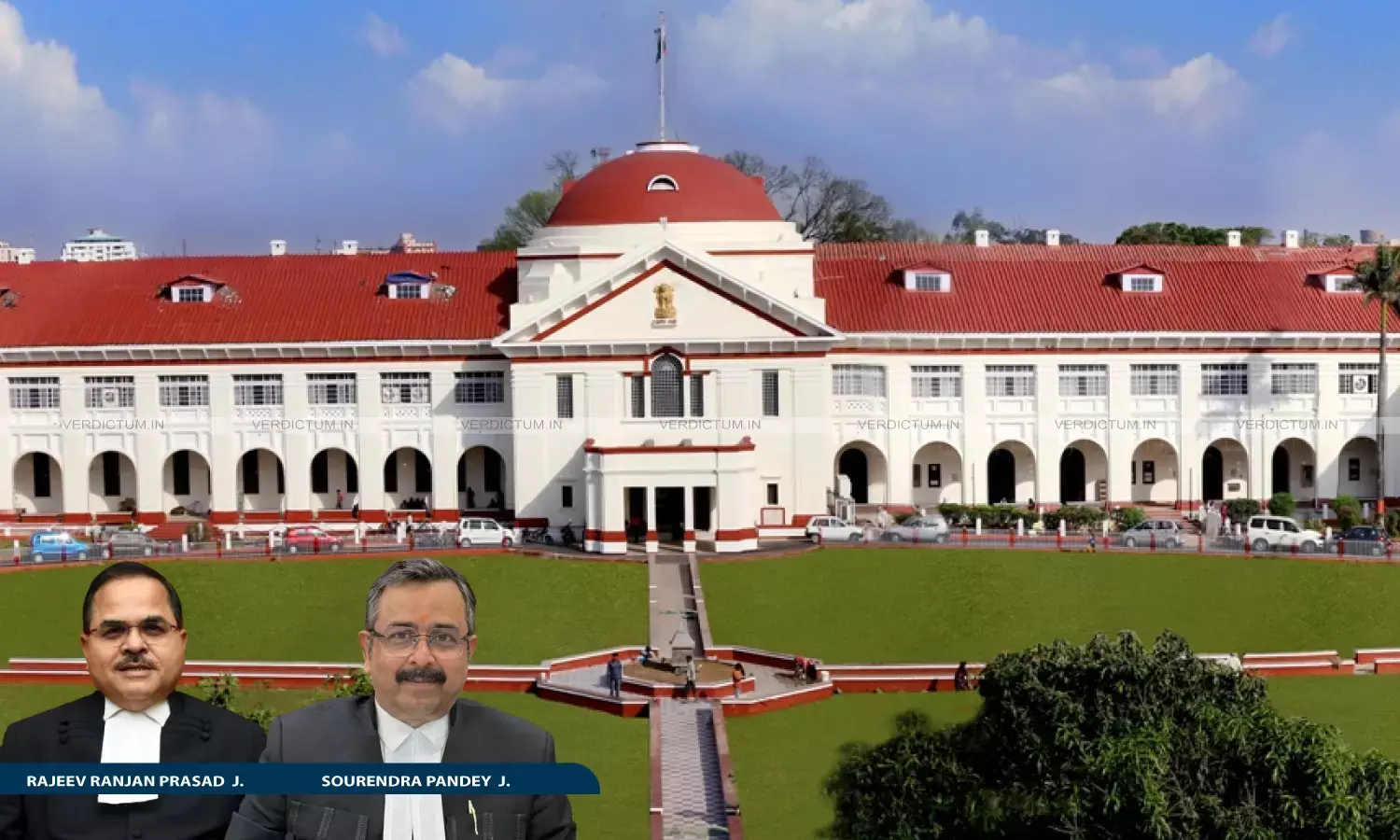
The Patna High Court, while confirming the death sentence awarded in a triple murder case, referred to the Mahabharata, observing that resorting to violence for control over land and property mirrors the moral collapse depicted in the Mahabharata, where aggressors who acted against dharma ultimately faced destruction.
The Court was hearing a death reference along with a criminal appeal arising from a conviction for murder under the Indian Penal Code in relation to the killing of three members of the same family over a land dispute.
A Division Bench of Justice Rajeev Ranjan Prasad and Justice Sourendra Pandey, while affirming the conviction, referred to the epic, observing: “…the Kauravas were the aggressors, who attempted to kill relatives for property or to seize the reign of the empire. Mahabharat culminates with a message that aggressors meet a tragic end as divine punishment for their “adharm”, i.e. to try to kill their brother (cousins) to seize power.”
Background
The matter arose out of a dispute over agricultural land between close relatives residing in the same ancestral house. The prosecution alleged that the appellants, along with their absconding co-accused, assaulted three family members with sharp weapons following a quarrel over ploughing of the disputed land.
It was alleged that the victims were chased across multiple locations within the village and were ultimately attacked with swords, resulting in fatal injuries to all three.
The trial court convicted the appellants under Section 302 read with Section 34 of the Indian Penal Code and awarded the sentence of death, leading to a statutory death reference before the High Court, along with appeals by the convicts.
The defence challenged the conviction on multiple grounds, including alleged delay in lodging the FIR, suppression of the earliest version, non-examination of certain witnesses, inconsistencies regarding time and place of occurrence, and alleged defects in the investigation.
Court’s Observation
The High Court undertook a detailed examination of the evidence of eyewitnesses, medical evidence, forensic reports, and the findings of the trial court. The Bench held that the core prosecution version regarding the place, time, and manner of occurrence remained intact despite alleged discrepancies.
The Court noted that the prosecution witnesses consistently supported the occurrence taking place within the shared family premises and found that the medical evidence corroborated the nature and severity of the injuries inflicted.
Rejecting the defence argument of ante-timing and suppression of the earliest version, the Court held that lapses in investigation could not automatically enure to the benefit of the accused where the substantive evidence otherwise established guilt.
The Bench further observed that the brutality of the assault, the number of injuries, and the use of sharp-edged weapons reflected a clear intention to cause death.
While invoking the Mahabharata to emphasise that “aggressors meet a tragic end as divine punishment for their adharma”, the Court, while drawing parallels with the present case, observed that “…the story of Mahabharat leads us to one and only one conclusion that the appellants, who were the aggressors should be punished for their sin/crime, which has not only taken the three human lives but have also killed three women who after losing their husbands have become lifeless, their children have been left to cry all over their lives”
The Court held that the facts of the case reflected a similar pattern of aggression for land, where violence was used to eliminate close relatives, attracting the gravest consequences under the law.
Consequently, the Court concluded that “it is one of the rarest of the rare cases in which the option to impose a sentence of imprisonment for life or a special sentencing cannot be consciously exercised”.
Conclusion
Affirming the conviction recorded by the trial court, the High Court upheld the findings that the appellants were guilty of committing murder with common intention. The Court confirmed that the prosecution had proved its case beyond a reasonable doubt.
The death reference was accordingly considered and confirmed in accordance with the law, and the criminal appeals were disposed of in terms of the Court’s findings on conviction and sentence.
Cause Title: The State of Bihar v. Aman Singh & Anr.
Appearances:
Petitioners: Advocate Anil Singh, Amicus Curiae; Advocate Manoj Kumar
Respondents: Senior Advocate Ansul, Manish Kumar, Addl. PP, with Advocates Pratik Mishra, Vatsal Vishal, Raushan Kumar, Dharmendra Kumar Singh, Eashiita Raj, Advocate Manoj Kumar, Sada Nan Roy