

If Tender Period Lapses Without Formal Extension, Contract To Be Considered Naturally Terminated: Patna High Court
The Court ruled that a contract is considered naturally terminated if the tender period expires without a formal extension.

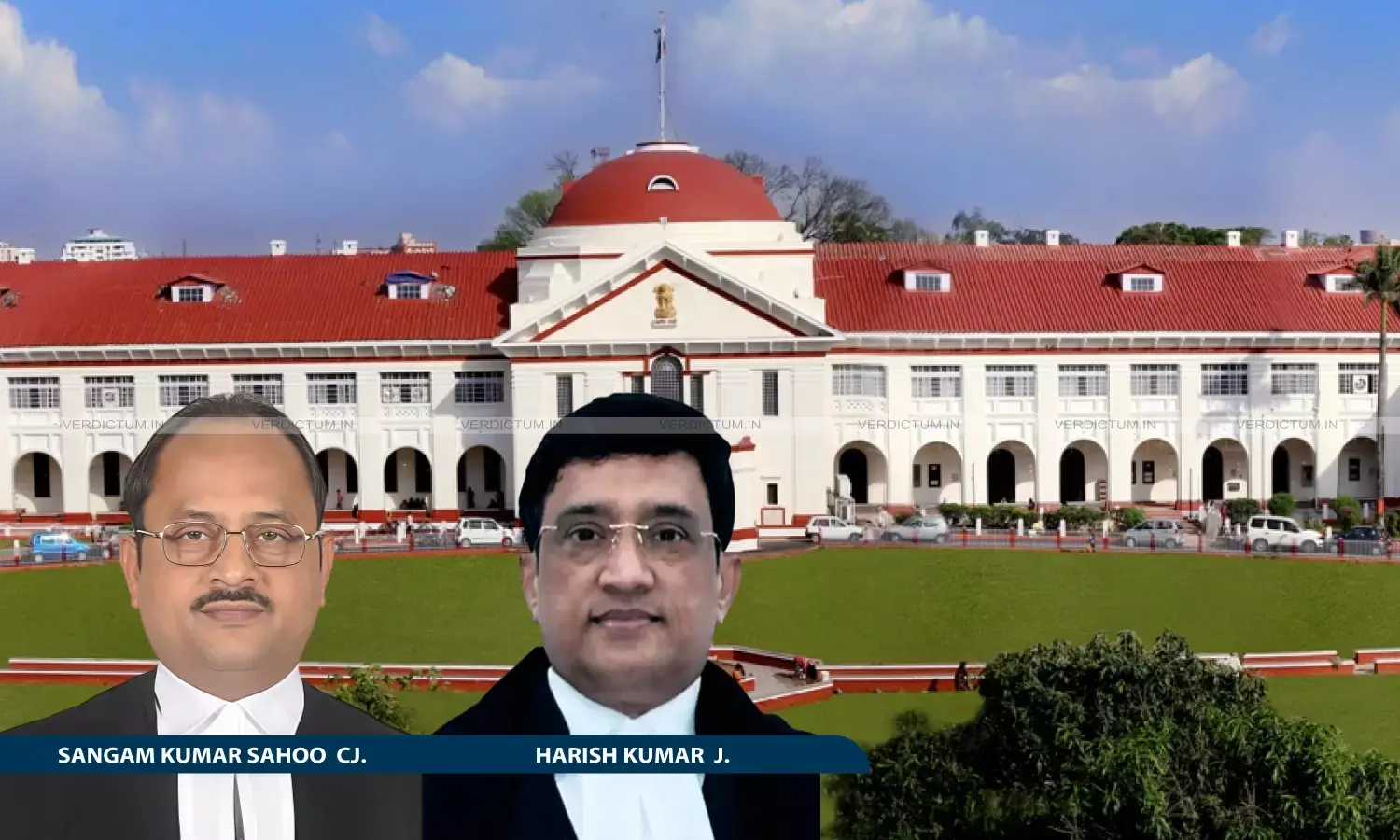
The Patna High Court has held that if a tender period expires without a formal extension, the contract is considered to have naturally terminated. Consequently, the Court found that the State’s action in cancelling the earlier tender and opting for a fresh process was neither arbitrary nor motivated by mala fide intentions.
The Division Bench of Chief Justice Sangam Kumar Sahoo and Justice Harish Kumar observed, “After hearing the learned Counsel for the respective parties, we are of the view that if a tender period lapses without a formal extension, the contract is considered to have naturally terminated; hence it cannot be said that the action of the appellants in cancelling the earlier tender and deciding to hold a fresh tender was arbitrary and there is any kind of mala fide in it. If such quantity would be put to fresh tender, it would definitely fetch more money and that is one of the reasons for which the decision had been taken to float a new tender.”
Advocate General P K Shahi appeared for the Appellants, while Senior Advocate Ganpati Trivedi appeared for the Respondents.
Facts of the Case
The State of Bihar appealed a 2024 order that had set aside the cancellation of a 2008 tender awarded to M/s. Kumar and Kumar. The firm had sought to quash the 2017 cancellation order, arguing that the eight-year delay in collecting the empty cartridges was not its fault and that the authorities were bound to honor the original agreement.
Initially, the firm won the bid for the cartridges at a rate of Rs. 241.11/kg and deposited the required security. In early 2009, a committee was formed for the disposal, but the firm requested two brief delays due to the proprietor's health and labor issues. Subsequently, the authorities postponed the measurement indefinitely due to Parliamentary Elections and VVIP security duties.
Despite repeated representations from the firm, the authorities remained silent until 2017, when they cancelled the tender. The State cited a significant increase in the quantity and market price of the cartridges as the reason for re-tendering. While a Single Judge originally ruled in favor of the firm, finding the government's delay unfair, the Division Bench has now reversed that decision.
Contention of the Parties
The State argued that the petitioner firm showed "gross delay" by approaching the Court only in 2017. He contended that if the firm had a genuine grievance, it should have filed a petition much earlier instead of merely submitting representations that the authorities did not act upon.
The State emphasized that cartridge prices rose substantially since 2008. Providing the materials at the old rate would cause a huge financial loss to the State and would, therefore, be contrary to the public interest.
The firm argued that while the petitioner requested two initial deferments, the firm remained ready and willing to cooperate thereafter. He blamed the authorities for failing to take the necessary steps to complete the measurement. The firm contended that issuing a fresh tender would be detrimental and cause significant financial loss to the petitioner, which would result in an injustice. The firm argued that the government's decision to cancel the contract was illegal, arbitrary, and capricious.
Observations of the Court
The Court said that no fault can be found with the authorities concerned so far as the delay is concerned, and the petitioner firm should have approached the Court within a reasonable period, knowing very well that the validity of the tender period was only for six months and there was no specific stipulation for relaxation of the period.
The firm approached the court in 2017, roughly eight years after the initial dispute began. In this regard, the court held that merely filing repeated representations does not save a claim from being barred by delay and laches
The Court emphasized that the State has a duty to protect its financial interests. Because the market price of brass and the quantity of cartridges had risen significantly, a fresh tender was necessary to ensure the State received a fair price.
“We are of the humble view that since there was no illegality committed by the authorities in cancelling the tender on account of passage of time and since admittedly, during the relevant period, the petitioner firm did not come forward to receive the goods, rather took time on some pretext or the other which was also granted to him and, moreover, since he approached this Court about seven to eight years thereafter, and went on filing representation after representation and by floating the new tender, there would benefit to the State exchequer and the same is necessary for public interest, the learned Single Judge was not justified in entertaining such writ petition and also passing the impugned order”, the Court said.
The Court also reiterated that in commercial and tender matters, judicial review is limited. It found no evidence of malice or arbitrariness in the State’s decision to pursue a new tender for the benefit of the public exchequer.
Accordingly, the court quashed the impugned order, upholding the State’s decision to issue a fresh tender. The Court directed the State to refund the firm's security deposit of Rs. 1,00,000 within four weeks, including 6.5% annual interest from the date of deposit.
Cause Title: State of Bihar and Ors. v. M/s Kumar and Kumar and Ors. [LPA No. 320 of 2025 in Civil Writ Jurisdiction Case No.7771 of 2017]
Appearances:
Appellants: Advocate General P K Shahi, Advocates N H Khan, Md. Irshad and M H Kuraishi.
Respondents: Senior Advocate Ganpati Trivedi, Advocates Madan Mohan, Saurabh Suman, Ritik Shah and Rahul Raj.