

Quasi-Judicial Orders Cannot Invite Criminal Prosecution: Patna High Court Quashes Sanction Against Executive Officer
Mutation stay order passed in official capacity protected under Judges (Protection) Act; cryptic sanction reflects non-application of mind

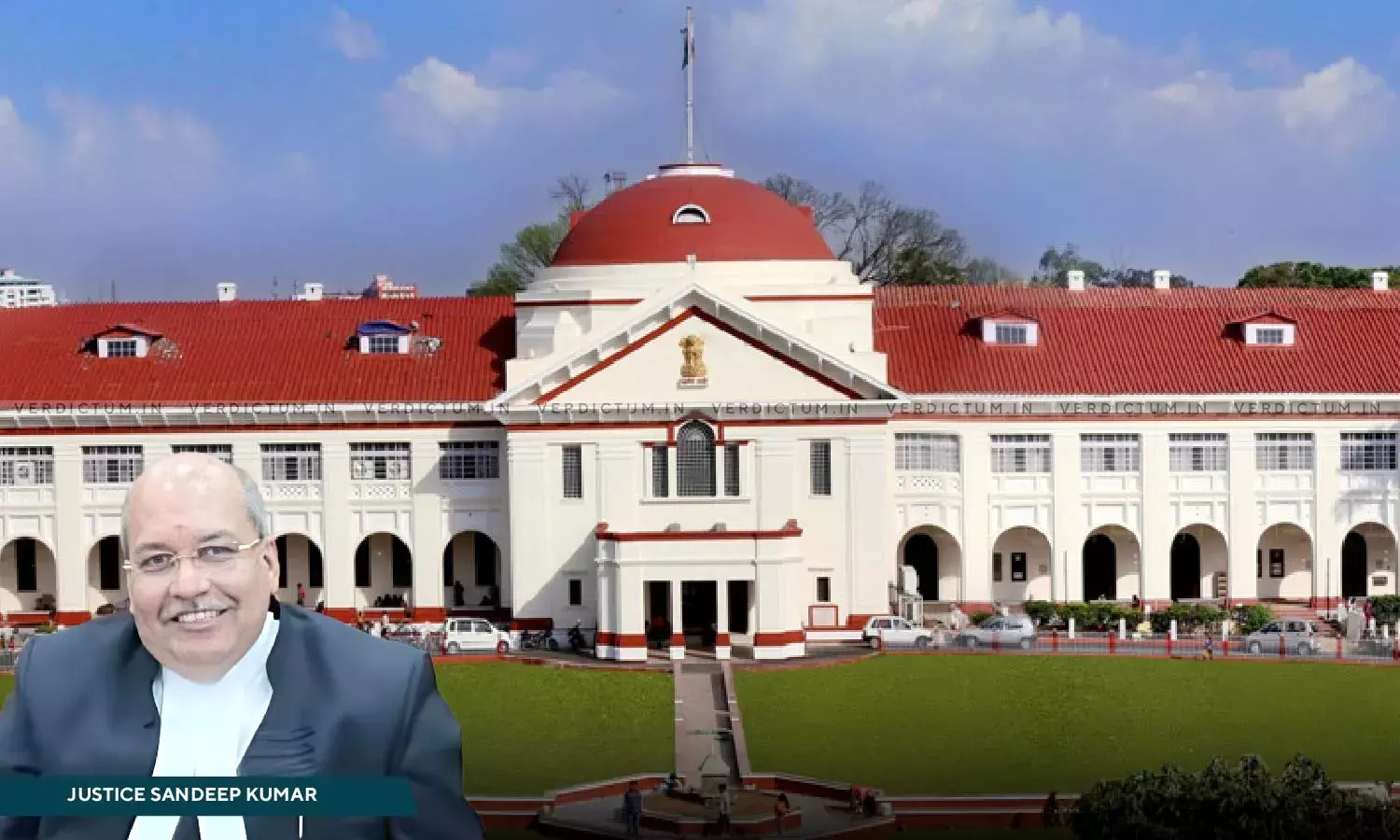
The Patna High Court has quashed criminal proceedings and sanction for prosecution granted against a senior government officer, holding that criminal law cannot be set in motion merely because a quasi-judicial order passed in discharge of official duties is perceived as unfavourable by one party.
The Court held that the sanction order failed to mention any material justifying criminal proceedings for staying the mutation case pending the title suit, and showed clear non-application of mind. It noted that the sanctioning authority overlooked the very purpose of sanction, particularly when the petitioner was protected under the Judges (Protection) Act, 1985, rendering the order unsustainable.
Justice Sandeep Kumar, thus observed, “…The present petitioner by his order had stayed the mutation proceedings which was before him on remand from the appellate authority since there was a dispute over the title of the subject property. If the parties to the mutation proceedings were aggrieved by the order of stay passed by the petitioner, then they could have availed remedies available under the law to assail the aforesaid order of stay. A bald statement that the order of stay passed by the petitioner being in favour of one of the parties to the mutation proceedings would not suffice to initiate a criminal prosecution against the petitioner. The criminal prosecution launched solely for passing an order of stay by the petitioner while discharging his duties, in the mutation proceedings simpliciter would squarely amount to malafide prosecution”.
However, the Court clarified that while disciplinary or other action may be taken in appropriate cases under law, criminal prosecution cannot be used as a tool to challenge quasi-judicial decisions.
Advocate Rajesh Kumar Mishra appeared for the petitioner and Jharkhandi Upadhyay, APP appeared for the respondent.
The application was filed challenging an impugned order passed by the Secretary, Department of Law, Government of Bihar whereby sanction for prosecution under Section 420, 467, 468, 471, 120-B of the Indian Penal Code, was granted against the present petitioner.
The petitioner, who was serving as an Executive Officer at the Bankipur Circle Office, Patna Municipal Corporation, had passed an order staying mutation proceedings in his quasi-judicial capacity, pending adjudication of a title dispute already before a competent civil court.
The present matter pertained to a property dispute concerning a residential building at Rajendra Nagar, Patna. The complainant, acting as power of attorney holder for his grandmother residing abroad, alleged that the property had been illegally mutated decades earlier in favour of a third party by misrepresenting lineage and parentage.
While proceedings against the alleged beneficiaries of the mutation were already pending separately, the petitioner-officer was later arrayed as an accused on the allegation that he acted in connivance with them by passing a stay order in the mutation proceedings in 2013.
Rejecting the allegations, the High Court held that revenue officers exercising statutory powers in mutation proceedings perform quasi-judicial functions and fall squarely within the definition of “Judge” under Sections 2 and 3 of the Judges (Protection) Act, 1985.
The Court reiterated that:
-passing a stay order in a mutation proceeding pending a title suit is a judicial act;
-any alleged error in such an order must be corrected through appellate remedies, not criminal prosecution;
-criminal proceedings launched solely on the basis of a judicial or quasi-judicial order amount to abuse of process.
The Bench also found the sanction order dated 28-12-2020 to be cryptic, non-speaking, and mechanical, noting that it failed to demonstrate independent application of mind or disclose why statutory protection available to the officer was being withdrawn.
Relying on recent Supreme Court precedents, the Court further reaffirmed that sanction under Section 197 CrPC cannot be granted as a mere formality and must reflect conscious satisfaction that the act complained of was not reasonably connected with official duty.
Cause Title: S. Kumar v. The State of Bihar and Anr., Criminal Miscellaneous No.1897 Of 2022
Appearance:
Petitioner: Rajesh Kumar Mishra, Rohit Raj, Advocates
Respondent: Jharkhandi Upadhyay, APP
Click here to read/download the Judgment