

Power Of Review Can’t Be Applied Retrospectively To Validate Actions Taken When No Such Power Existed: Patna High Court Grants Relief To Panchayat Teachers
The Patna High Court was considering a petition filed by the petitioners seeking the quashing of the Order of the District Teachers Appointment Appellate Authority.

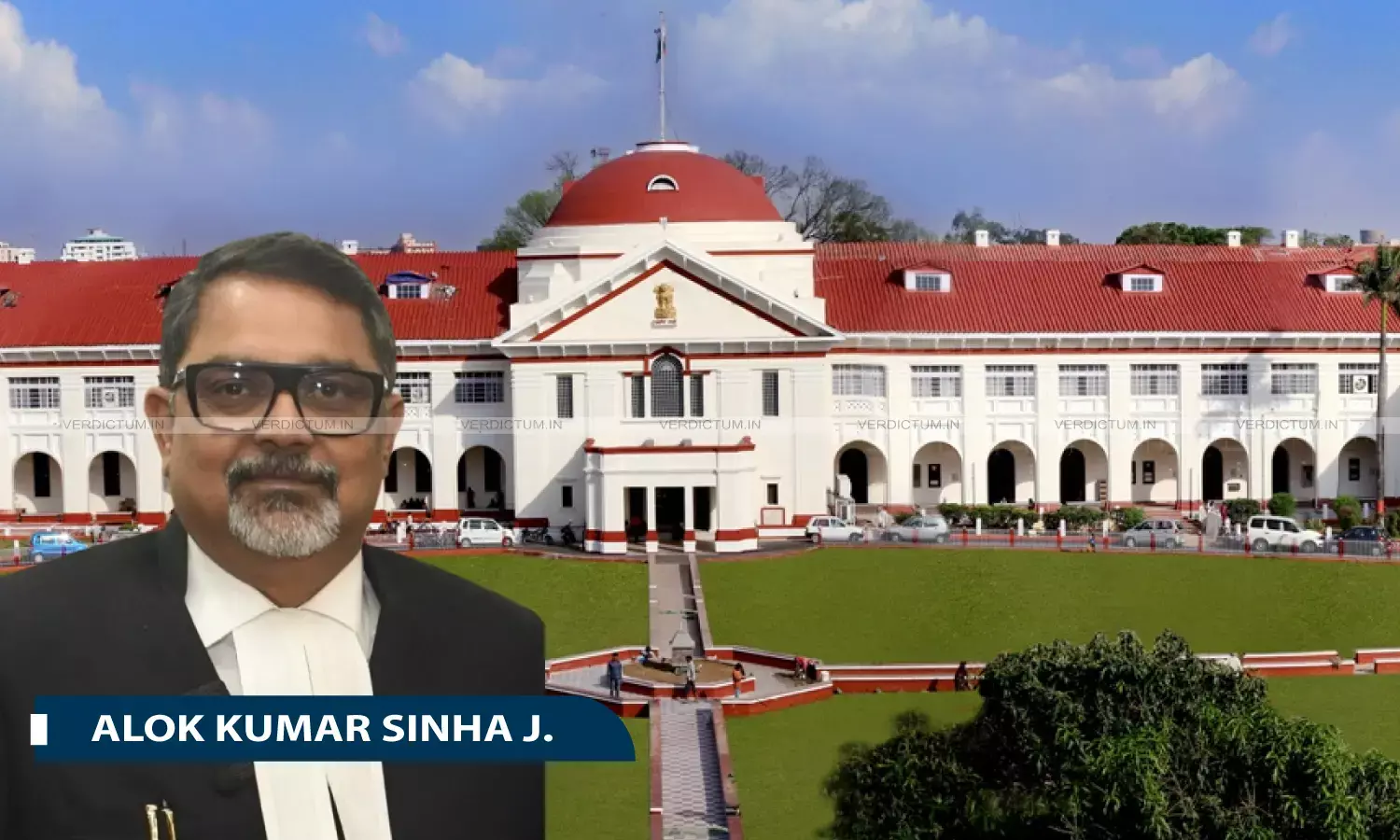
Justice Alok Kumar Sinha, Patna High Court
While directing that the aggrieved Panchayat Teachers’ appointment be accepted and they be granted consequential benefits, the Patna High Court has held that the power of review cannot be applied retrospectively so as to validate actions taken at a point of time when no such power existed.
The High Court was considering a petition filed by the petitioners seeking the quashing of the Order of the District Teachers Appointment Appellate Authority whereby their Appeal had been rejected.
The Single Bench of Justice Alok Kumar Sinha held. “The power of review being substantive in nature cannot be applied retrospectively so as to validate actions taken at a point of time when no such power existed.”
Advocate Akash Chaturvedi represented the Petitioner while Advocate B. Singh represented the Respondent.
Factual Background
The petitioners were appointed as Panchayat Teachers pursuant to the selection process conducted under the Bihar Panchayat Primary Teacher (Appointment and Service Conditions) Rules, 2006. The appointments were made against sanctioned and vacant posts after due process of selection, counselling and verification. A dispute subsequently arose with regard to the legality of the alleged appointments. The matter was taken before the District Teachers Employment Appellate Authority, Buxar, which by order allowed the claim of the petitioners. Thereafter, the very same Authority, reviewed and recalled its earlier order, holding that the earlier order suffered from error.
The petitioners assailed the order before the State Teachers Employment Appellate Authority, Bihar, which by order dismissed the appeal and affirmed the order passed by the District Appellate Authority. Aggrieved by the aforesaid orders, the petitioners approached the High Court
Reasoning
On a perusal of the provisions of the Bihar Panchayat Primary Teachers (Appointment and Service Conditions) Rules, 2006, and the Guidelines of 2008, the Bench explained that the Rules lay down the procedure for selection and appointment of teachers, regulate their service conditions, and provide for adjudication of disputes by the designated Appellate Authority. The jurisdiction of the Appellate Authority is confined to hearing and deciding appeals arising out of disputes relating to appointment. The Bench further explained that the Rules do not contain any provision either express or by necessary implication conferring upon the Appellate Authority the power to review, recall or reopen its own final order once the same has been passed. “It is well settled that the power of review is not an inherent attribute of a judicial or quasi-judicial authority and must emanate from a specific statutory conferment”, it added.
The Bench thus held, “ Applying the aforesaid principle, this Court finds that in absence of any express provision under the Rules 2006 and Guidelines 2008, the Appellate Authority could not have assumed unto itself the power to review or revisit its own final decision. Once the final order was passed, the Authority became functus officio.”
Considering that the legislature found it necessary to introduce an explicit provision conferring power of review in 2020, the Bench held that such power did not exist under the earlier statutory regime, namely the Rules of 2006 read with the Guidelines of 2008. Noting that the order of the District Teachers Employment Appellate Authority, Buxar, had attained finality, the Bench stated that the Authority stood divested of jurisdiction to reopen or reconsider the matter.
The Bench thus held that the impugned order passed in the appeal was ex facie without jurisdiction. Allowing the writ petition, the Bench directed the respondents to accept the joining of both the petitioners as per the order passed by the District Teacher Appellate Authority, Buxar. “...pursuant to their appointments, the respondents are further directed to grant all consequential benefits to which the petitioners would be legally entitled to with effect from the date of issuance of their appointment letters. The aforesaid exercise shall be completed within a period of fifteen days from the date of passing of this judgment”, it ordered.
Cause Title: Kumari Bandana v. The State Of Bihar (Case No.: Civil Writ Jurisdiction Case No.15887 of 2017)